



I struggle with the fact that although break-ups are such a natural part of life, they can also feel so distinctly isolating. You can have tons of support and people telling you everything you’re going through is ‘normal’, and yet it can still feel like you’ve gotten yourself into some kind of a particular mess that no one could ever fully recover from. But I guess that’s also why the love you had was so great— it was something that no matter how many rom-coms you watched and novels you read, you two were always the main characters who you felt had something more special than any fiction or non-fiction lovers had.
This is why I believe it can be so hard to accept the fact that you’re not alone in going through breakups. If others can relate so closely to the lows, does that mean their relationship had brought them to all the same highs where you were taken? Can’t be— because if that’s true, than the person you just lost isn’t actually the only person who you can have a great love with. And that (fact, unfortunately) hurts way too much because— accepting it would mean accepting that it might be okay to let this person go, although every bone in your body is telling you not to.
⌿
Of all places, I did find myself getting comfortable with relating to others about this topic on YouTube. I wasn’t inclined to join in the conversation necessarily, but something about the comment section of a Break-Up Ted Talk led by Psychologist Guy Winch resonated with me. I think partly, it was that I’d imagined everyone had found themselves there the same way that I did. Search: Best Breakup Advice. Maybe those people had always taken colossal questions to the YouTube search bar, but I imagined that maybe they were in the same place I was; having had nothing to lose in the most desperate and aimless way possible.
There’s also an anonymity factor, accompanied by a quality to many of the comments that make them seem like they were never meant to be read. Not in a way that the writer would ever be upset or embarrassed that their comment grew traction, but a way that makes me feel like I’m connecting with others’ inner most thoughts. When I read them for the first time, the rawness fit perfectly with the rawness of my emotions— maybe not meant to be given context or translated for people to understand better, but certainly meant to be acknowledged.
⌿
Below is a set of comments from “How to Fix a Broken Heart | Guy Winch” on YouTube published by TED— comments I strongly believe are meant to be acknowledged.
Names are excluded for privacy.


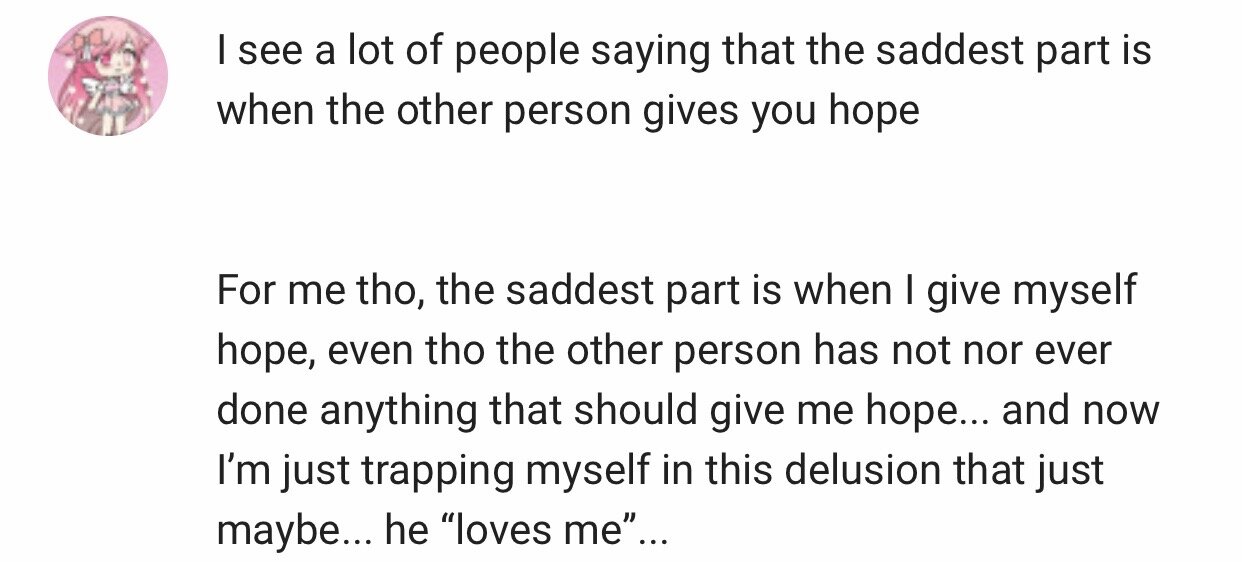
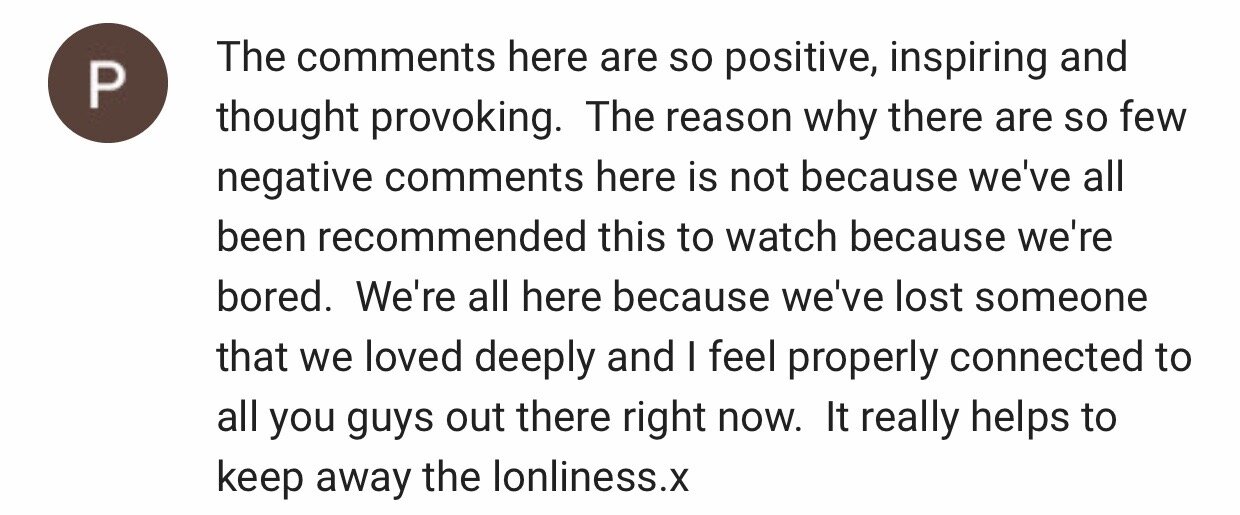


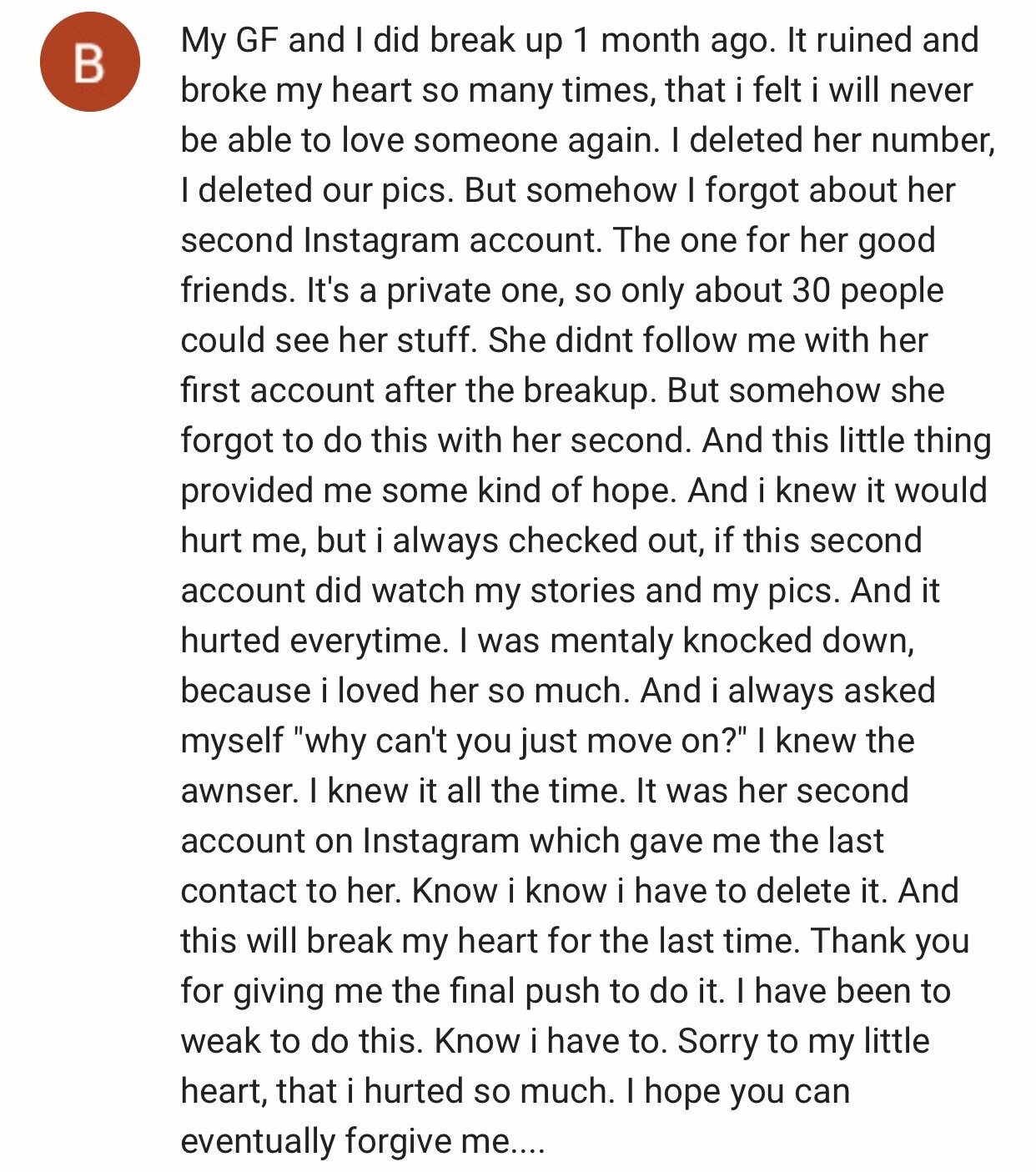
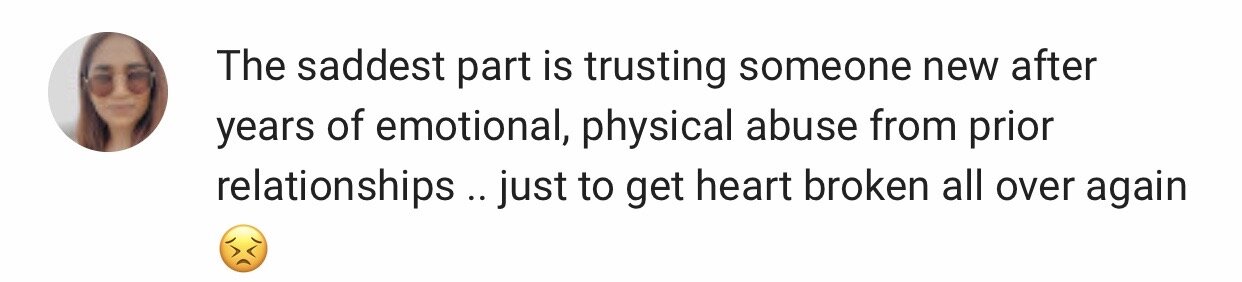
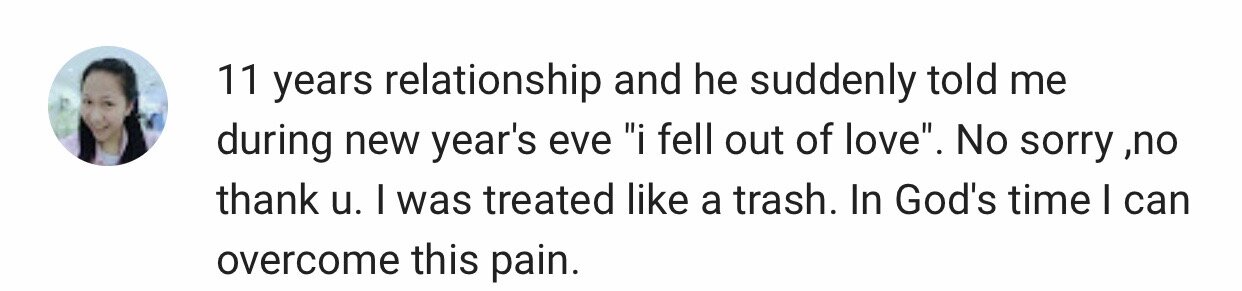

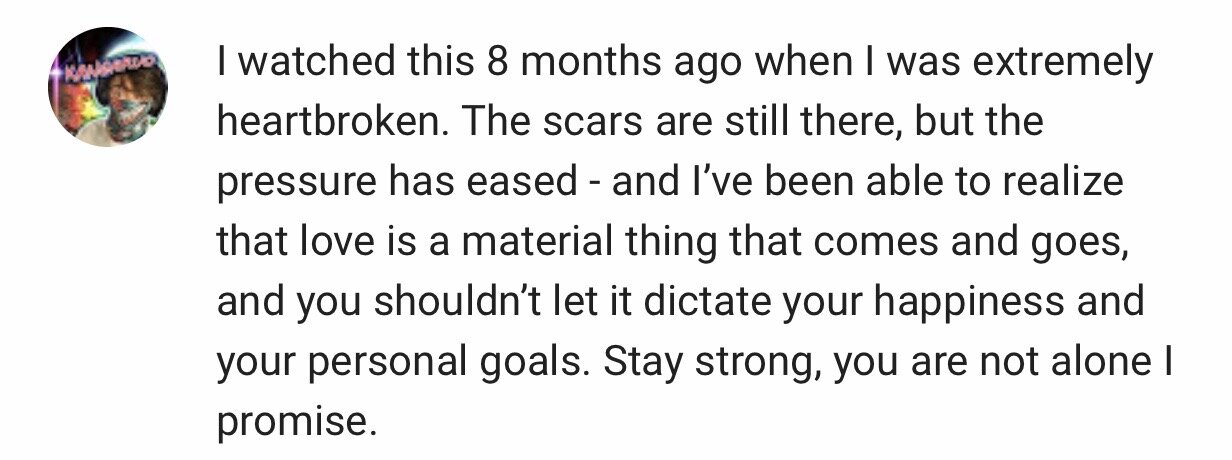
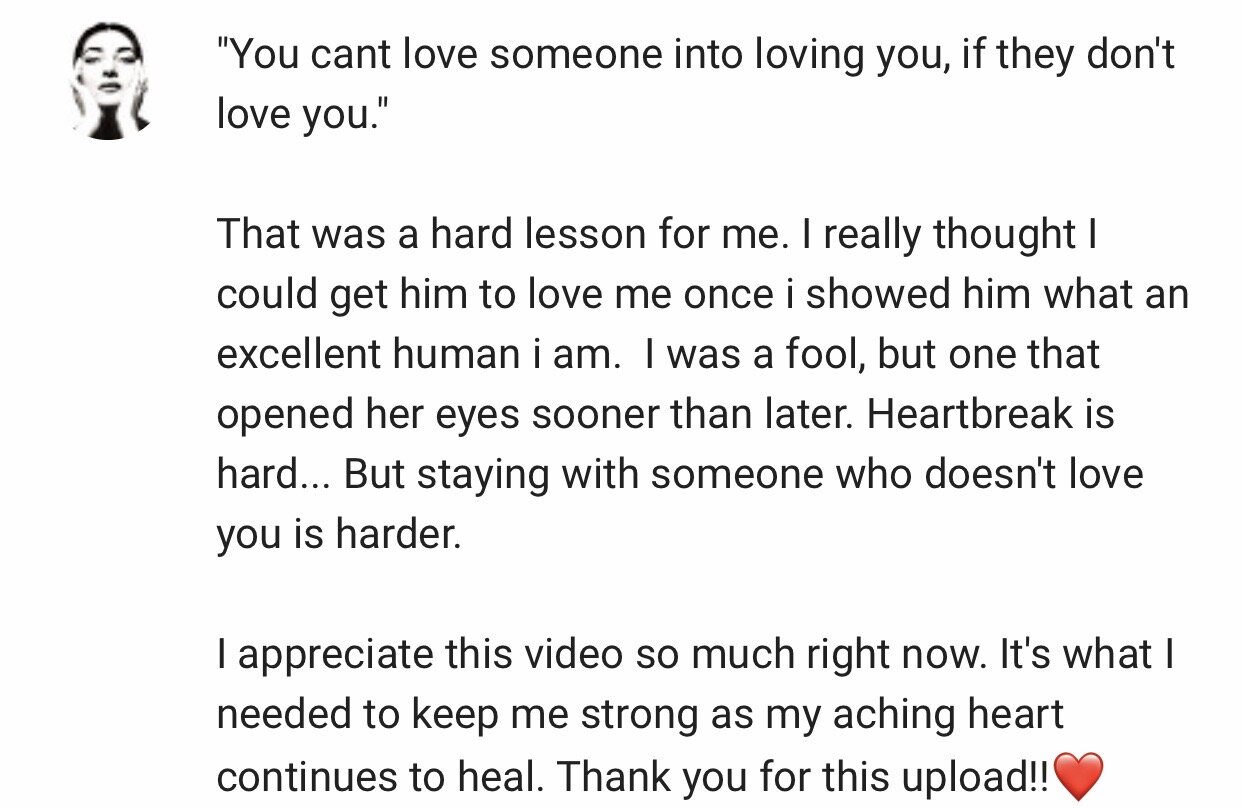
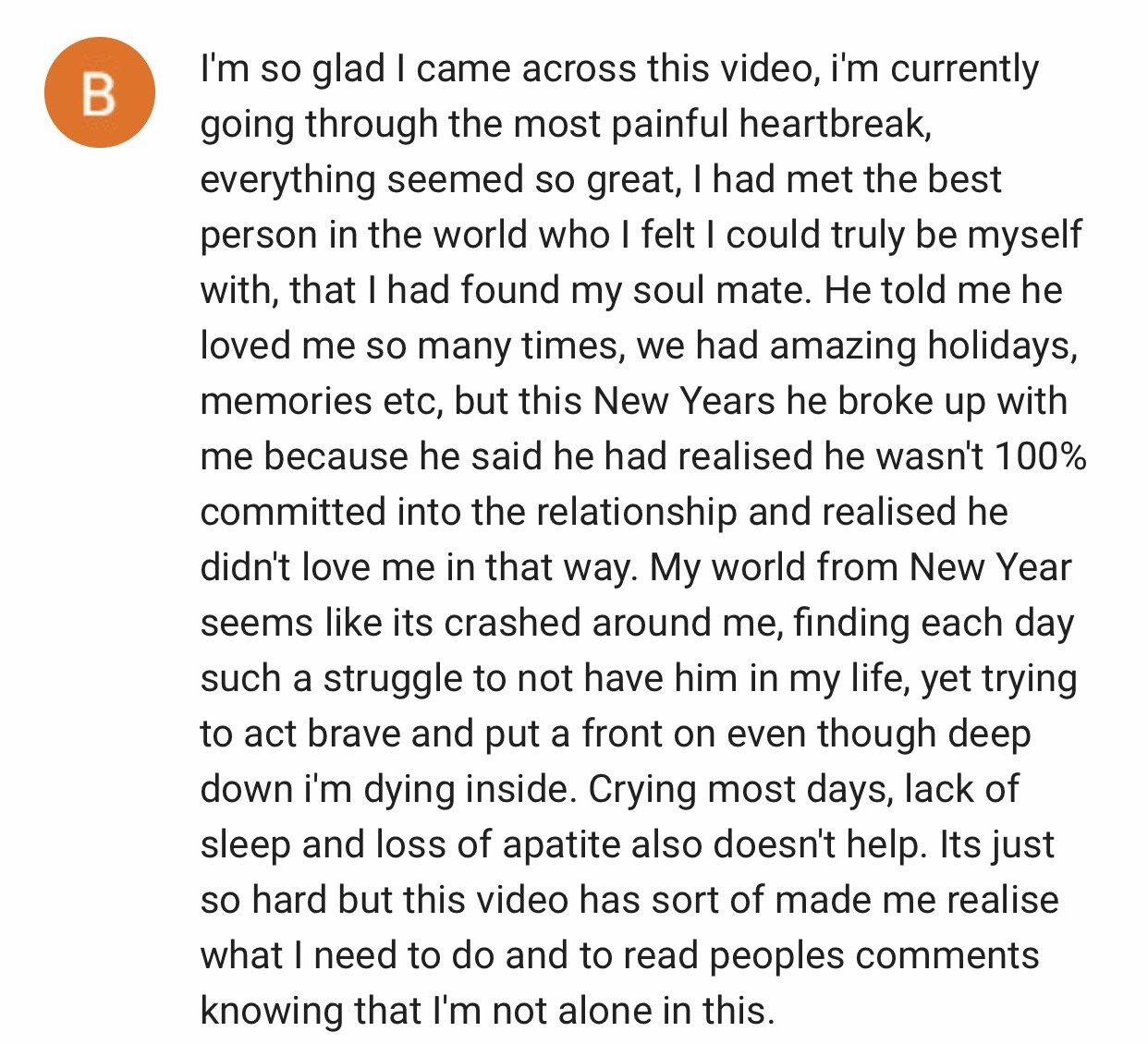

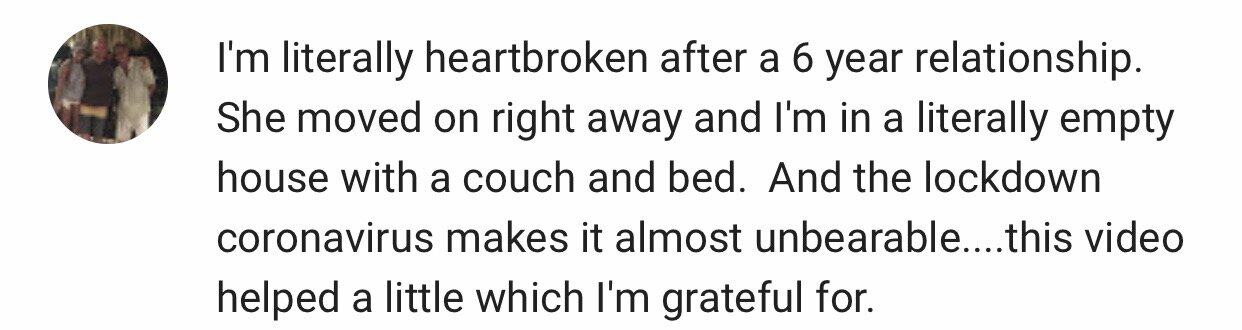
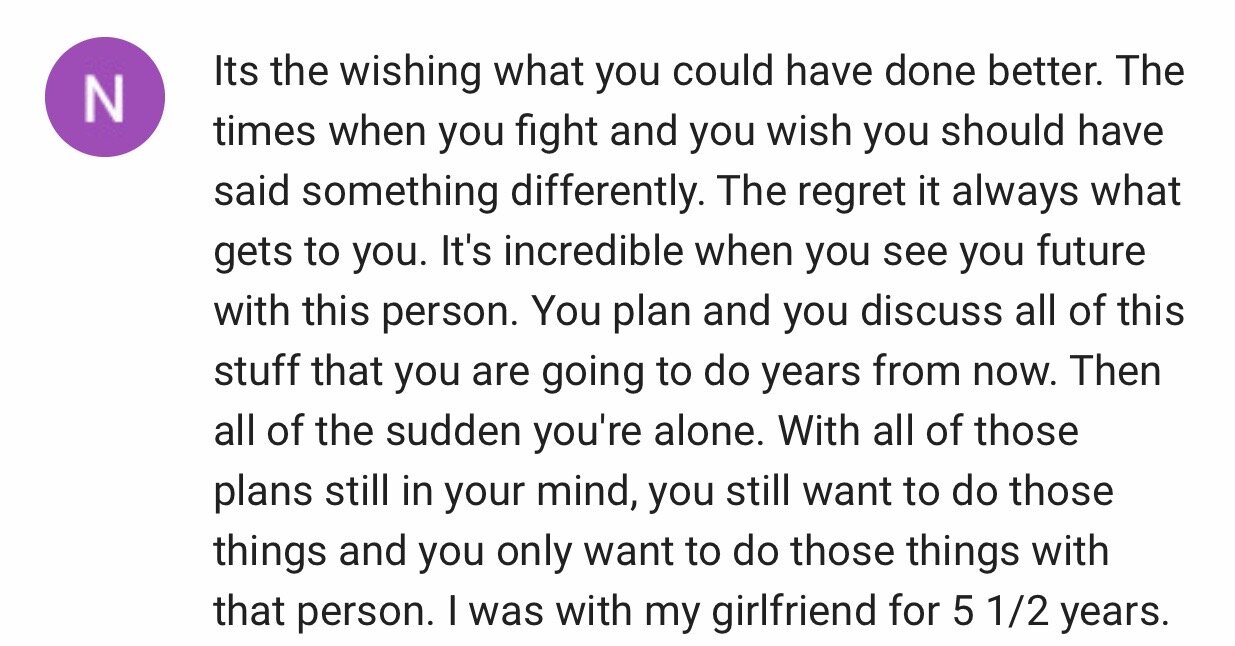
And the most oddly comforting thing about the comment section of the break-up Ted Talk, it didn’t have to include any happy endings. Although I’m positive that sooner or later all of these people and myself will come out of these situations stronger, I believe sometimes it’s important for people to just be able to express what the journey is like. Of course it’s helpful as well to hear about the benefits and potential that lies behind all of the pain, but that doesn’t make the feelings any less significant in the moment.
Image Credit:
Cover- ___________. Image Header-__________ Comment Images- Sourced From “How to Fix a Broken Heart | Guy Winch” on Youtube. Contact hello@pilotmagazine.uk for comment author credit.