

Getting an Uber in pitch black darkness at 4am is never the way you should start the day, only end it. I was forcing my head and eyes into consciousness as I travelled to Gatwick for my flight to Berlin. The airport was busy with families desperately clasping their children, urgently rushing to their gates, and all I wanted was someone to drag me through the airport in the same way so I didn’t have to think. Sleeping for an hour, I woke up to a man dressed in a wedding dress running down the plane’s aisle, the toilet waiting for his vows. Immediately drenching my nervous system with hot oil (coffee), my mission was to get to my hotel and decompress. I was meeting Alex for our interview in 4 hours. We waited in the queue for security in an airport I’ve previously described as being ‘like a spa’; today was the day I took it all back. Worming our way through the line, we eventually reached prime position after 2 hours, only to be met with a whole cabin crew jumping the line and a changing of 2 security guards. It was clear I was not going to meet Alex at the time I had planned, and wasn’t sure what time I was going to make it out of this hell. Having never cancelled an interview before, I texted him like a puppy with a tail between its back legs, apologetic that it wasn’t going to work out. He was gracefully understanding, and I thanked him for his patience. We agreed to call the following week, since my time in Berlin was only 48 hours long.
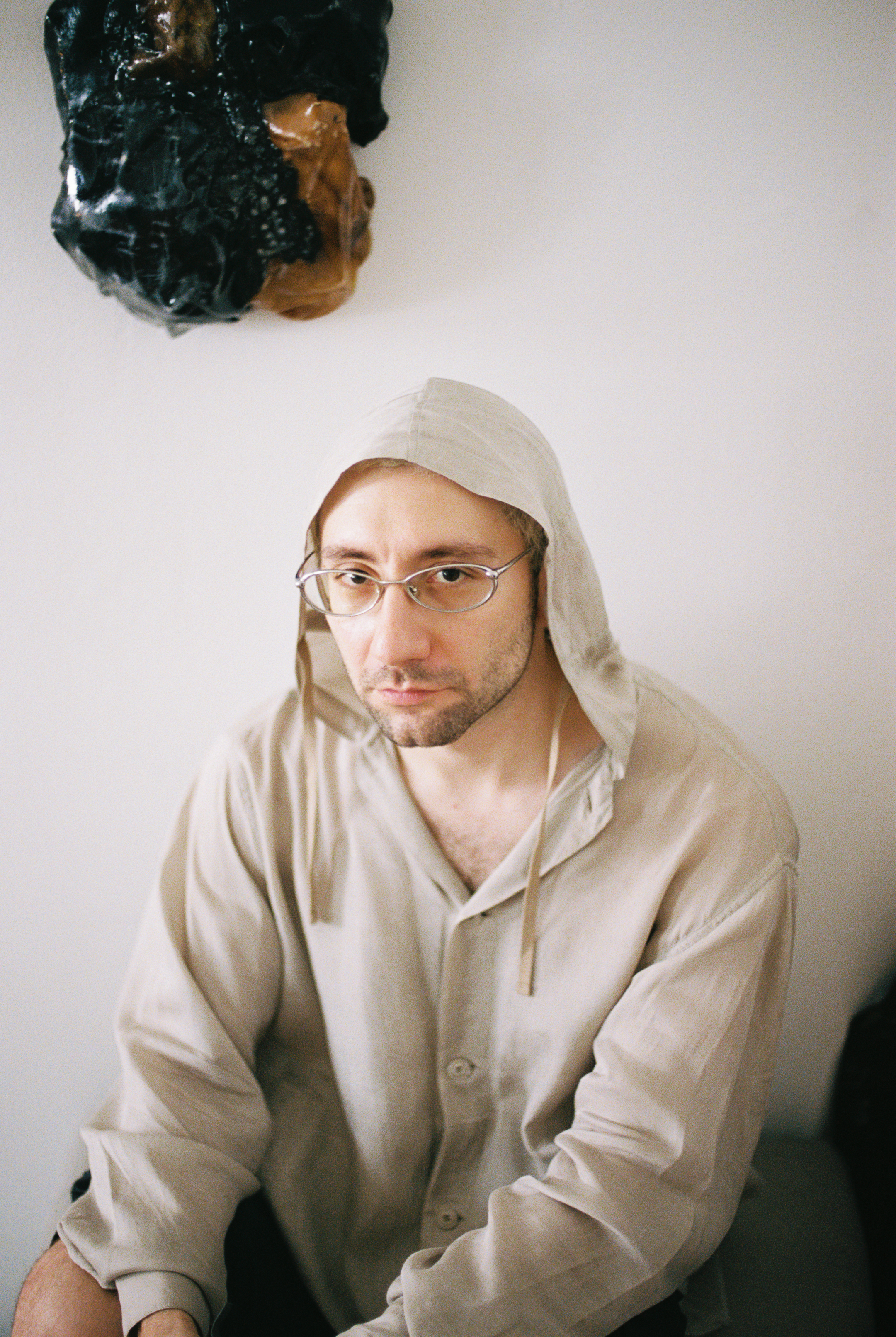
After what felt like a whirlwind of a trip, I inevitably became ill, and unfortunately so was Alex. We both texted to cancel, wished each other well, and promised to reschedule once we were both feeling better. A week passed and I texted him to check in. I was hoping the doom of delays hadn’t made him lose faith in me completely, but by some miracle, we were going to make it happen. The next day we called, and illuminated against a white wall was Alex. Finally both of us were able to put faces to names, and we chatted for a while before I asked about his work. I wanted to know what influenced the shapes he makes which feel like creatures of their own species. “That’s how I feel when I’m processing a moment” he humbly tells me, “Where everything is crazy fast and you’re just observing what is going on, and it's hard to tell what exactly you’re seeing.” If time dictates our experience of reality, Alex’s work deals with what happens when we no longer trust what we’re confronted with; constructing an alternate way of seeing in an age normalised by hyper-processing everything at once.
(The following text has been edited for clarity and length.)
Hi Alex, where are you right now?
Alex: I’m in Georgia, I’ve been here for a week already, it’s super inspiring, like the nature here is crazy. The air is so crisp.
Have you been before?
Alex: Yeah, actually I lived here some years ago.
Oh wow, I’ve never been but I really want to go. The music scene is supposed to be so good.
Alex: Yeah, the club scene here is amazing, people say it's the new Berlin.
You’re based in Berlin, right?
Alex: Yes, but I agree with the people. *laughs*
What do you think of the Berlin art scene?
Alex: Honestly I don't want to sound like it was better before, but it's kind of true. I mean Berlin is one of the best places in Europe because there are so many things happening every day, there are so many communities, but at the same time I feel like it's kind of fragmented. I’ve only lived here for three years, but people who have been in Berlin for decades say it used to be easier to connect with people. I personally feel kind of the gap in the art scene that you have like artist-run spaces and self-organised communities, and on the other hand you have major galleries and the gap between those is huge.
It's kind of similar in London, so many young artists are being blue chipped way sooner than what they used to be in their careers, so it's creating this weird disparity within the market in terms of value. Where did you live before Berlin?
Alex: I was born in Russia, but my mother is from Ukraine and my father is from Georgia, so I'm like this kind of post-Soviet mixture I guess. But, before Berlin I lived here in Georgia for a year and a half, and before that I lived in Moscow. I don't think that I'm gonna stay there for decades, maybe three, five years max. Then, I’d like to move on, I'm going to be looking for a bigger city. Berlin feels small and even though it is amazing culturally, at the same time, the prices go higher but the city is not getting better.
Where would you want to go?
Alex: Recently, this year I visited Korea and China for the first time. That was so exciting and so different from where I've been before, and I connected with amazing people, so maybe I would go to Korea or even China. The most inspiring thing for my work is to move around to see different people, different pictures, different nature, different relationships within the cultural landscape. That’s the most inspiring thing to me.
Your work does feel like an amalgamation of all these different cultures that you've been exposed to as you've grown up and moved around, how do you think this has impacted the way you see images and your selection process?
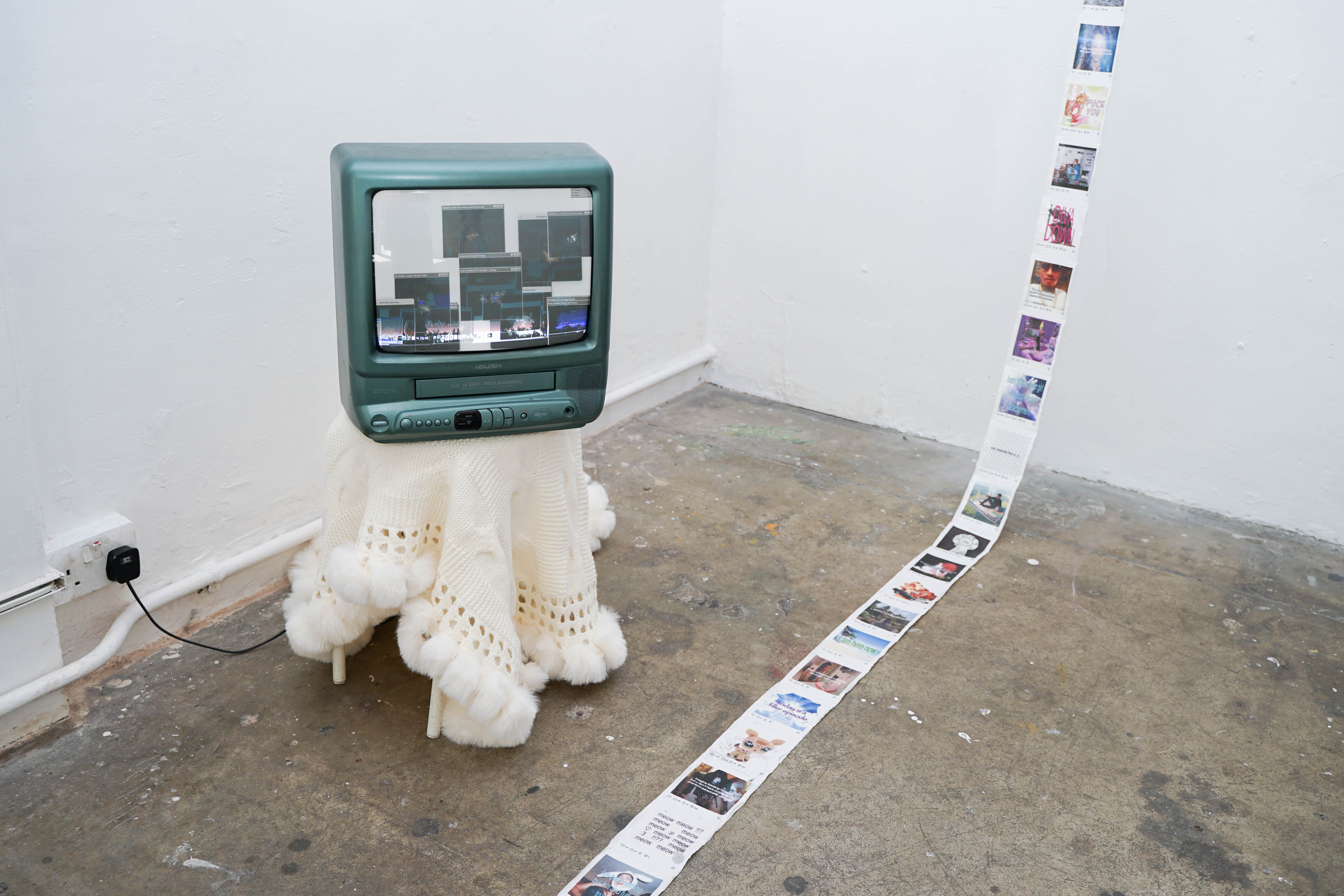
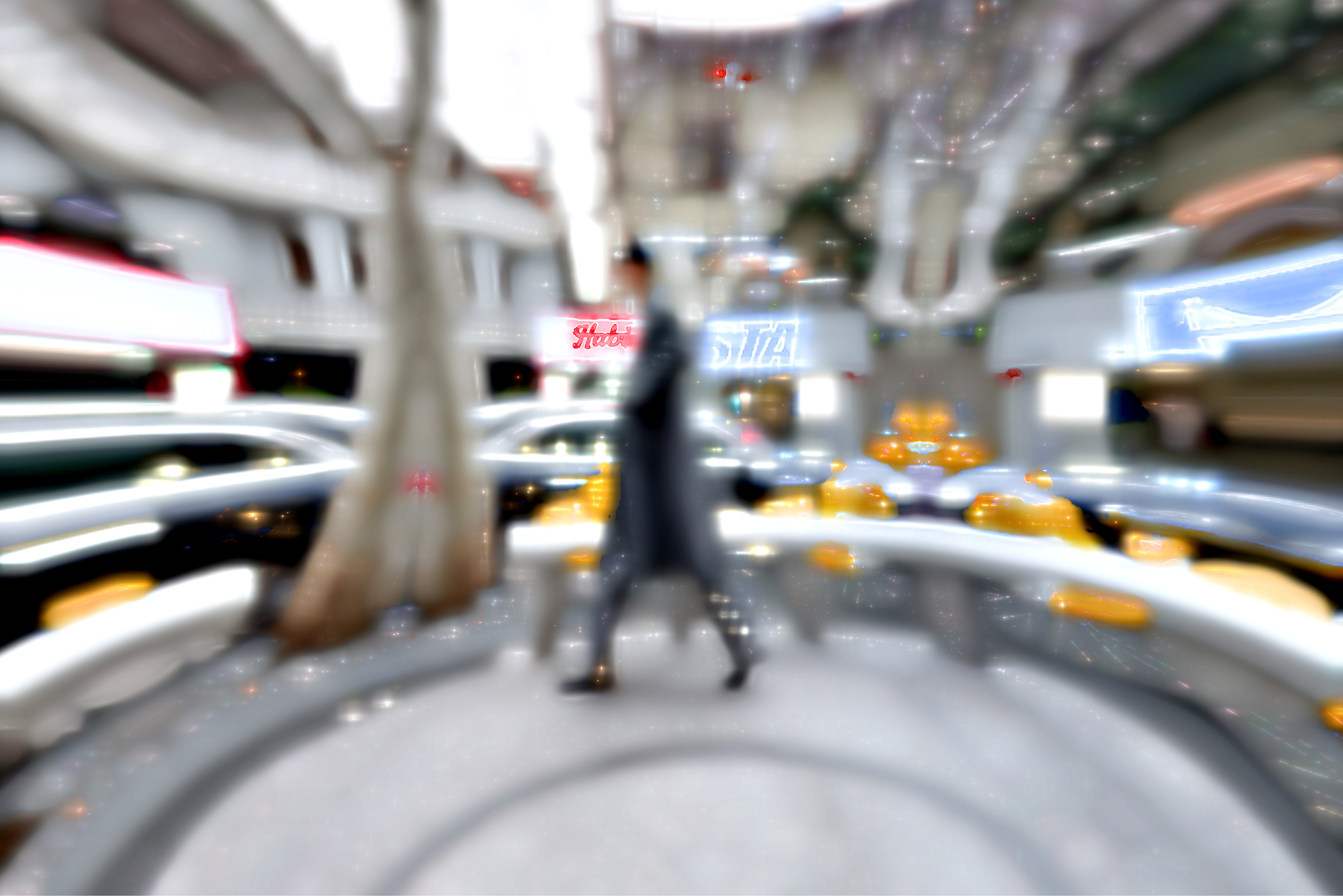
Alex: Currently I have a couple of different series going on, but the main one begins with photography. It’s all about observation, with photographs from different places, some from here in Georgia, others from my trips to different parts of the world. I act as a street photographer. When I take images, I create this database for when I'm looking for different situations within the city. Daily interactions between people and environments, animals, buildings, lights. Everything is a possibility.
Have you always taken photos throughout your life, or is that something that’s recently come with your practice?
Alex: It was always there. Actually, for my very first job I was photographing buildings for a startup. They wanted me to take photographs of buildings then make a map, like a Google map, but they wanted to use textures. I was probably 15 or 16, and I would walk around with my camera photographing buildings from all the angles.
That's so interesting because I guess your practice now takes 2D into 3D, but then when you were taking photos of buildings, it's kind of doing it the other way round, constructing the picture. Your works are like an illusion of moving image, are there any other forms of physical media that you are inspired by?
Alex: I guess video art, maybe even dance and ballet. I forgot the name of the technique, but ages ago I discovered chronophotography, like in the early 20th century when you have all the frames of a movement. I saw it in some book when I was a kid. There was an image of a ballet dancer performing something, but the frames were stacked and the sequence in one image.
Yes, I’ve seen that. Are you interested in ballet as a performance?
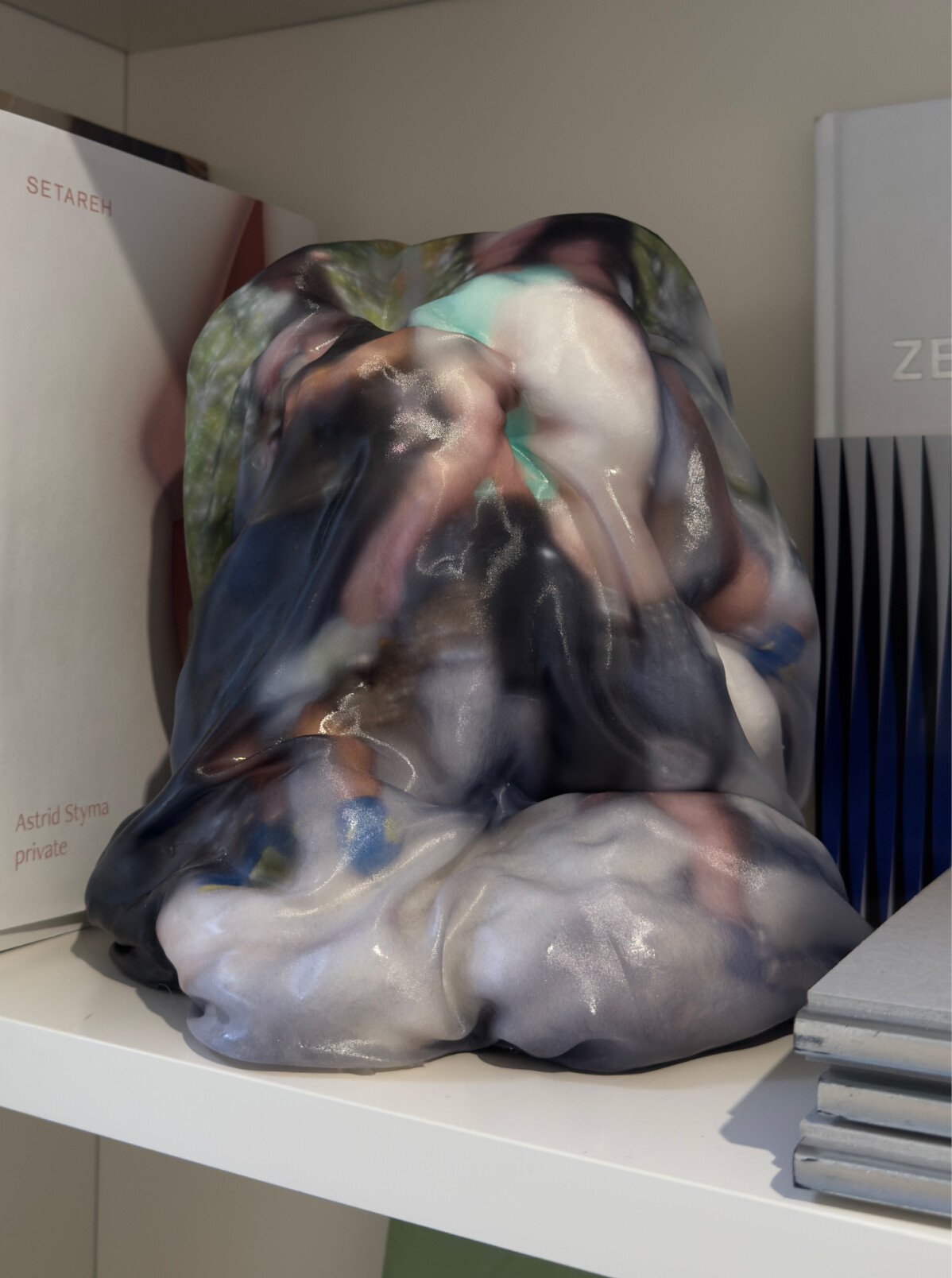
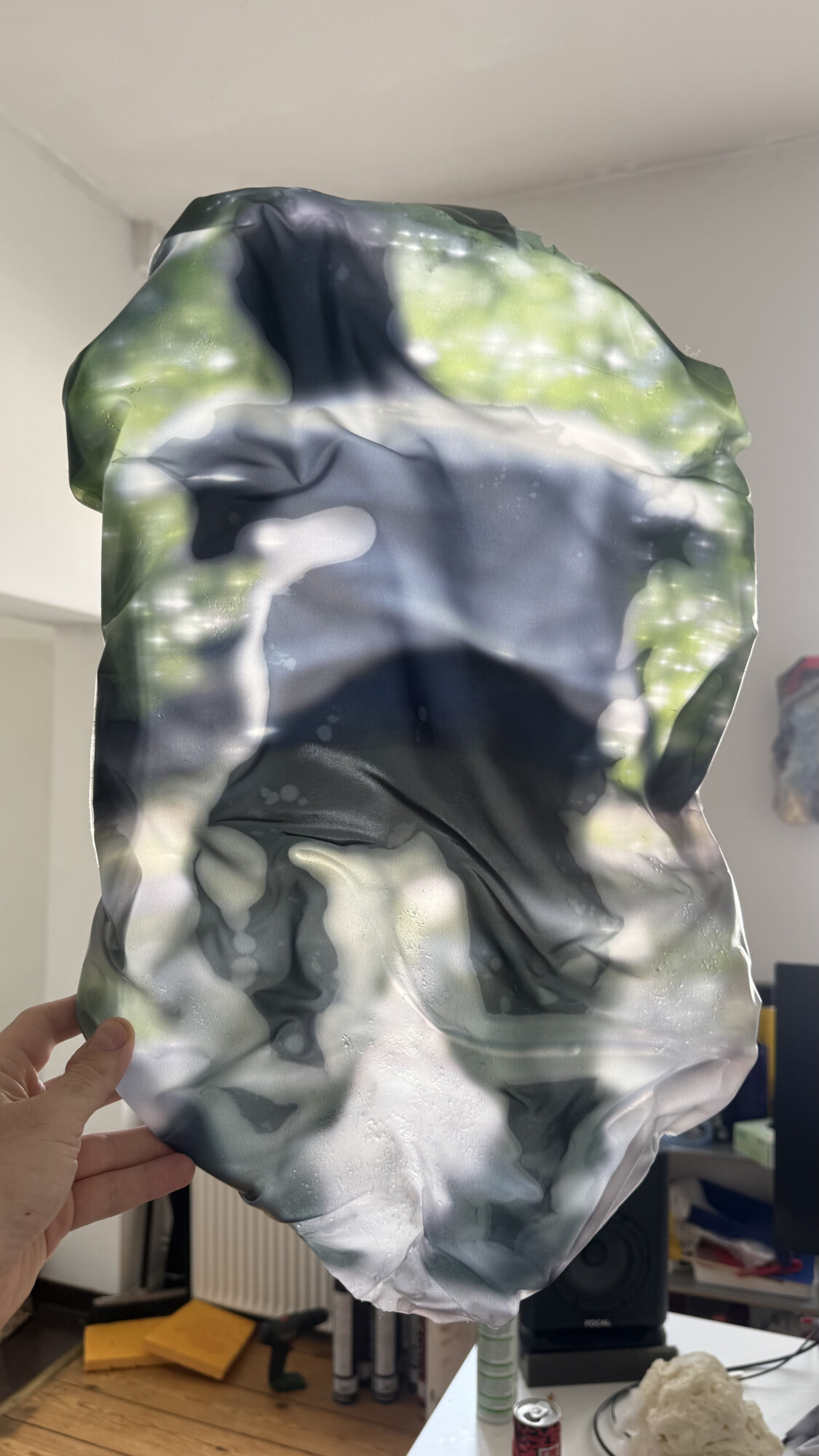
Alex: Yeah, sometimes I go, mostly I went when I was living in Moscow, the scene was really good there. In Berlin, it’s more performances of various kinds. Recently, I’ve been watching a lot of what's going on in robotics, like robots wrestling in China or with other robots in the Olympics when they were running. It made me interested in different kinds of motion within different creatures, like how jellyfish move, how they propel themselves forward, how worms move and so on. So the different kinds of movement, different kinds of motion, is super inspiring to me. This kind of blur situation I have in my work, I like to say, is a little metaphor. It feels like you're driving at a high speed on a highway, so you have this motion blur, of shape and colour. Everything around you is kind of blurred and things are continuous. That’s how I feel when I’m processing a moment. Where everything is crazy fast and you’re just observing what is going on, and it's hard to tell what exactly you’re seeing. So lots of my works are riddles, you need to make some effort to try to kind of decode them.
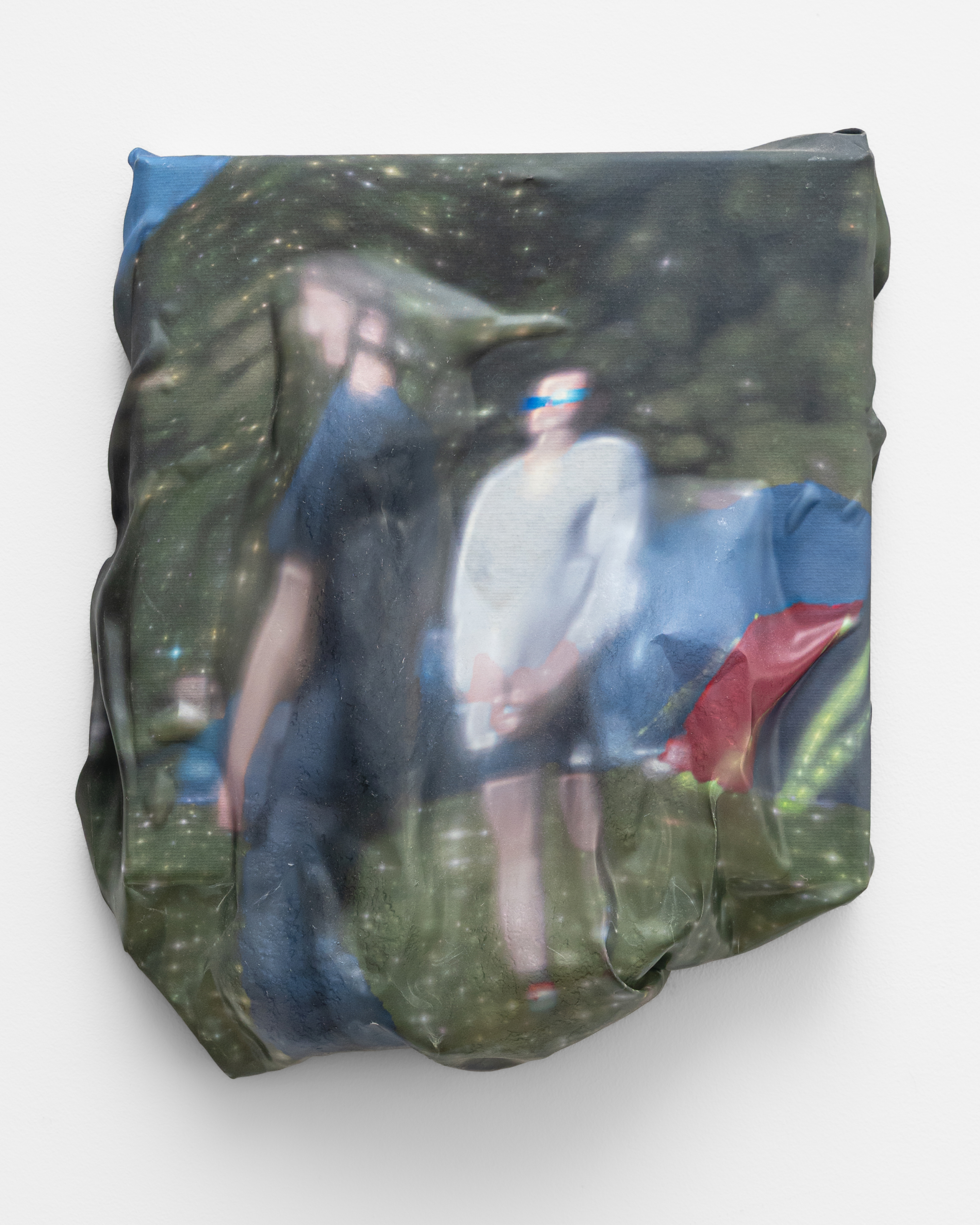
I like that you described them as riddles, a puzzle to unlock. Do you see each of your works becoming almost like living beings? You’ve said they turn into this creature when you add weight to it.
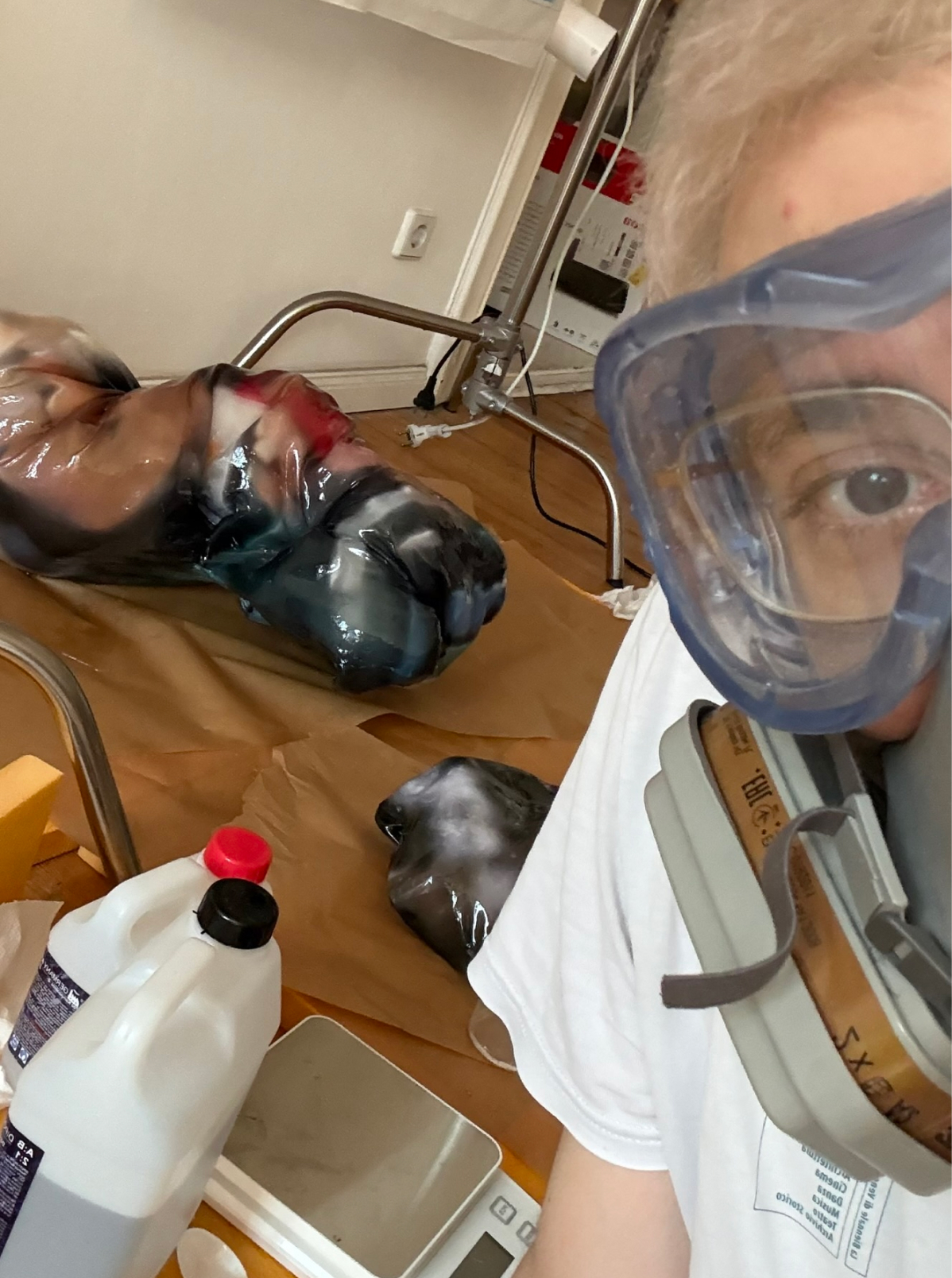
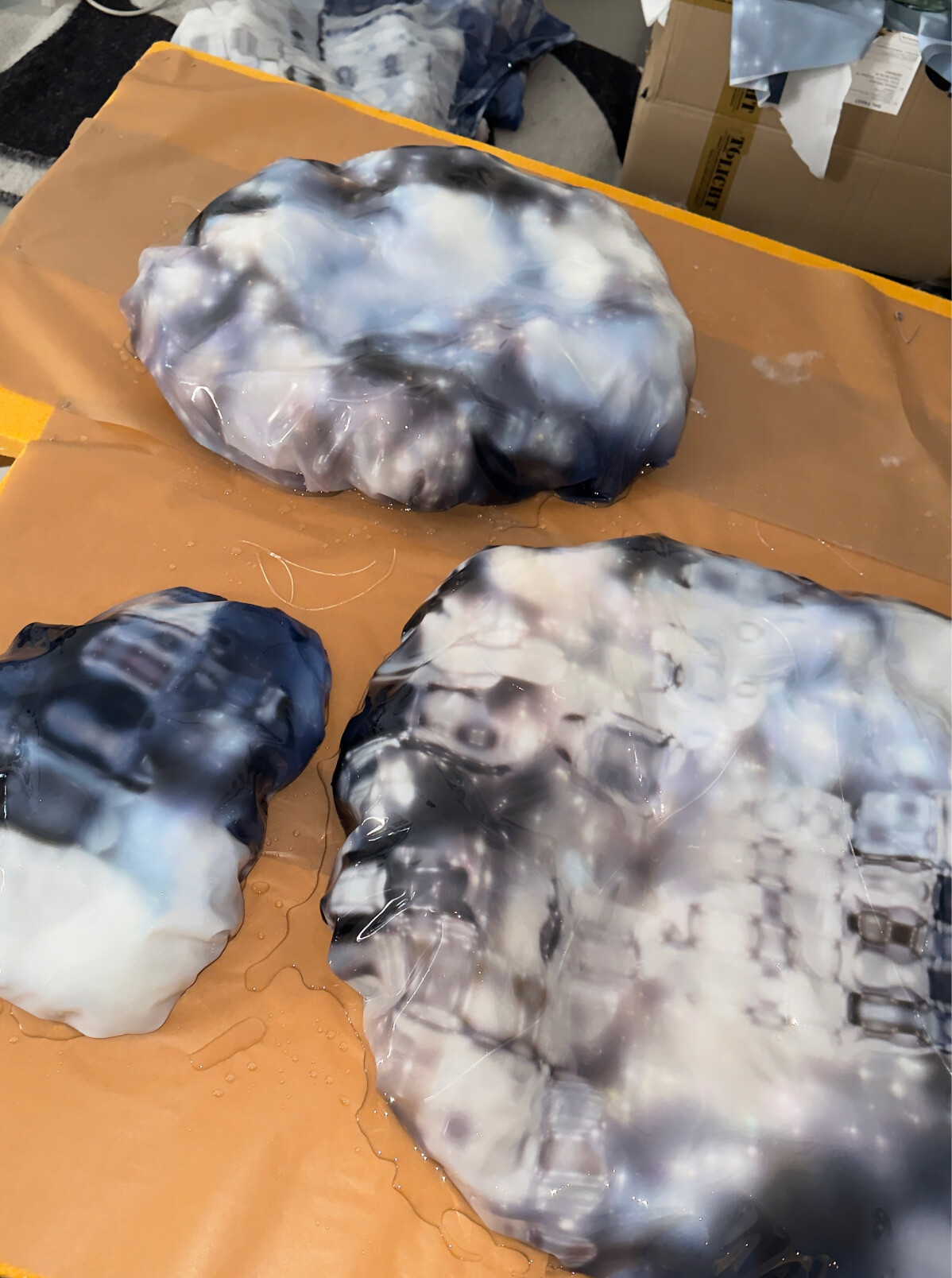
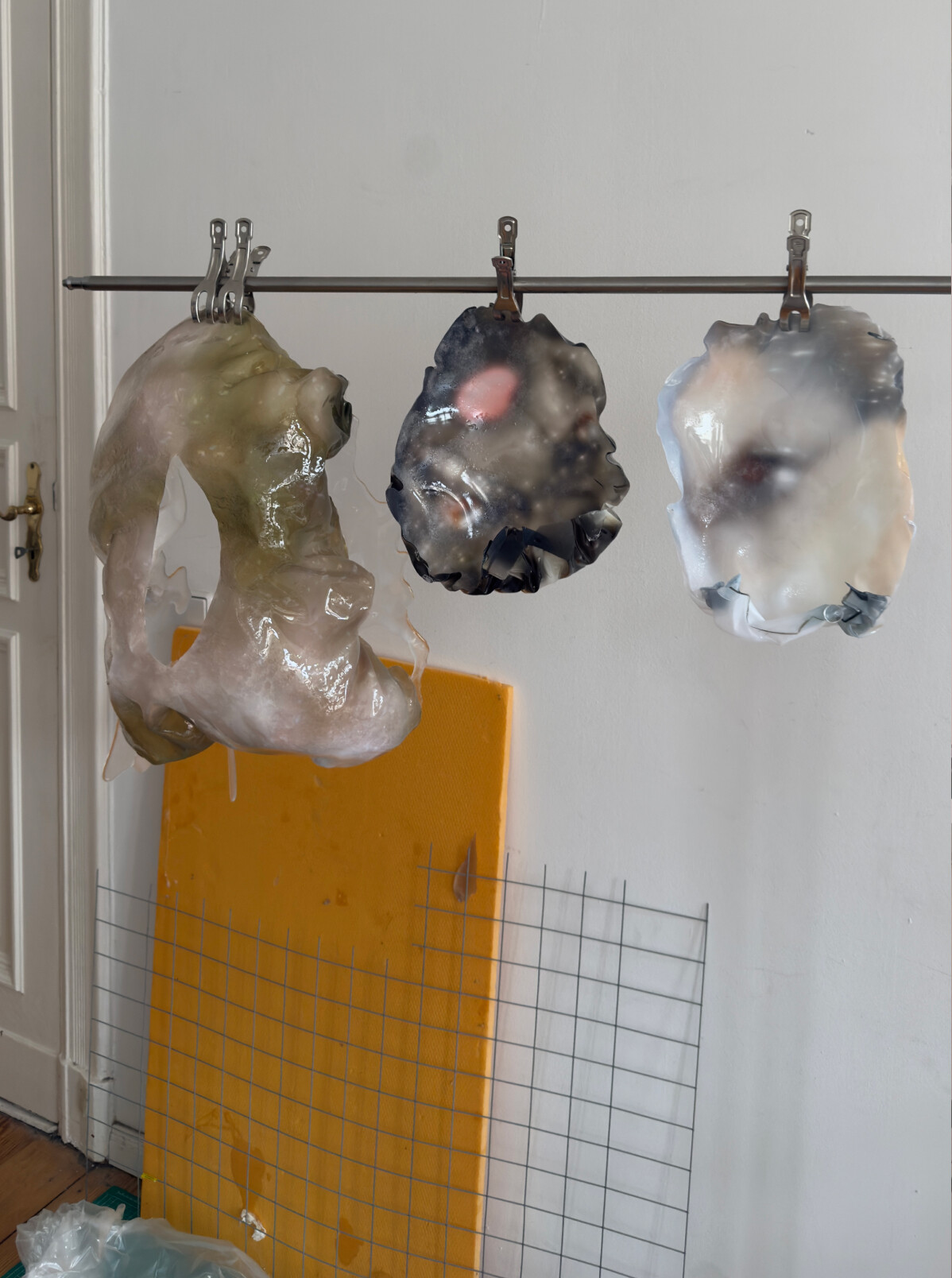
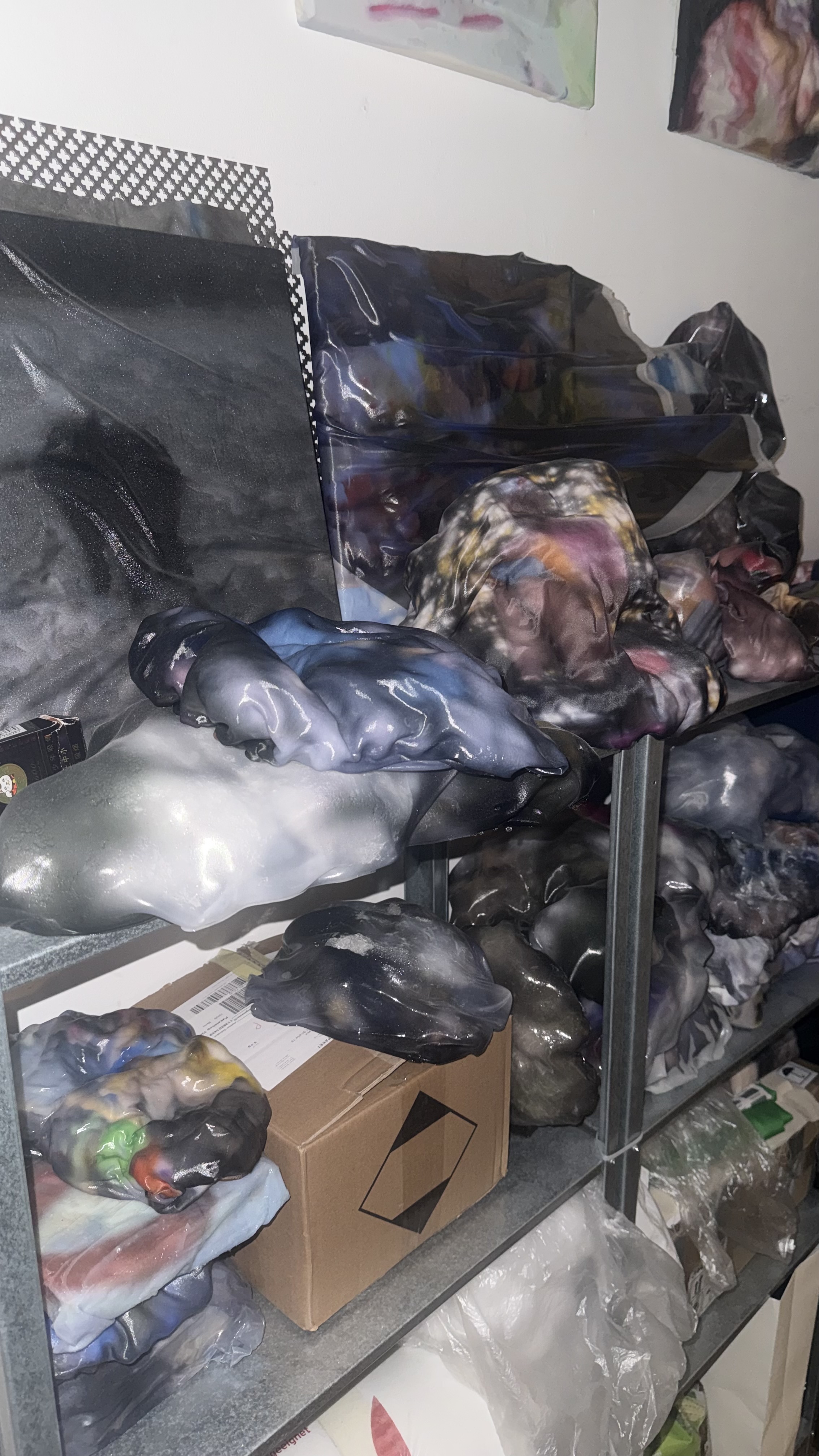
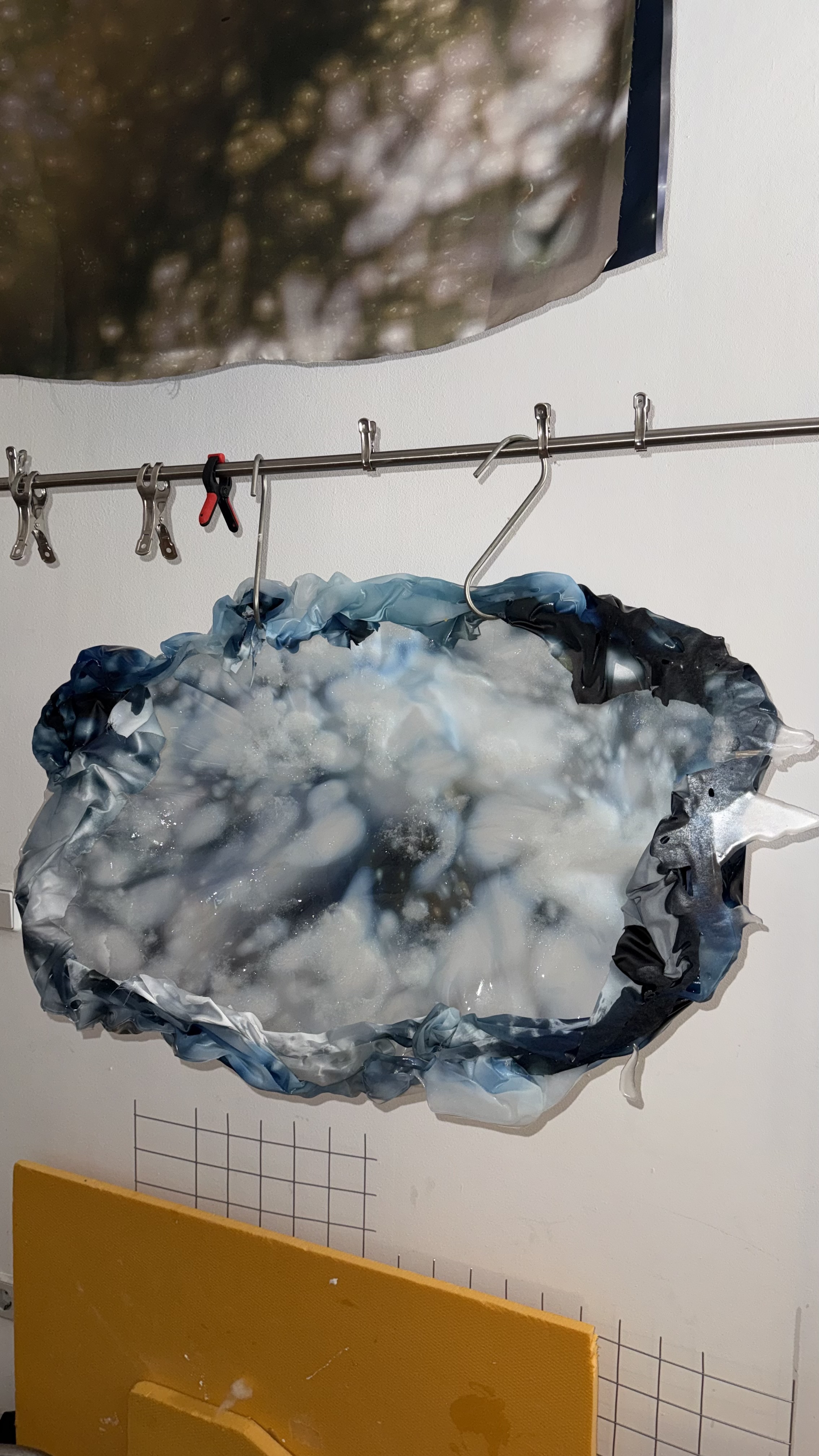
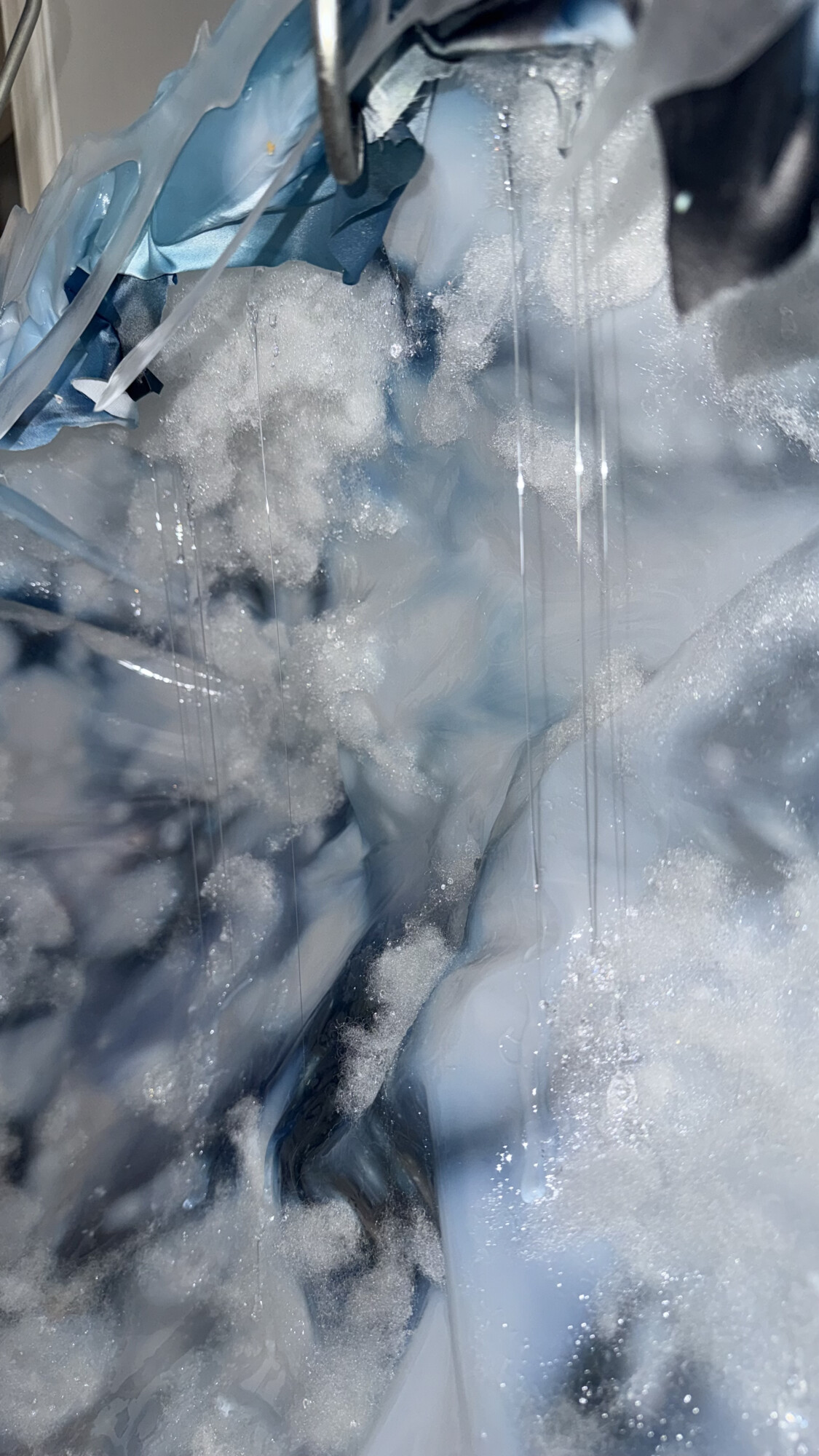
Alex: Yeah, absolutely. It's like in some series I have more of that, in some I have less. In bigger works where I create them on site, they're kind of spatial and they have body like characteristics. The shape is suspended in motion. I have a new series, it's called Membranes, where I’m exploring this idea more. I was inspired by speculative biology, when it is proposed that there are different kinds of creatures that could have existed, millions and millions of years ago. So I was thinking about some of those little image creatures, image bodies, image objects, made of data, made of glass, made of sand, made of residue from the technological artefacts we have. I'm just experimenting with that. I was using imagery from a satellite called Sentinel 1 and 2, it's a program to track images by taking the geo data from other satellites, adding a layer of observation and surveillance. These images I’m altering I then make into shapes which reminds me of shells or bacterial membranes.
Where do you think your interest in surveillance imagery comes from, it seems to be a theme?
Alex: I've been researching AI and how image recognition works, which connects to the blurring. Speaking about blur, I think clarity is dishonest. Firstly, clarity suggests that we know everything about the image which is not true, also you need a clear image for face recognition purposes, so by making this I'm making them into a video object so they can have more points of view than a flat image. Introducing this kind of blur, it makes it unrecognisable and melts everything you see in the image into one thing.
Do you believe in this sense of nostalgia sickness that society’s kind of experiencing with our relationship to images?
Alex: Absolutely, and I think even the fact that I'm using photography from the places I visited and I lived before, bringing this nostalgia into physical form, it becomes more tangible. Also, I was thinking about them as kind of pixels of reality, a melted piece of reality.
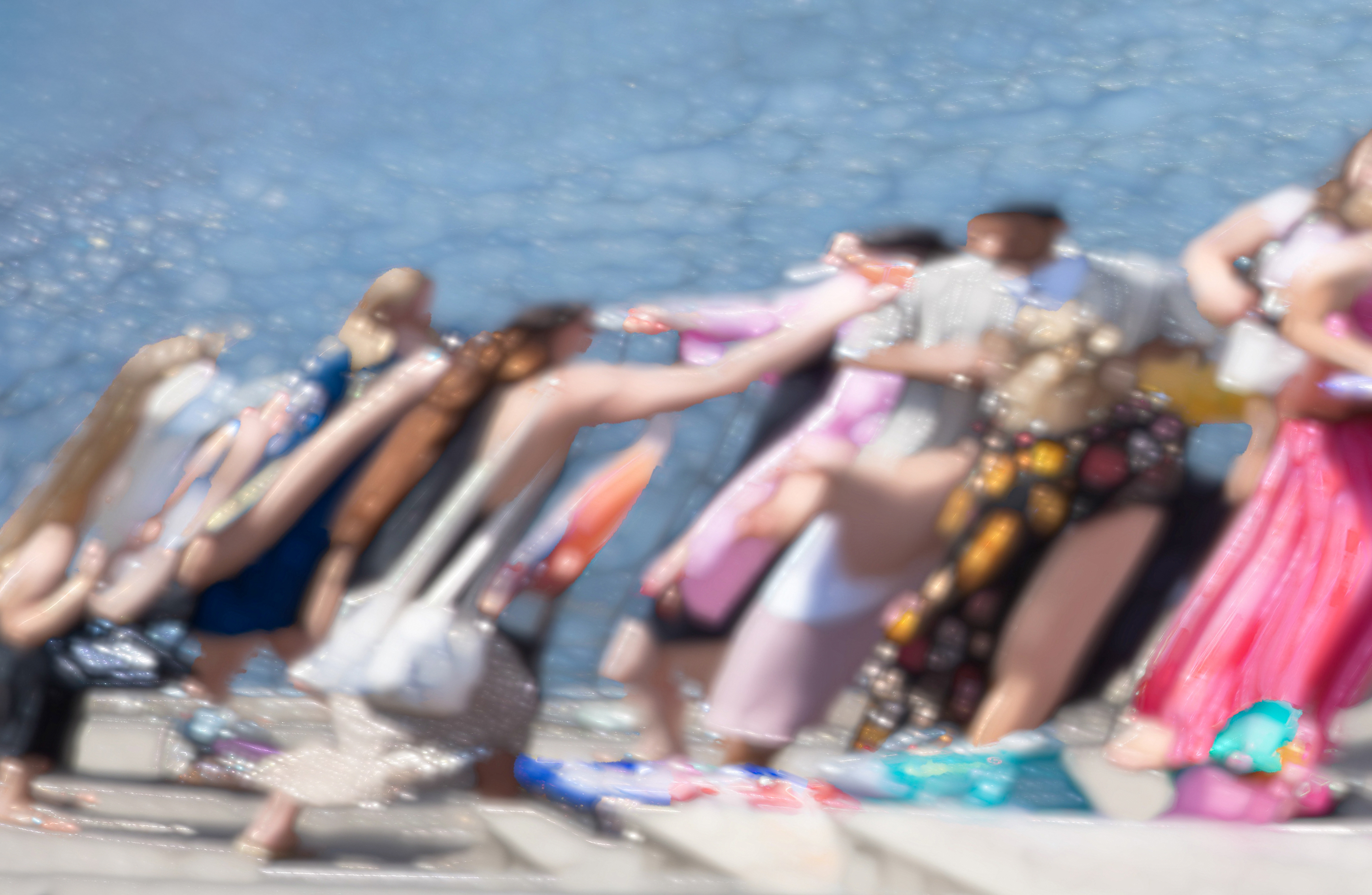
Yes, almost like a reincarnation of a moment. Can you tell me about any new projects you’re working on?
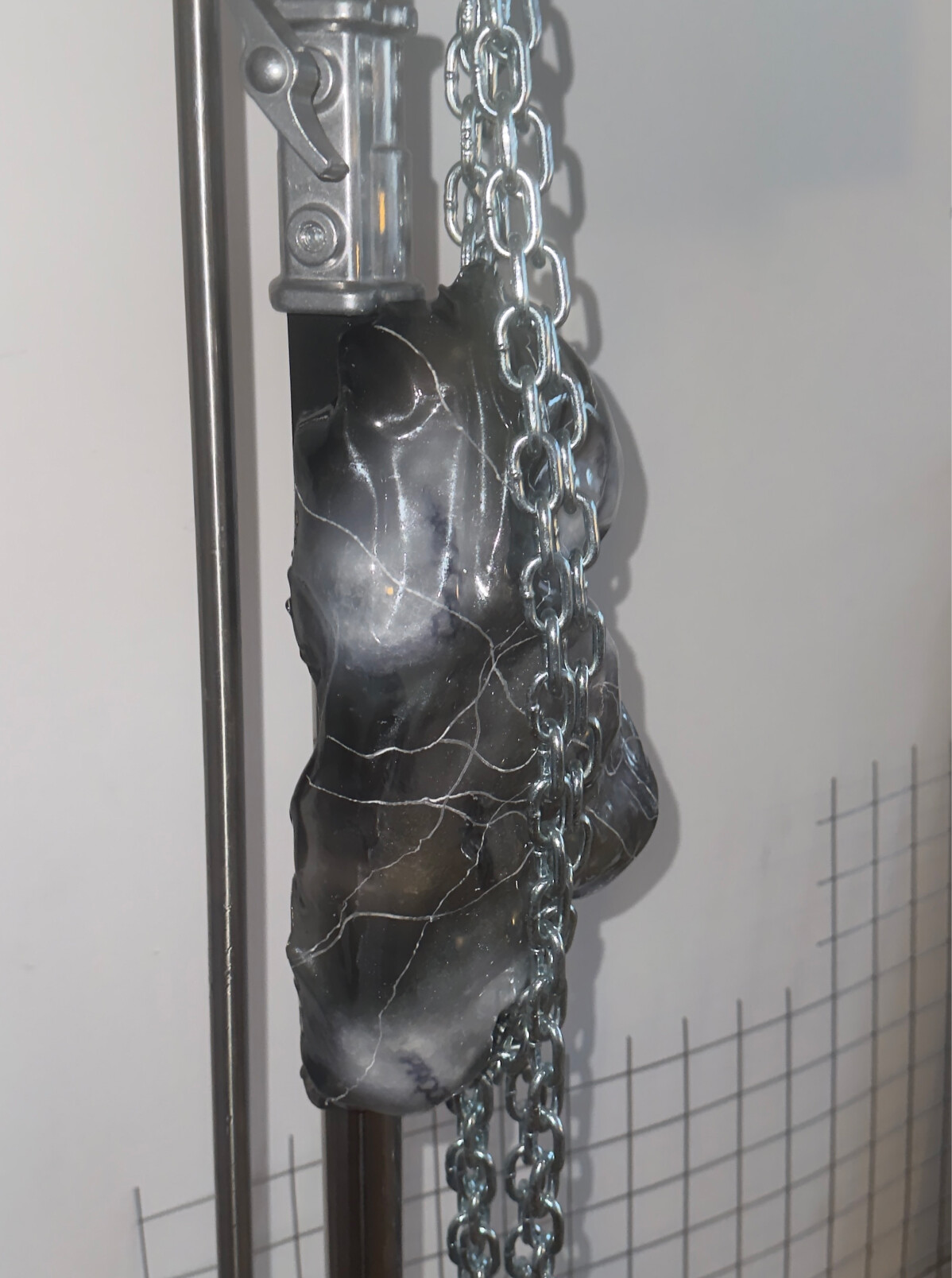
Alex: Membranes is one, but it’s a working title. I have another series, it's called Wildfires, where I use satellite data of wildfires. I was interested in how you can make remote events into a spatial encounter, so making it bodily. They were all works made on site specifically for an exhibition, so the shapes were representative of organic shapes growing from architectural features on the space. For Membranes, they have a slightly different technique, they don't have anything inside and are semi-transparent. I'm introducing metal elements to them, as this kind of links back to the technological, man-made nature of those objects. I want people to question where they’ve come from. Are they living fossils, organisms or just man-made parts of a mechanism?
I'm really fascinated by the metal as part of the sculptures, because it looks like they should break, so I like that tension.
Alex: Right now I’m working on introducing physical movement into them too, so I’m prototyping how these shapes can react to their environment, whether it be motion or light. I’d like to try to make them like an actual organism, moving and responding to the environment. Hopefully I’ll be able to show one in a show I’m going to be in later this year.
Oh wow, that's so exciting.
Alex: Yeah, but it’s not easy because I still need the image to be kind of recognisable so it should have parts with printed image, but the whole structure resembles a cell or bacteria, expanding and contracting or responding with light or sound. It’s a new exciting territory I’m going to be exploring more.
I know we spoke about these forms being almost like creatures, so do you ever intend for them to take on anthropomorphic qualities?
Alex: I was considering that because the previous series with wildfires are bigger, I made them in a way so they have this suspended motion in them, so it’s like somebody might be inside or it could be a part of some huge creature. But with the Membranes thing I wanted to keep them kind of separate, since I was getting inspired by cells and bacteria mostly, and looking at how those little organisms move, and how they are basically membranes within membranes. So, I think for this project I’m fascinated by things which are non-human, but we’ll see where it goes.
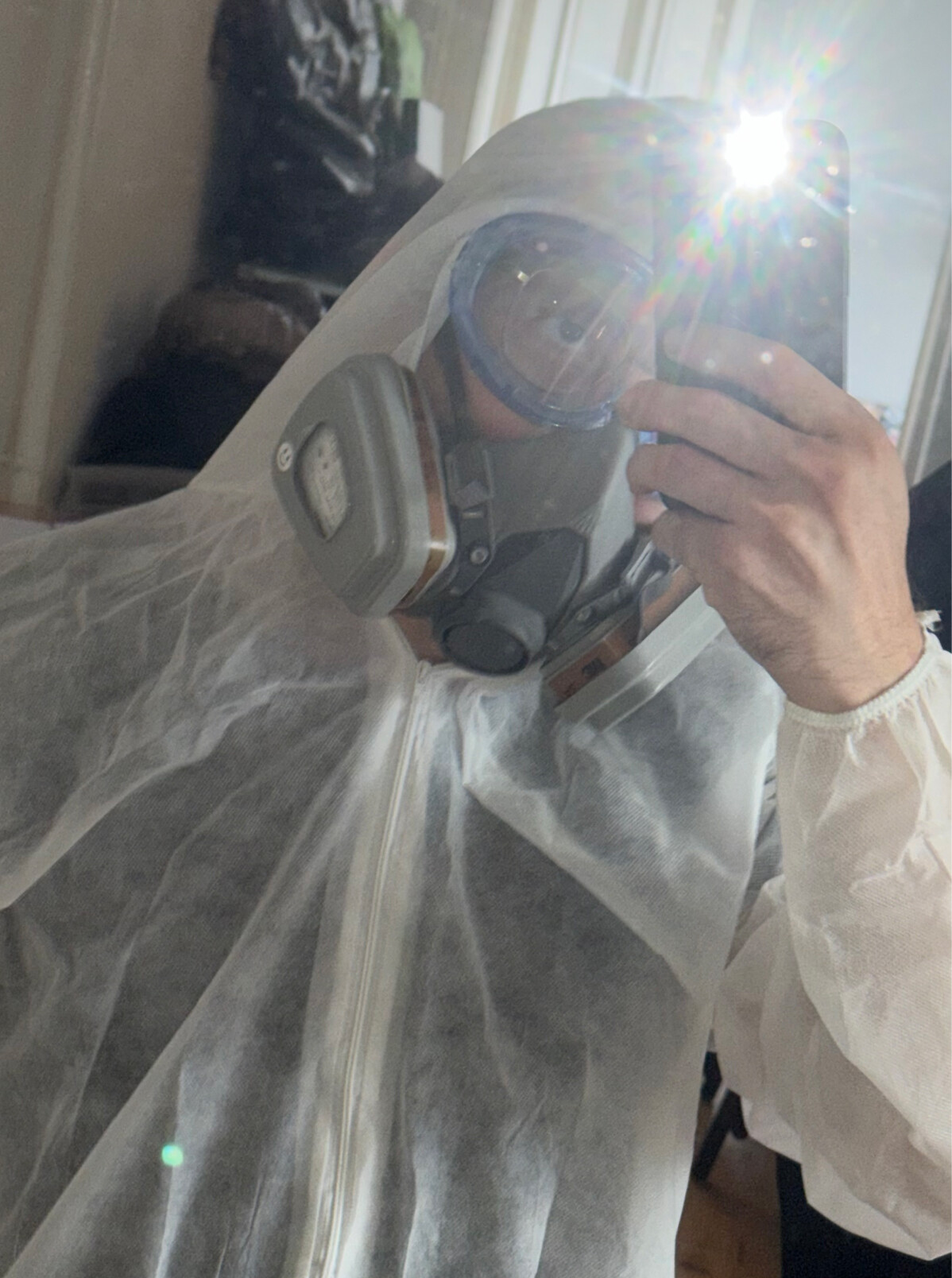
I sculpted everything before in 3D software to see how the structure underneath the fabric should look, but with the Wildfire series, or bigger objects and with Membranes, I was doing that just by hand, trying to roughly follow the idea of that shape. It gives this material kind of resistance, which is a nice interplay.
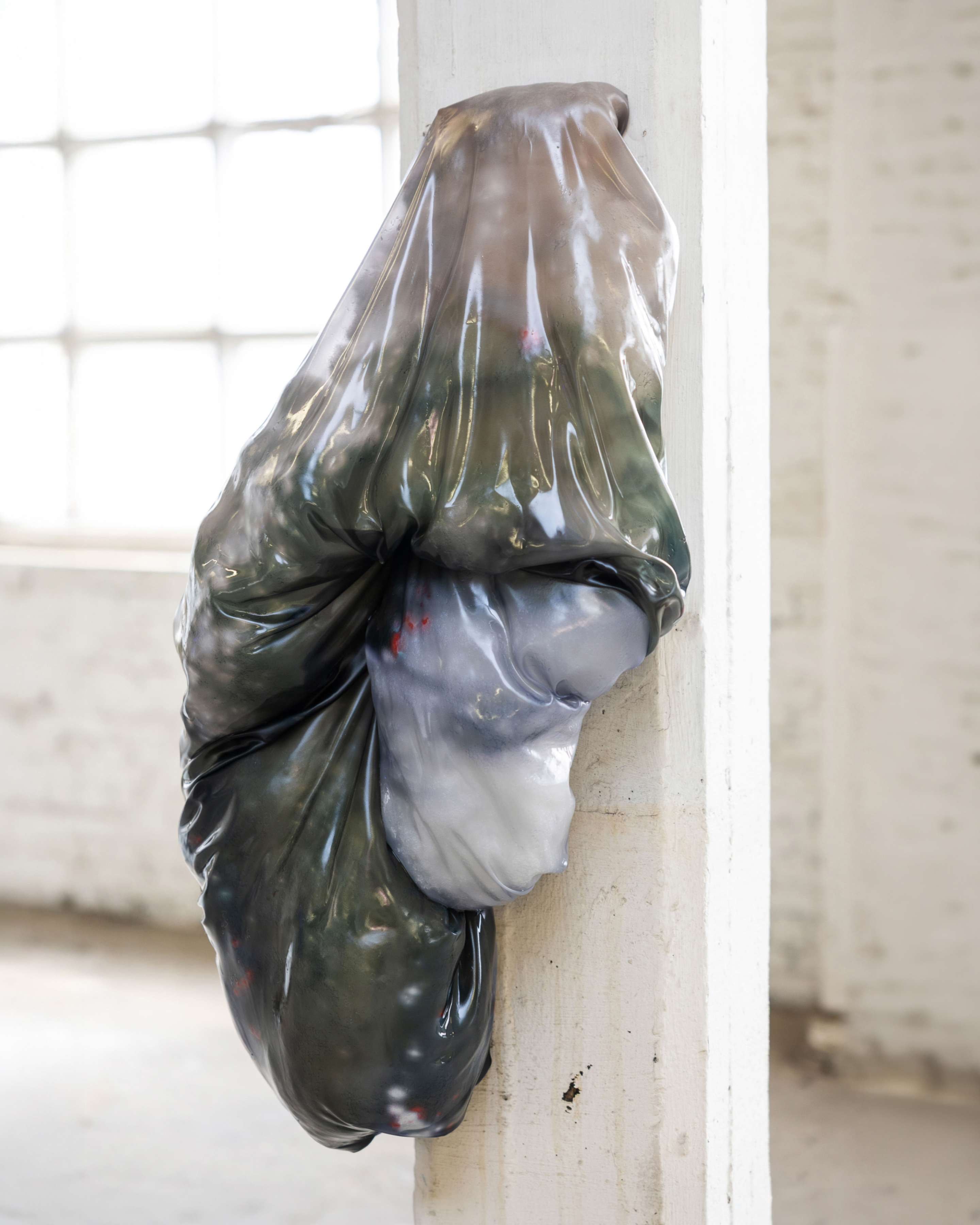
I'd love to be able to see them in person, I feel like it's such a different experience.
Alex: Yeah, I'm so fascinated by research-based arts. At some point, I would love to go into art and science territory, maybe collaborate with biologists. I have some biologist friends, sometimes I’ll ask them what this particular shape reminds them of, or how this kind of bacteria would be structured and so on. I'd love to have a microscope myself and take photographs. I’m fascinated by artists who work with living organisms, growing mycelium, like those fabrics which are made by bacteria. Maybe at some point, I will go to this territory, we'll go see.
So your dream collaboration would be with a scientist?
Alex: Yeah, absolutely, I mean, on so many levels. What if the fabric I use is actually made by little creatures, bacteria or mycelium? It's crazy because it suggests that the world is bigger than what we can see and obviously what we can perceive. I'm interested generally in my work, with this idea of clarity and non-clarity, since humans are made out of billions of tiny organisms which are somehow organised into bigger structures. It’s incomprehensible.
It's like you're creating your own species with these sculptures, and I'd love to see if you make a whole new discovery from this.
Alex: Yeah that would be amazing. I think the science and art approach are seen as different sides, but really they’re looking for something similar.