

Some people believe that recognizing a pattern is the same as breaking it. This month’s exhibitions know otherwise. In true Pilot fashion, across a myriad of mediums and material practices, artists examine the systems through which a life becomes legible: gender, technology, memory, desire, ecology, belief, architecture, and the stories we inherit about ourselves. Their subjects are not unaware of these forces, as they each seem to understand them intimately. What remains uncertain is whether understanding offers any meaningful protection.
That tension assumes markedly different forms. Melody Tuttle locates it within the private rituals of femininity that persist long after the performance is over. Oscar yi Hou finds it in the fleeting intimacies of nightlife, where identity softens beneath collective desire. Darcy Whent turns to folklore and religion to ask why some invented stories become truth. Wenfei Quan examines a digital landscape in which proving one's humanity has become a recurring task. Alix Vernet and Alannah Farrell linger on the traces left behind by changing environments, obsolete structures, and places transformed beyond recognition. Meanwhile, Brenda Cabrera, Yulia Iosilzon, and Taylah Hasaballah imagine worlds where distinctions between bodies, ecosystems, and materials begin to blur. Lastly, throughout Brittney Leeanne Williams's work, the body itself becomes an unstable container for memory, experience, and imagination.
Taken together, these exhibitions offer an archetype for anyone who has ever mistaken self-awareness for healing. They are for people who have identified the pattern, named the system, read the theory, and discovered that insight does not make them immune to repetition. Here, self-knowledge is neither cure nor confession. It is simply the moment when a person realizes they can see the machinery clearly and are still living inside it. Like the most devastating films, these works understand that beauty rarely emerges from fulfillment. More often, it arrives through longing, loss, uncertainty, and the stubborn decision to continue anyway.
Alix Vernet: LANDMARKS
Chapter NY | 60 Walker St, New York
September 9 - October 17
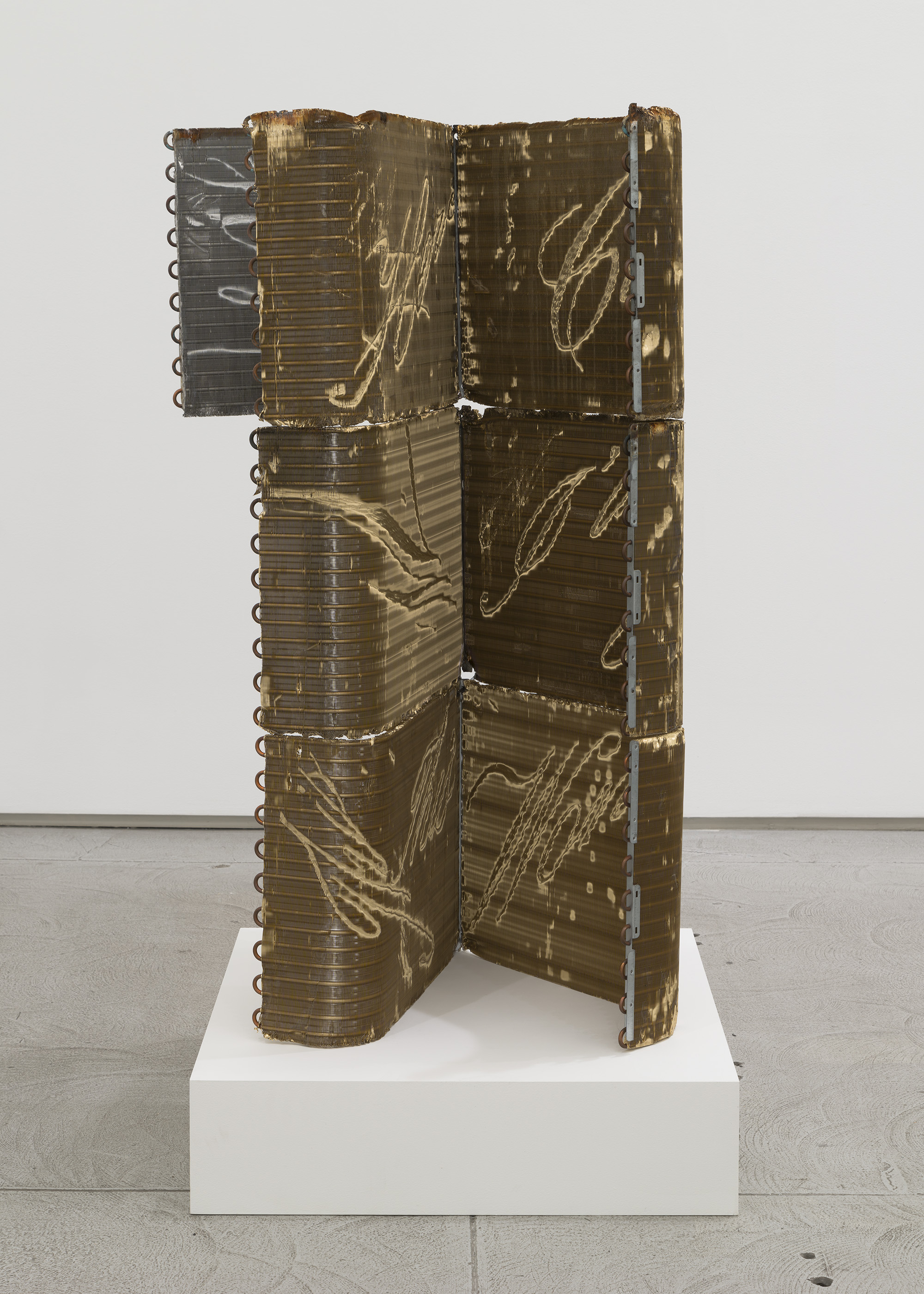
Alix Vernet has the kind of eye that makes you question your own. Following her residency at 99 Canal and exhibitions like Eden at Market Gallery, she's built a practice around noticing what everyone else ignores: a rooftop floor, a fragment of ornamentation, a battered air conditioner hanging from a fire escape. In her latest solo show LANDMARKS at Chapter NY, those discarded condensers become the unlikely stars of the room, standing somewhere between monuments, ruins, and living organisms. Alix Vernet has built this entire exhibition around the kind of urban details most of us train ourselves to edit out: air conditioners, metal grates, architectural remnants, surfaces marked by weather, labor, and time. The cool thing about Vernet isn't that she finds beauty in unexpected places. Lots of artists do that. It's that she makes you feel slightly embarrassed for having overlooked it yourself. After spending time with her work, walking through New York starts to feel a little different. You catch yourself staring at things you used to filter out.
The first time I was able to see Alix Vernet's work was in Eden. I remember becoming obsessed with a series of works derived from the rooftop floor itself, an early indication of what makes her practice so compelling. She adapted a sixteenth-century fresco-transfer method to lift the most eroded portions of Market Gallery’s rooftop, preserving fragments of paint, fossilized bottle caps, runoff, and other evidence of a decade spent partying there. Once used to rescue murals from damaged Florentine cathedrals, the conservation technique allowed her to treat a disappearing social world with the gravity of a historical monument. In LANDMARKS, that same impulse persists, perhaps suggesting that a landmark is not necessarily what a city chooses to remember, but what someone cared enough to notice before it disappeared.
Darcy Whent: Soft Bodies, Hard Frames
Kristin Hjellegjerde Gallery | 2414 Florida Avenue, West Palm Beach
September 18 - October 24
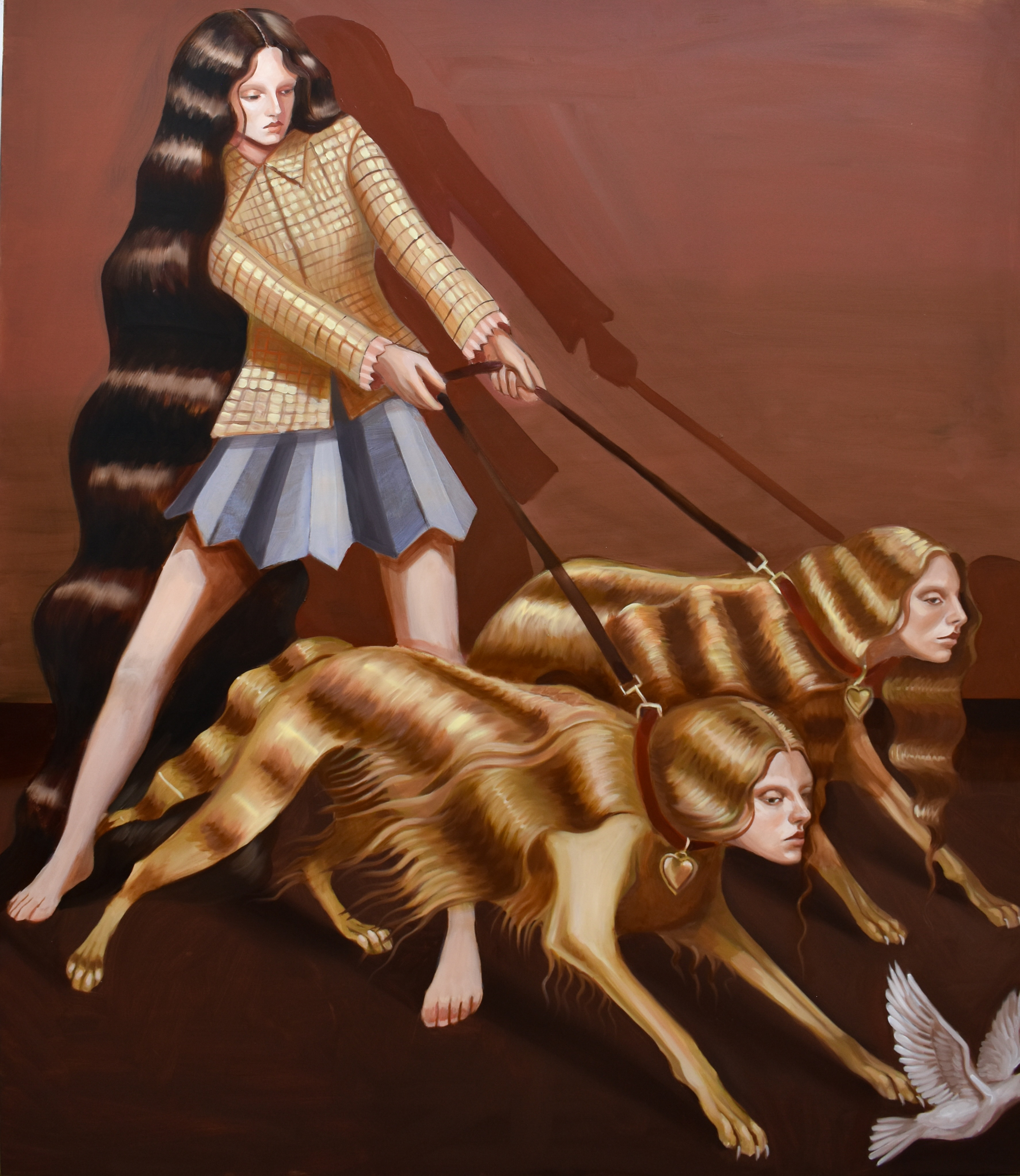
Have you ever outgrown a version of yourself before knowing who comes next? I first came across Darcy Whent's work while putting together an early version of this month's list, back when the theme was still elusive. All I knew was that I kept gravitating toward artists wrestling with inherited stories: about femininity, adulthood, belief, identity, and what happens when those narratives suddenly stop making sense. Out of curiosity, naturally I started polling my close friend's story on Instagram for their opinions. What surprised me wasn't their answers but how quickly I found myself defending Whent's inclusion as though the decision were somehow personal. Maybe I liked the opposition. Maybe I liked that her work resisted easy consensus. Or maybe I recognized something I couldn't yet name.
Whent has described painting as a way of processing psychological experiences without forcing them into resolution, and Soft Bodies, Hard Frames thrives in that uncertainty. Women, eggs, birds, vines, fairy tales, religious symbolism, and half-remembered stories drift through compositions that feel suspended between childhood and adulthood, fantasy and doctrine. More importantly, they're gorgeous.Her paintings possess the kind of stylized, theatrical beauty that pulls you in before you realize they're quietly asking larger questions about belief, power, and growing up. If self-awareness is supposed to be a cure, Whent's paintings gently suggest otherwise. Sometimes all it gives us is a clearer view of the questions we're still carrying, and the uncomfortable realization that growing up isn't the moment you find certainty, but the moment you understand it was never coming. Sometimes the bravest thing a person can admit is that they're still figuring it out.
Oscar yi Hou: Nightcrawling
James Fuentes Gallery | 52 White St, New York
September 11 - October 10
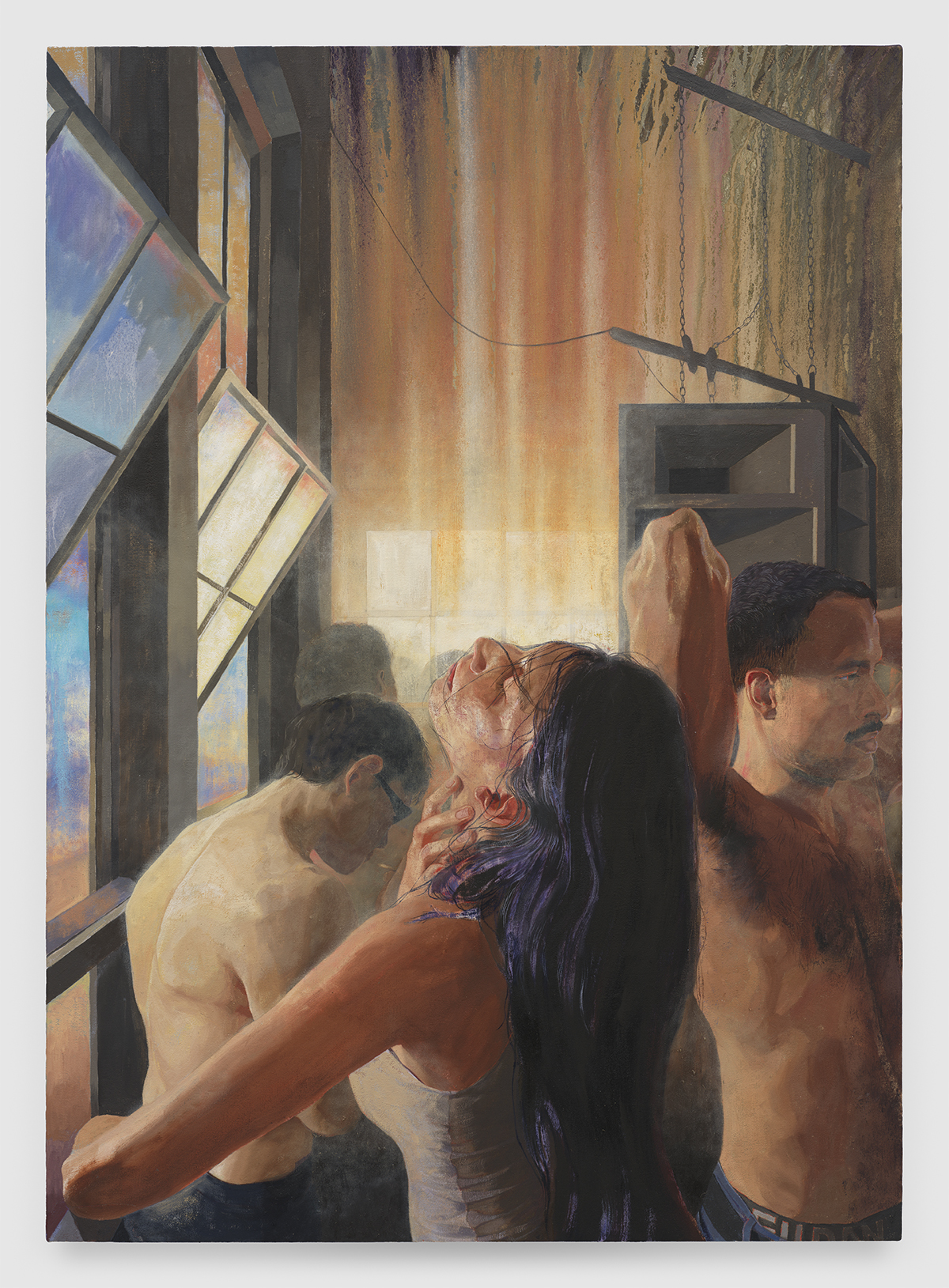
How well do you really know the person you become after dark? Oscar yi Hou arrives at Nightcrawling fresh from a summer residency in Fire Island Pines with fellow painters and close friends Sasha Gordon and Amanda Ba. Working under the name Man Car Sash, the trio borrowed from the Surrealist game Exquisite Corpse, surrendering individual authorship to chance, intuition, and the strange intimacy of making something together. That same willingness to lose control courses through yi Hou’s third solo exhibition at James Fuentes.
His earlier portraits often held their subjects inside intricate architectures of symbols and text; here, the walls come down. Faces surface through sweat, colored light, and atmospheric washes before slipping away again. Bodies melt into the room. The crowd becomes its own weather system, the kind that can save you, consume you, or forget you by morning. It is an exhilarating turn from an artist whose world has always moved freely between poetry, queer theory, Chinese calligraphy, dance music, political history, and a dirty joke delivered with impeccable timing. yi Hou has spoken about once using theory as armor against vulnerability; in Nightcrawling, he appears ready to risk being felt before he is fully understood. These paintings know what every great night out eventually teaches us: you can spend years constructing a self, only to lose it within minutes of finding the right room. Pleasure may be temporary, but perhaps permanence was always the least interesting thing about it.
Brenda Cabrera: La Pesca
Project Room at El Apartamento | Calle de la Puebla #4, Madrid
September 10 - November 7
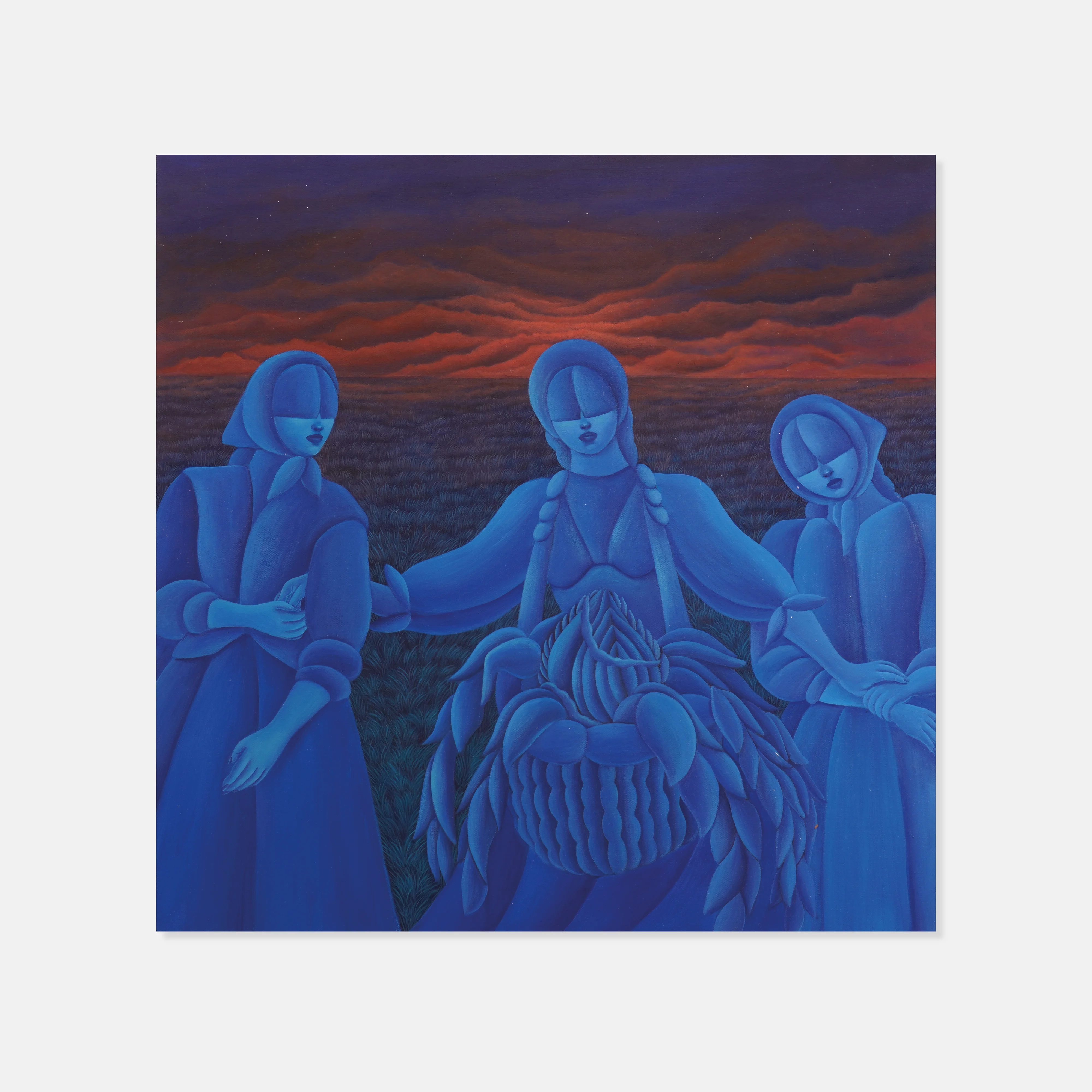
Some artists have ideas. Others have a world. Brenda Cabrera belongs firmly to the latter category. In La Pesca at El Apartamento, the Cuban painter constructs an oceanic mythology populated by her "Prototipos," hybrid beings that drift between human, animal, and something else entirely. Set within a primordial sea where science, ritual, ecology, and fantasy coexist, the exhibition imagines existence as a continuous process of exchange. Nothing remains fixed for very long, including ourselves.
What pulled me in wasn't the theory, but the paintings themselves. Cabrera possesses one of those rare visual languages that feels immediately recognizable. Her figures are strange, elegant, playful, slightly unsettling, and completely her own. Her compositions are dense yet effortlessly readable, layered with luminous colors, fluid contours, and figures that seem to emerge from and dissolve back into their environments in the same breath. Looking at the work, it feels less like an image and more like entry into a fully formed psychological universe. Every color, creature, and gesture appears governed by its own internal logic, creating a body of work that feels both deeply contemporary and detached from contemporary trends.
Have you ever looked back at an old version of yourself and felt relieved they no longer exist? That question lingered with me throughout La Pesca. Across its hybrid creatures, shifting identities, and dreamlike waters, Cabrera treats transformation not as something traumatic or exceptional, but as the closest thing life offers to certainty. Perhaps that's what makes the exhibition feel so liberating. In a culture obsessed with defining exactly who we are, Cabrera remains committed to what else we might become.
Melody Tuttle: You Should Smile More
Project Room at Rhodes Contemporary Art Gallery | 65 Great Portland Street, London
September 3 - September 26
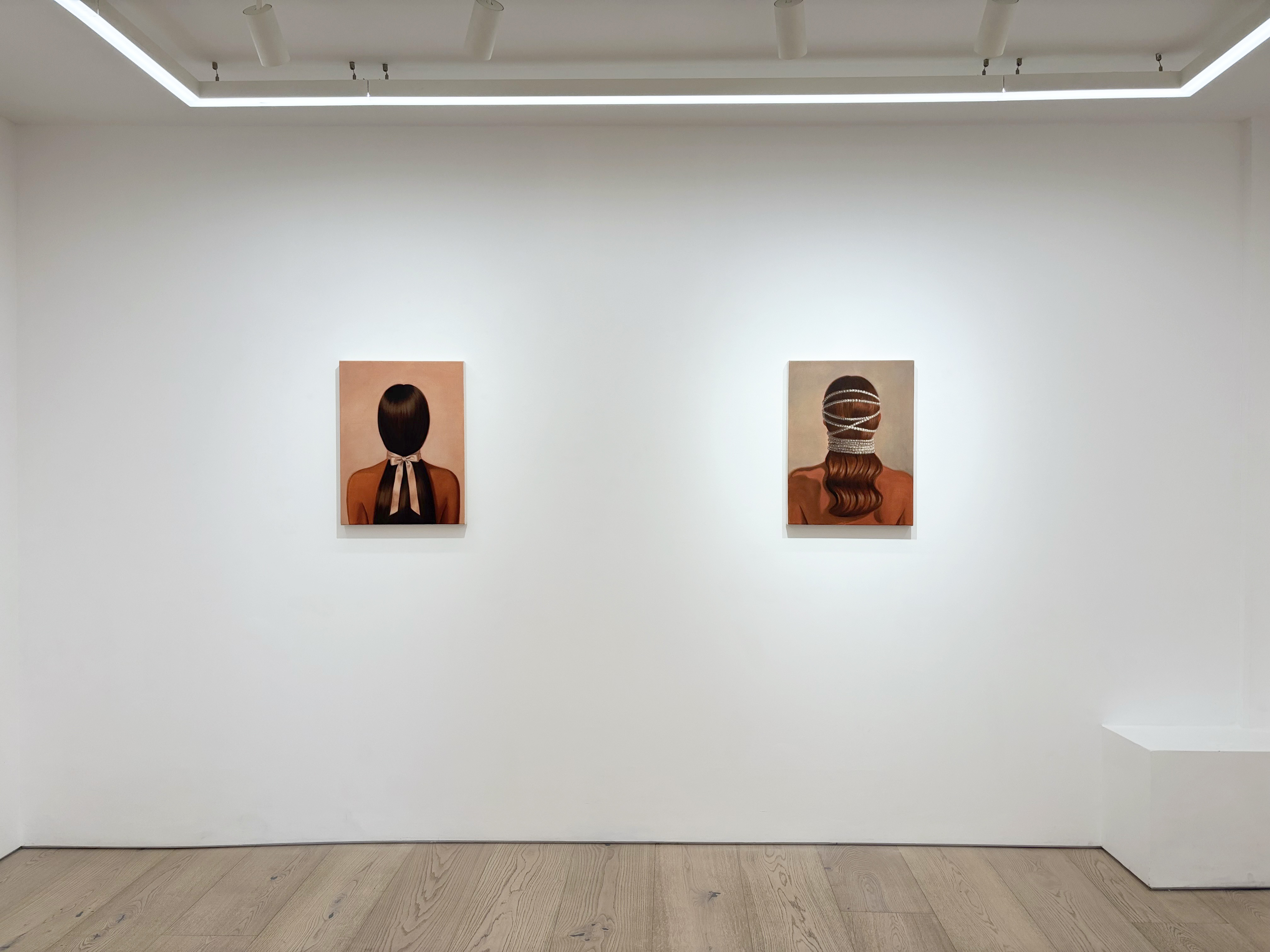
There is a particular kind of loneliness that comes from performing for an audience that isn't there. Melody Tuttle's You Should Smile More lives in that space. Across dressing rooms, mirrors, bedrooms, and transitional interiors, her figures appear caught somewhere between becoming and unraveling. We rarely see the main event. Instead, Tuttle focuses on everything around it: the preparation, the aftermath, the moments spent alone with a version of yourself that no longer needs convincing.
What makes these paintings so effective is Tuttle's ability to transform familiar scenes into psychological landscapes. Her compositions are cinematic without feeling staged, balancing intimacy and distance with remarkable control. Every glance, gesture, and fragment of interior space feels loaded with implication. The figures often appear suspended between confidence and vulnerability, glamour and exhaustion, visibility and retreat. Like the best films, the paintings trust what remains unsaid.
Perhaps that's why I couldn't stop thinking about them. Most conversations about femininity focus on how women are perceived. Tuttle seems more interested in what happens when nobody is looking. Who are you after the performance ends? Which parts remain? And how much of ourselves do we continue carrying long after we've stopped believing in the role? You Should Smile More never answers these questions. It simply understands that some of the most important ones are asked in private.
Taylah Hasaballah: Indicatrix
The Address Gallery | Via Felice Cavallotti, 5, Brescia
September - October
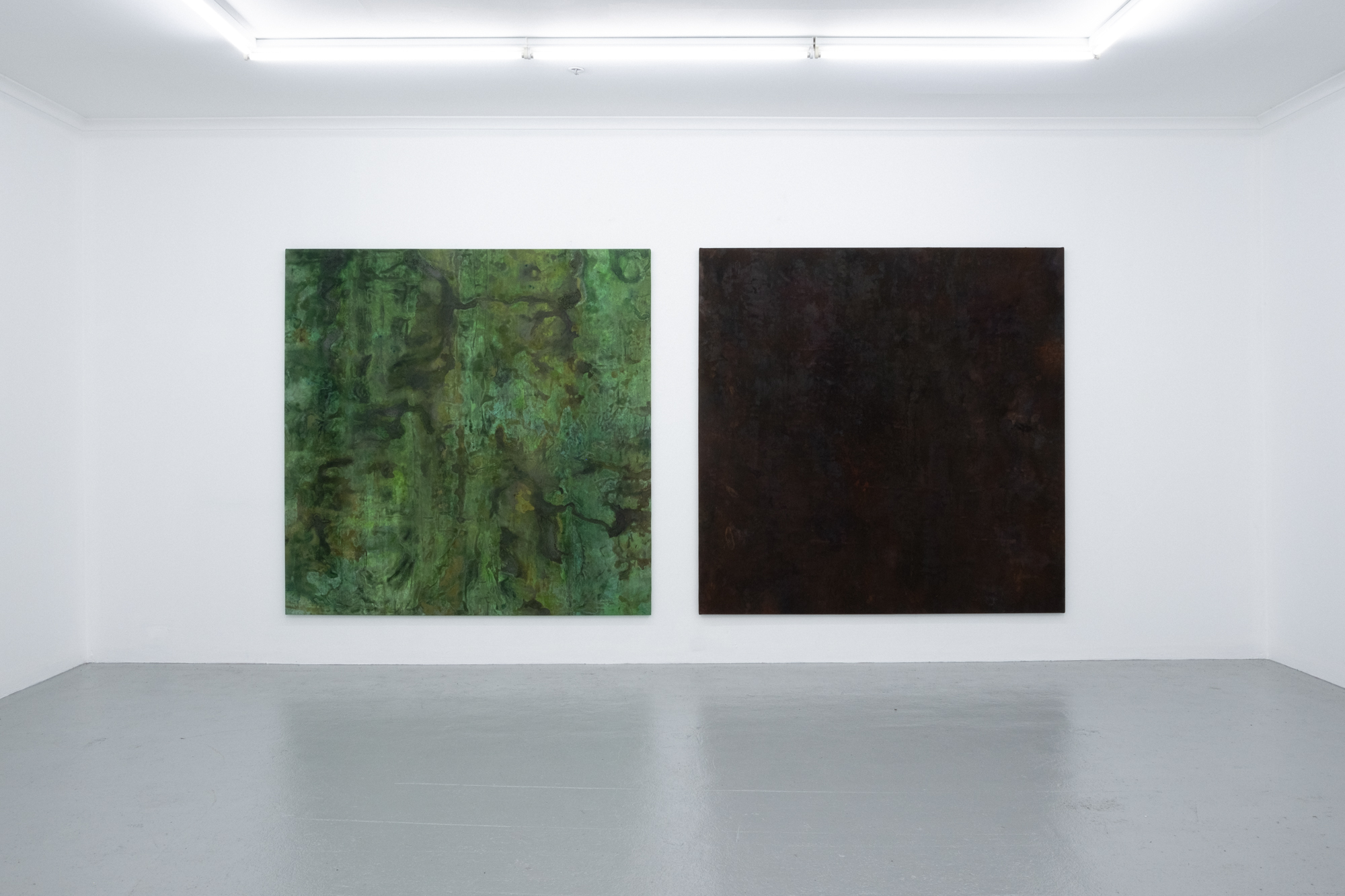
Some people spend their lives trying to leave a mark. Hasaballah seems equally interested in what happens after the mark begins to disappear. Trained in both science and painting, her practice is shaped by an ongoing investigation into entropy, deterioration, and energy loss. Working with metals, salts, acids, and pigments, she creates images that hover on the edge of formation, surfaces that appear simultaneously ancient and futuristic, as though they are emerging from and decaying into themselves at the same time.
Hasaballah's paintings feel less made than weathered into existence. Trained in both science and painting, she works with metals, salts, acids, and pigments that react, corrode, stain, and transform over time, creating surfaces that seem governed by natural forces rather than artistic control. The works in Indicatrix are simultaneously geological and cosmic, precise and unruly. Mineral blues dissolve into burnt oranges, metallic passages shimmer against ghostly fields of white, and forms appear only to disappear again. There is something mesmerizing about the way her paintings refuse stability; every surface feels alive, as if caught in the middle of its own evolution.
We spend so much of our lives trying to preserve versions of ourselves. Old photographs. Old texts. Old identities. Old certainties. Hasaballah's work quietly proposes another possibility: what if disappearance is not a failure of preservation, but an essential part of transformation? In that sense, Indicatrix may be one of the most hopeful exhibitions in this month's selection. It understands that decay and becoming are often the same thing.
Yulia Iosilzon: Zero Gravity
Foundry Seoul | 223 Itaewon-ro, Yongsan District, Seoul
August 22 - October 3

Yulia Iosilzon's paintings feel like they were made by someone who genuinely believes the world would be a better place if we stopped separating everything. In Zero Gravity, humans, animals, plants, oceans, myths, ceramics, textiles, and memories drift together without much concern for where one ends and another begins. Frogs, jellyfish, snails, flowers, and figures appear suspended within lush, saturated landscapes where land dissolves into sea and sea dissolves back into sky. The result is intoxicating. Every inch of the exhibition feels alive.
What I admire most about Iosilzon is her commitment to wonder. There is no irony here. No anxiety about being sincere. Her visual language is rich, theatrical, and unabashedly beautiful, yet never slips into escapism. Beneath the dreamlike surfaces sits a simple but profound idea: nothing exists alone. In interviews surrounding the exhibition, Iosilzon spoke about motherhood and the realization that a mother becomes a child's first world. That sentiment quietly echoes throughout Zero Gravity. Every creature, object, and landscape appears connected to something beyond itself.
In a moment when so much of contemporary life feels fragmented, Zero Gravity offers a rare fantasy: not becoming someone else, but loosening the need to define yourself so completely. For anyone exhausted by the pressure to understand, explain, and categorize every aspect of their existence, Iosilzon proposes something surprisingly radical. Wonder first. Answers later.
Wenfei Quan: Contemporary Hominin
TaThata Gallery | 191 Henry St, New York
September 11 - October 10
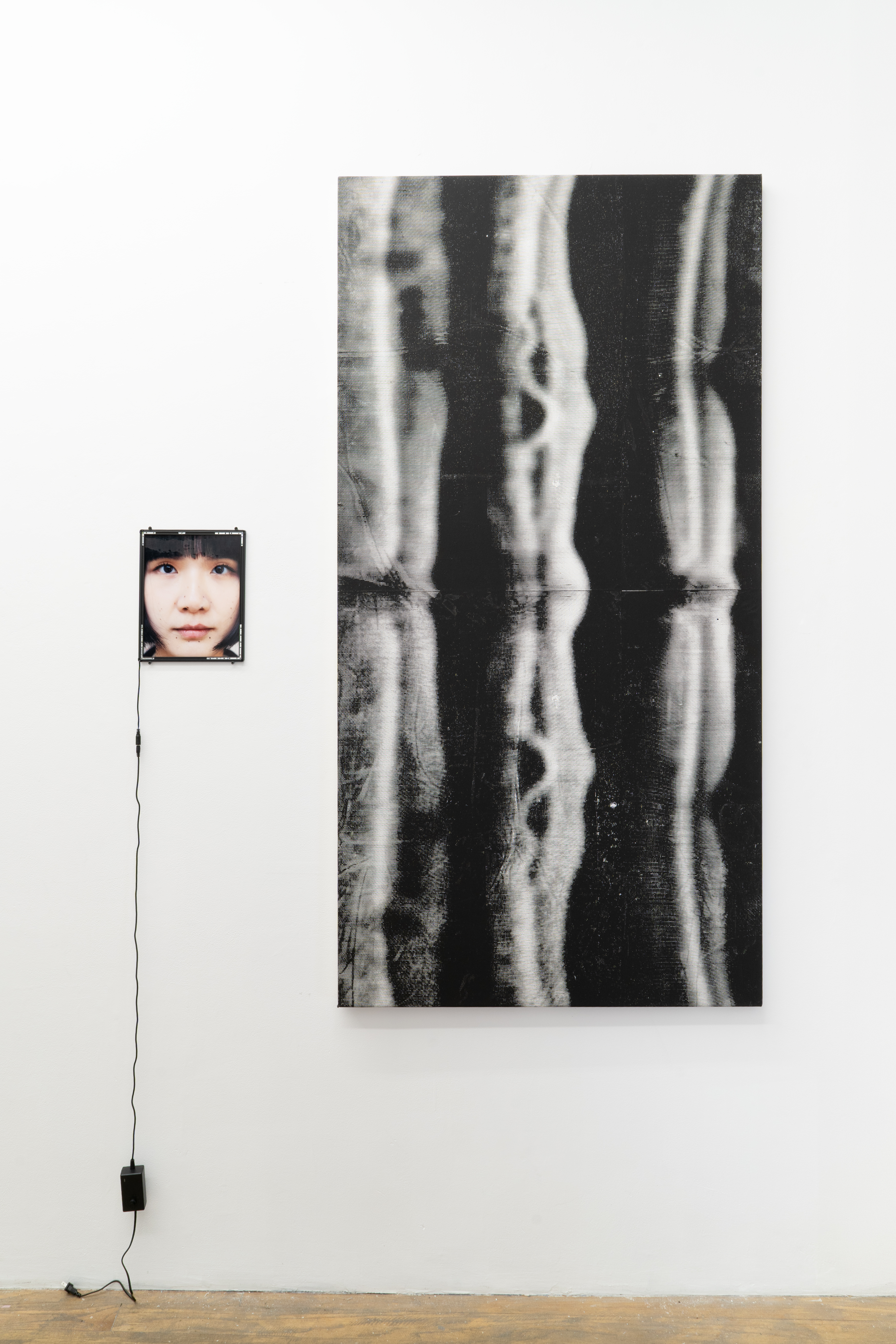
There is something deeply unsettling about seeing your own reflection and realizing it's slightly wrong. In Contemporary Hominin, Wenfei Quan builds an entire exhibition around that sensation. Drawing from artificial intelligence, evolutionary history, photography, printmaking, and installation, she fills the gallery with doubles, mirrors, retinal scans, synthetic faces, and images that seem familiar until they don't. A beauty mark appears where it shouldn't. A gaze feels almost human. An eye becomes a planet. Symmetry repeats throughout the exhibition, only to quietly fail. The result is less technological than psychological. You leave wondering whether the strange thing was the image or your confidence in recognizing it.
I admire how Quan approaches digital culture with the patience of a painter. While so much contemporary discourse around AI feels trapped between utopian hype and doomsday prediction, her work lingers somewhere more interesting: confusion. The exhibition begins with a deceptively simple premise. We live surrounded by systems we use every day yet barely understand. AI is merely the most visible example. Most of us can describe what these technologies do. Far fewer can explain how they arrived here, where they're going, or what they might ultimately produce.
If this month's archetype belongs to people who know too much, Quan offers a particularly contemporary variation: the person who has enough information to recognize that they're lost. Contemporary Hominin captures that sensation perfectly. Not ignorance. Not certainty. The strange middle ground where the familiar begins slipping into something else before you've found the language to describe it.
Brittney Leeanne Williams: Spotlight Exhibition
Vielmetter | 1700 S Santa Fe Ave, Los Angeles
September 18 - October 31
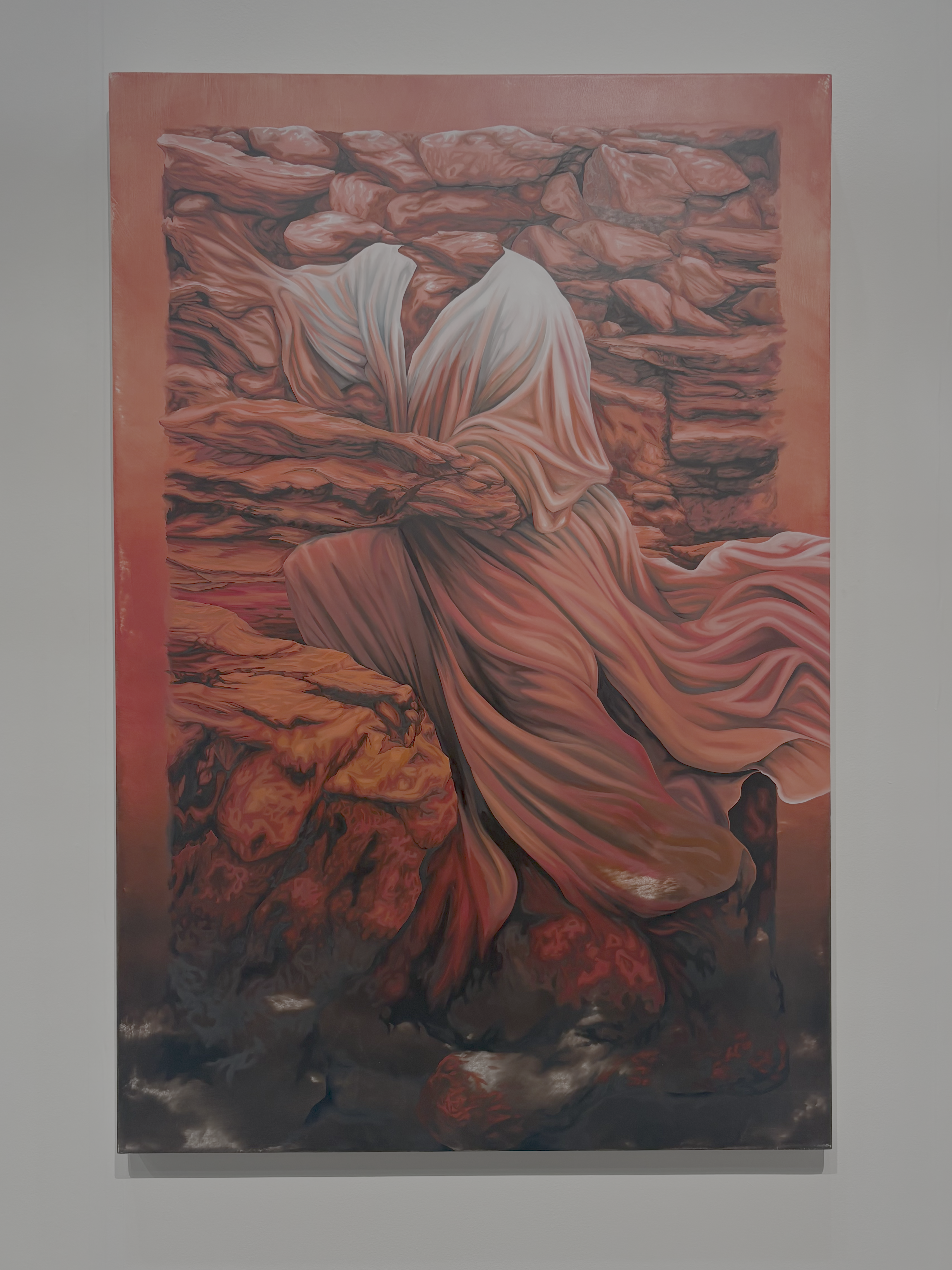
Every month there is one exhibition that makes the list before I've fully justified it to myself. This month, it's Brittney Leeanne Williams. The first time I encountered her work was at The Armory Show and I remember stopping in my tracks. Some paintings ask for your attention. Williams' paintings simply take it. Her figures exist somewhere between body, memory, landscape, architecture, and spirit. Drapery folds into flesh. Interiors open into psychological space. Color behaves less like description and more like atmosphere. You don't always know exactly what you're looking at, but you feel it immediately.
Williams has spoken about treating the body as both figure and vessel, capable of holding memory, dreams, collective experience, and emotional states simultaneously. That sensibility runs through nearly everything she creates. Her paintings possess a rare gravity without becoming heavy, a kind of quiet monumentality that feels increasingly uncommon. They are deeply rooted in lived experience yet remain difficult to fully explain, refusing the kind of instant legibility contemporary culture often demands.
Perhaps that's why I'm recommending this exhibition before seeing the press release. Some artists earn a level of trust. Williams is one of them. In a month filled with artists examining transformation, identity, and self-awareness, her work offers something rarer: presence. Not the performance of it. Not the documentation of it. The genuine article. And that's become surprisingly difficult to find.
Alannah Farrell: Solastalgia
Anat Ebgi | 372 Broadway, New York
September 9 - October 17
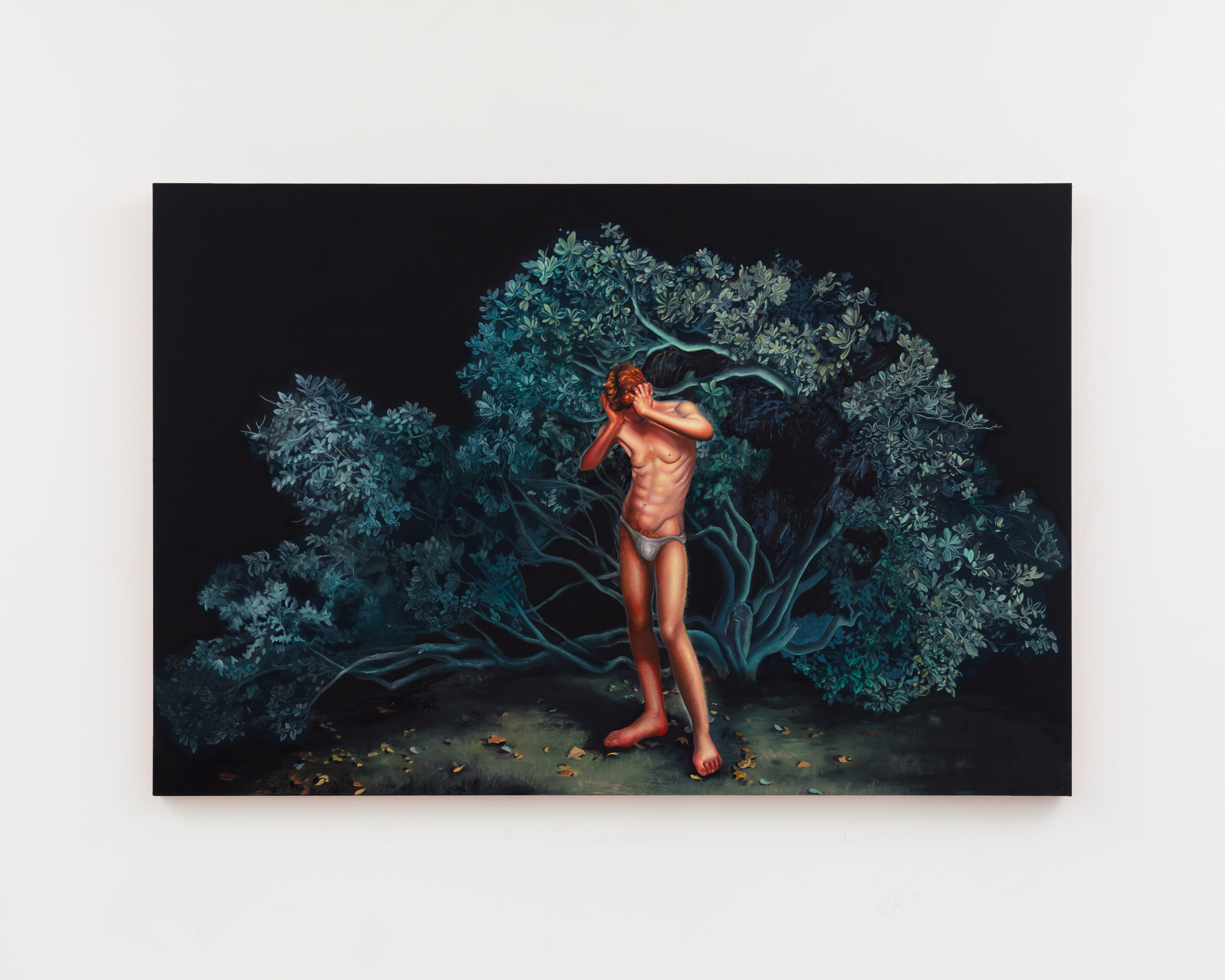
Some losses happen so slowly you don't notice them until they're already gone. That realization sits at the center of Alannah Farrell's Solastalgia. Named after the term describing the grief of witnessing your home environment change while you remain within it, the exhibition moves between intimate portraits and quietly devastating landscapes of rural decline. Empty storefronts, shuttered buildings, abandoned lots, and queer bodies appear with equal tenderness. Nothing here is treated as background. Everything is worthy of mourning.
Farrell possesses an extraordinary ability to locate beauty inside vulnerability. Their paintings are cinematic without becoming sentimental, romantic without becoming nostalgic. Lovers embrace beneath fading sunsets. Figures gather within places that feel simultaneously familiar and estranged. Throughout the exhibition, personal relationships become intertwined with broader questions of community, belonging, and disappearance. While many artists depict change as an exciting act of reinvention, Farrell remains attentive to what transformation costs.
Their work evokes thoughts of a different kind of self-awareness. Not the awareness that comes from therapy, theory, introspection, or social media, but the awareness that arrives when you realize a place, a relationship, a version of yourself, or even a future you imagined is no longer available to return to. There is no solution to that knowledge. No life hack. No growth mindset. Only the choice to keep loving something as it changes. If this month's exhibitions belong to people who know too much, Solastalgia offers their final lesson. Sometimes healing isn't moving on. Sometimes it's learning how to remain tender toward what is already disappearing.