




A shopfront window, white covering the tiled walls, and a concrete floor with some of the paint leftover from past shows. The artworks exhibited here appear quite preoccupied with what we carry forward from interfacing with the past. This space is temporarily where the scraps of digital ephemera have been printed, trimmed, and laid out with care, as if worth keeping in more ways than one. Its question at hand is quite ambiguous: what do we feed the internet, and what does it feed back to us in return?
Nataliya Belova and Sofya Rakitina both come from digital backgrounds, and their multidisciplinary artistic practices probe the algorithms that reinforce our online lives. Beneath that sits a wider worry about consumption. Does this endless scroll shape who we become? Is our sense of self, culture, even reality now curated by invisible algorithmic logic over the lived experience? The show explores the ways in which contemporary culture can still be called organic, or whether it has become generative.
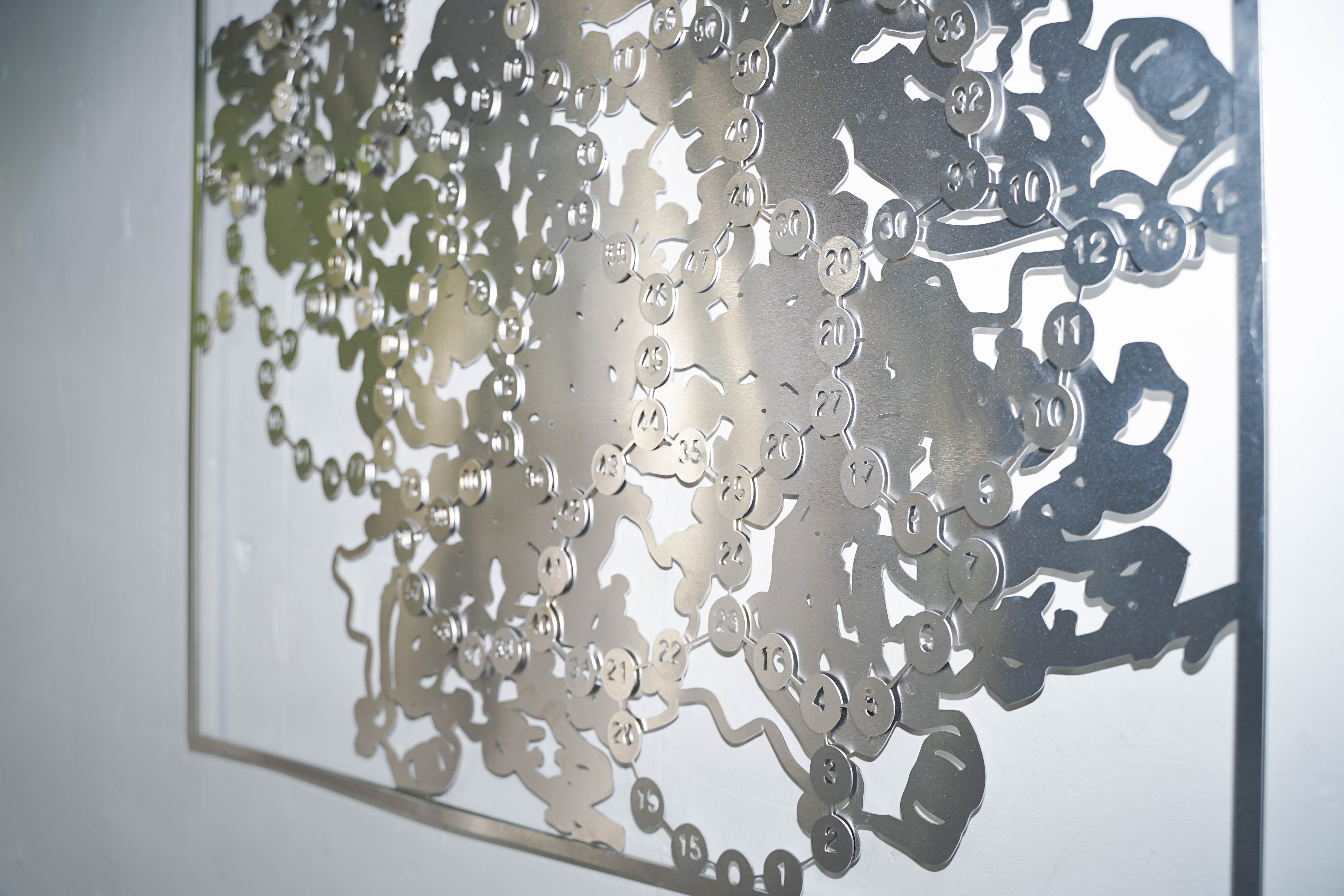
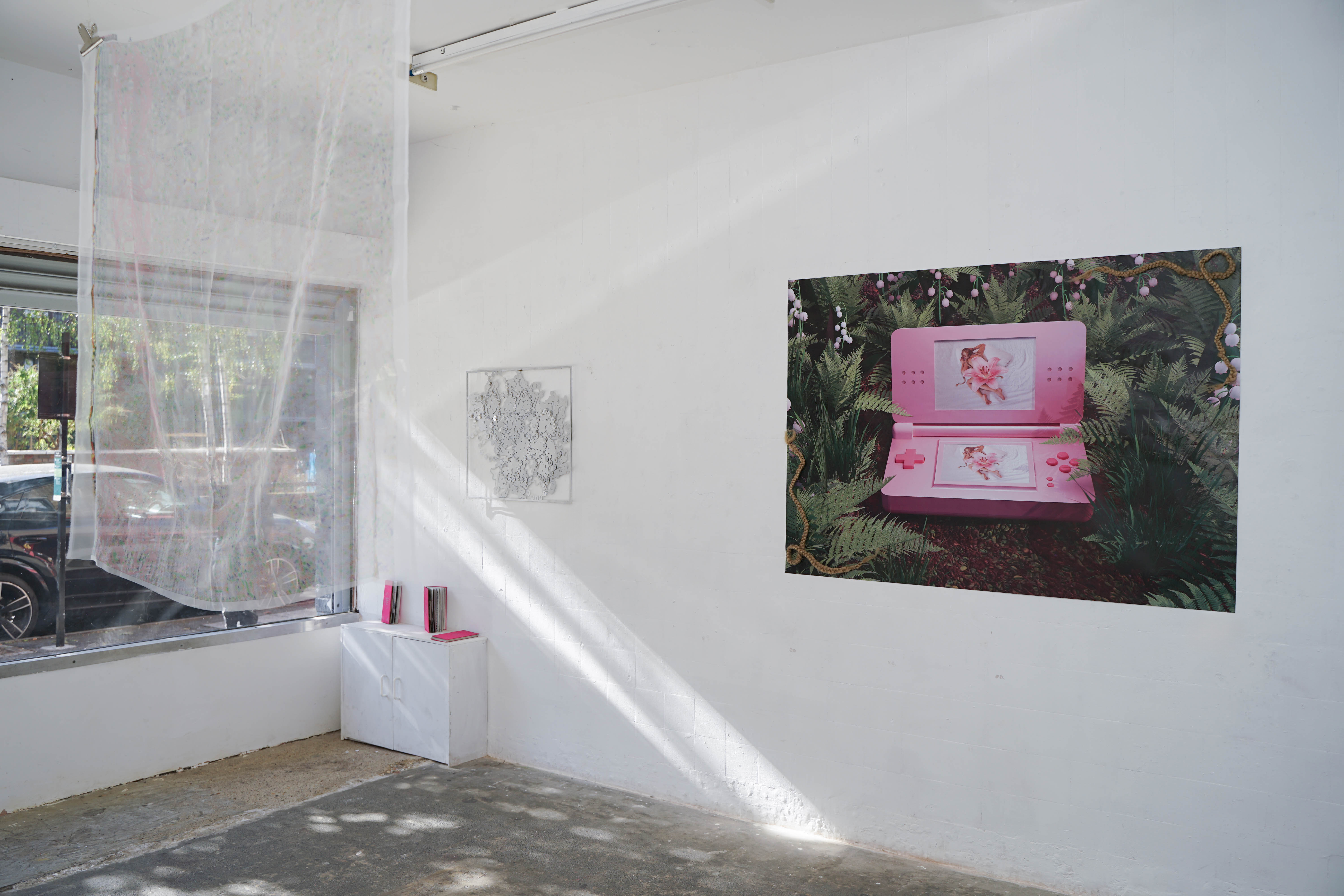
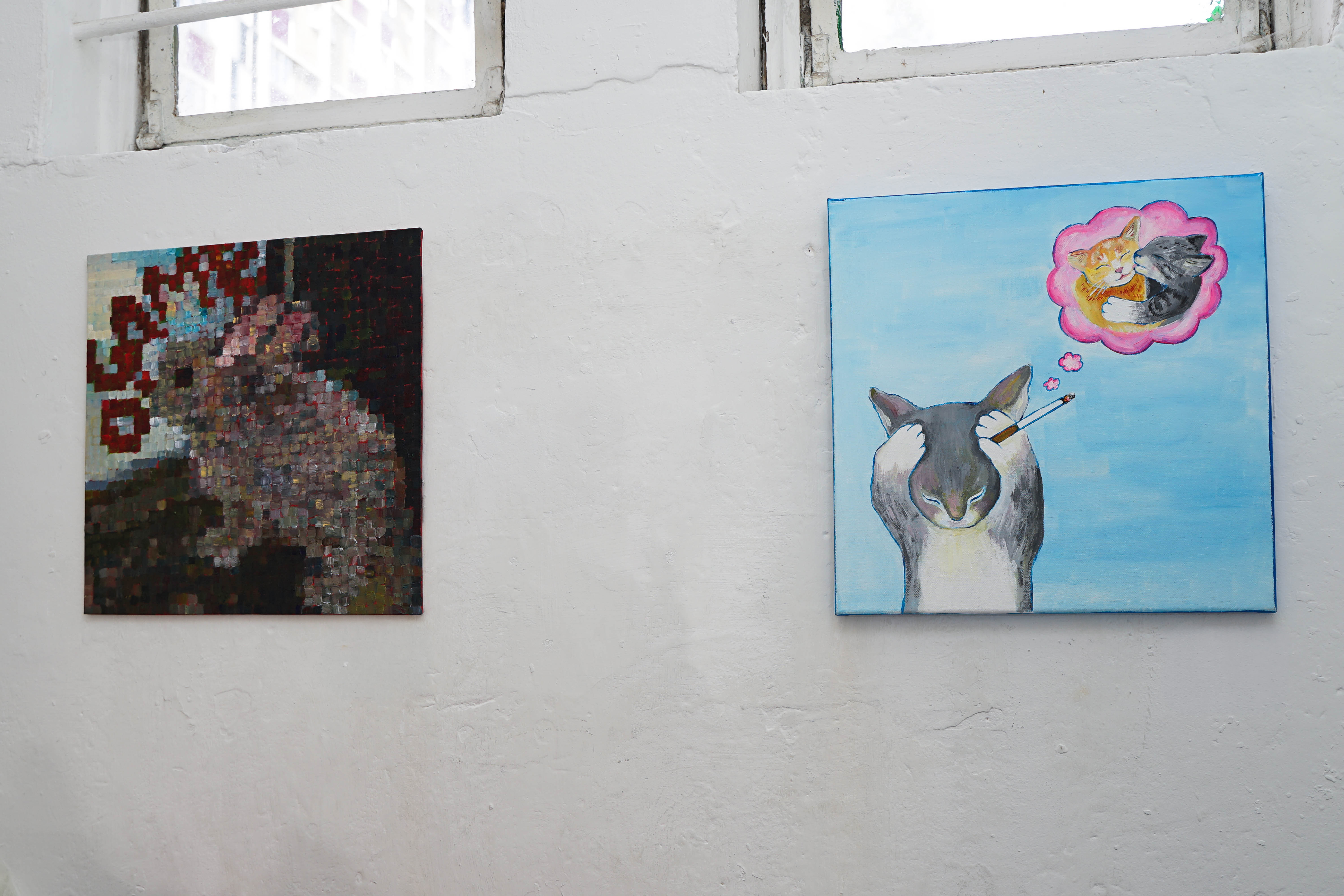
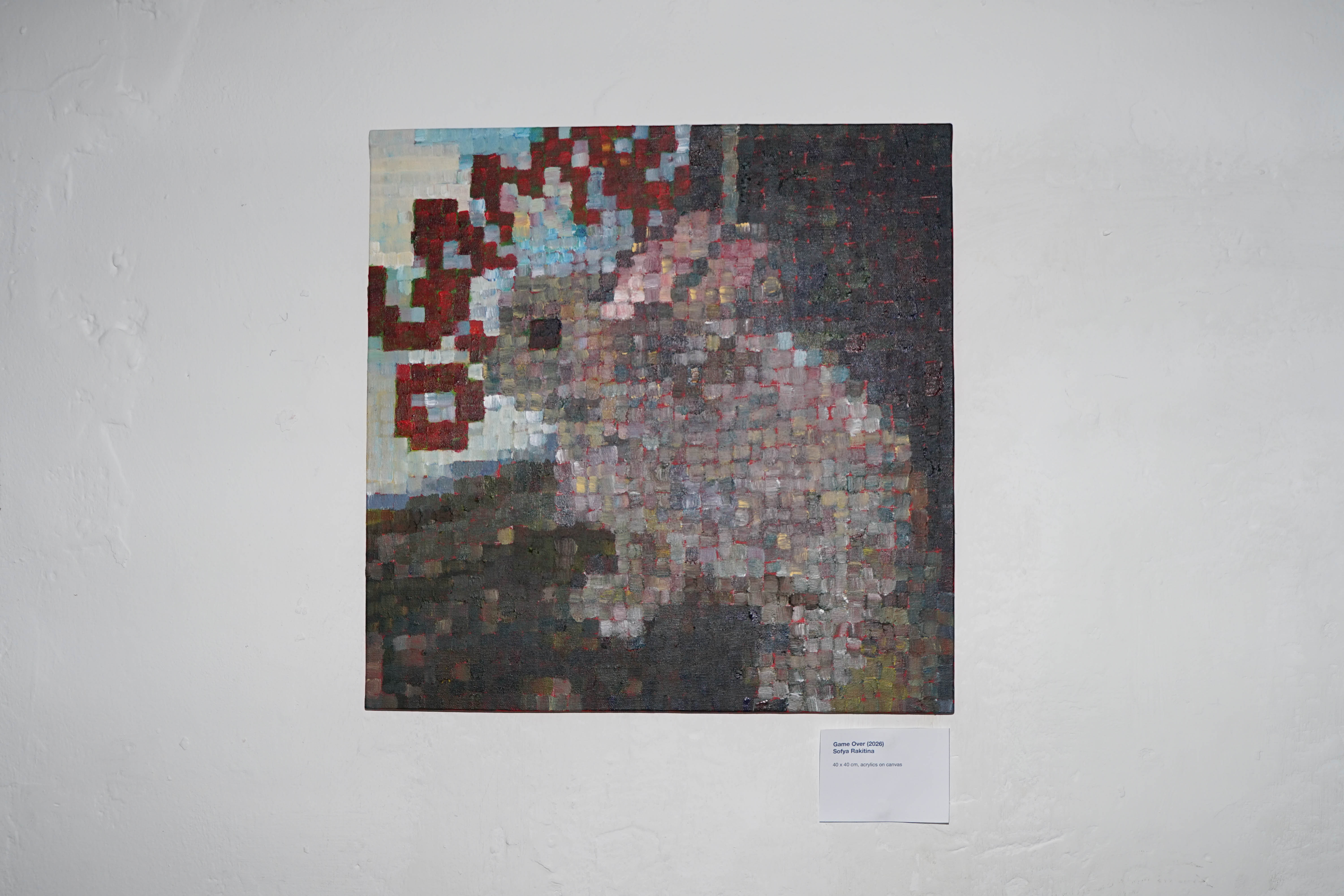
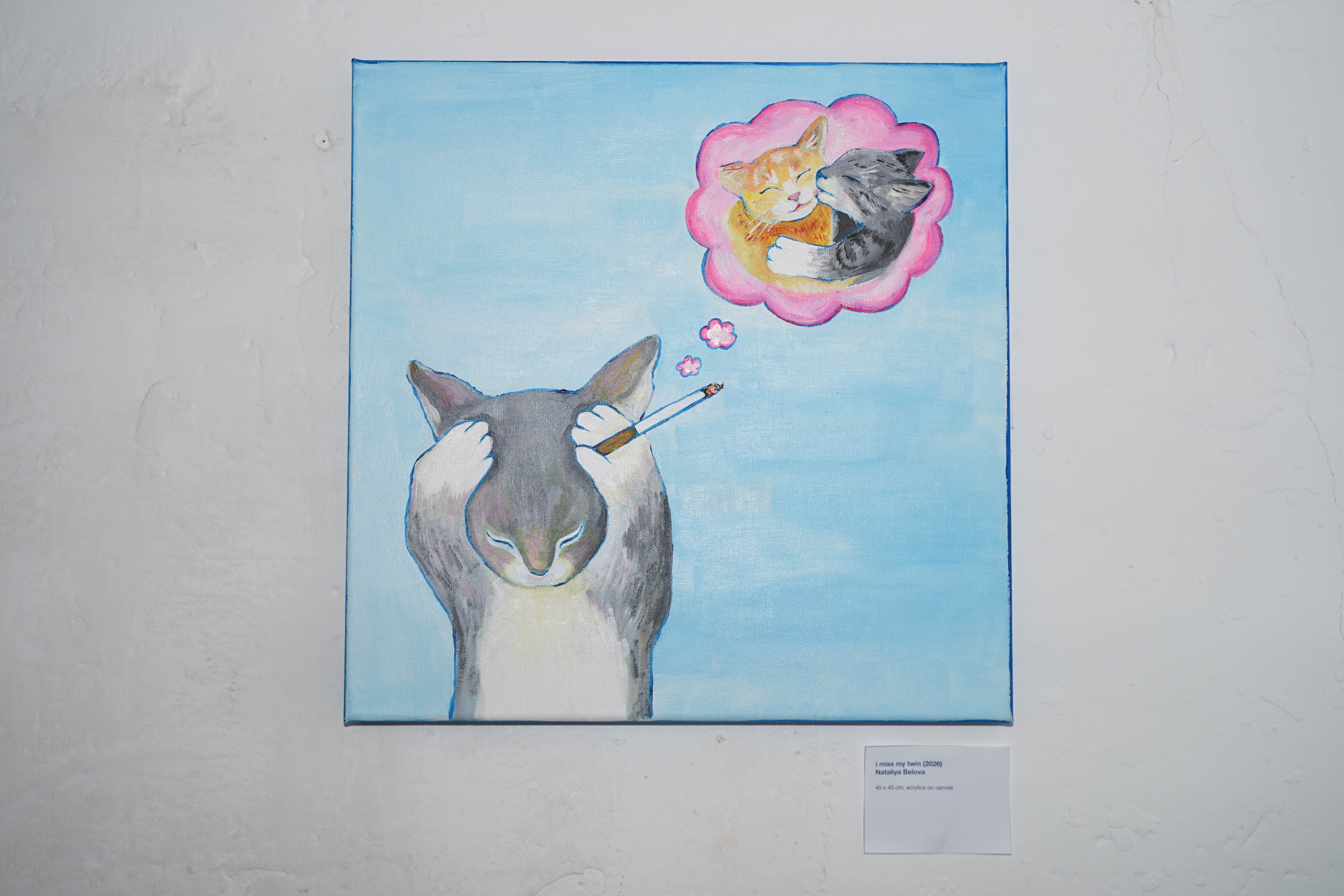
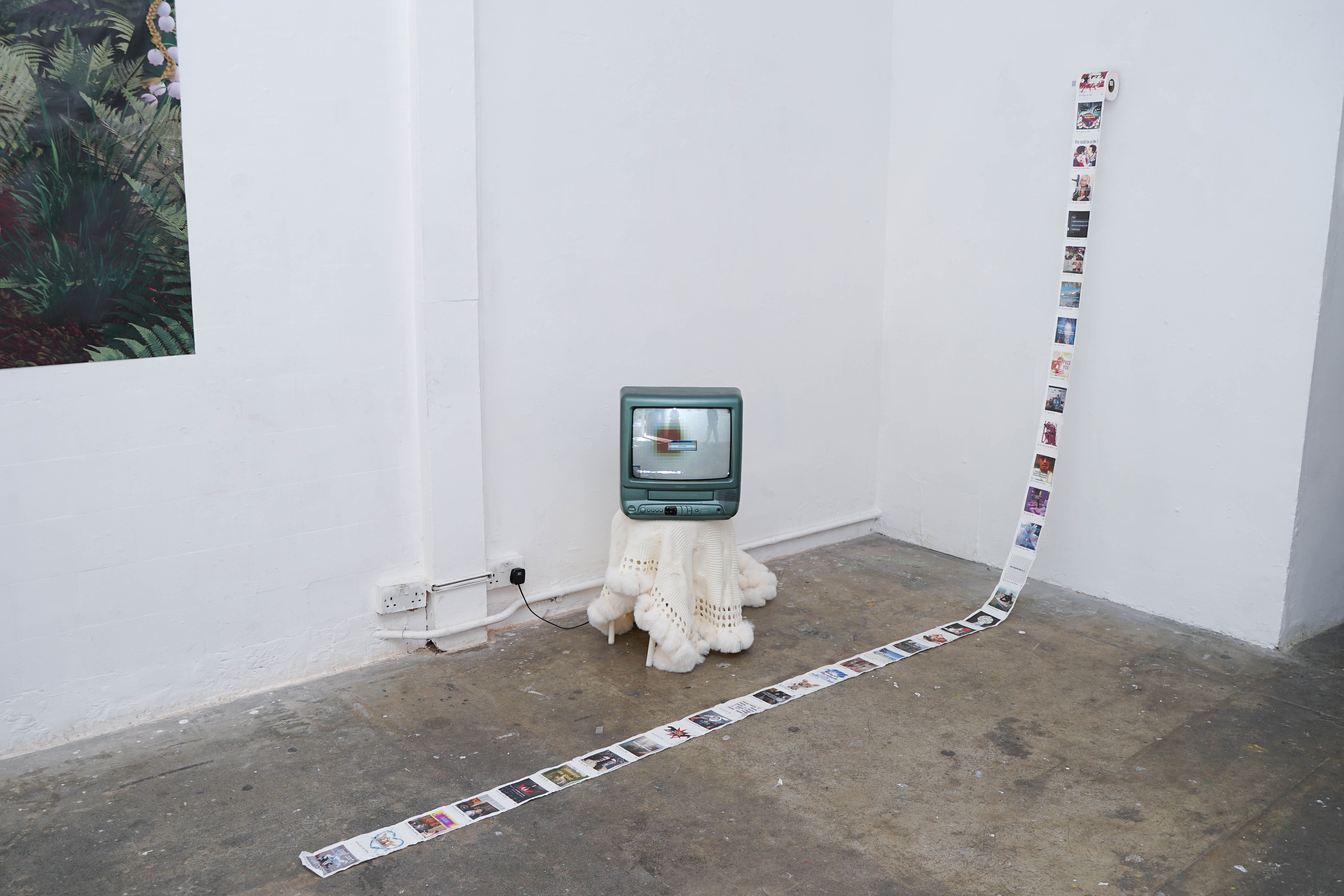
The answer is staged through the tension between the tactile and the virtual, the handmade and the screen-based. A metal sculpture of laser-cut digital diagrams is placed on the wall, reflecting the light from the outside. A toilet roll mounted on the wall unfolds across the floor, printed with a feed of images and memes, transforming the space into a mythical scenery where you can walk the length of a doom scroll. Plates hang on the wall, and silk ethereal coloured cloth hangs across the room from the ceiling. The look is unmistakably early-2000s, but the questions appear current.
In a corner where nostalgia turns tactile, a green Bush CRT television (VCR still present) sits on a stool draped in cream crochet. The work Digi-loss (2026) made by Sofya Rakitina is presented as a domestic and obscure nest for such obsolete technology in this present day. The piece seems to be reminiscent of early 2000s net art. On its screen, images overlap in windows, like a desktop left open for a decade and growing mold and signs of decay from the inside.
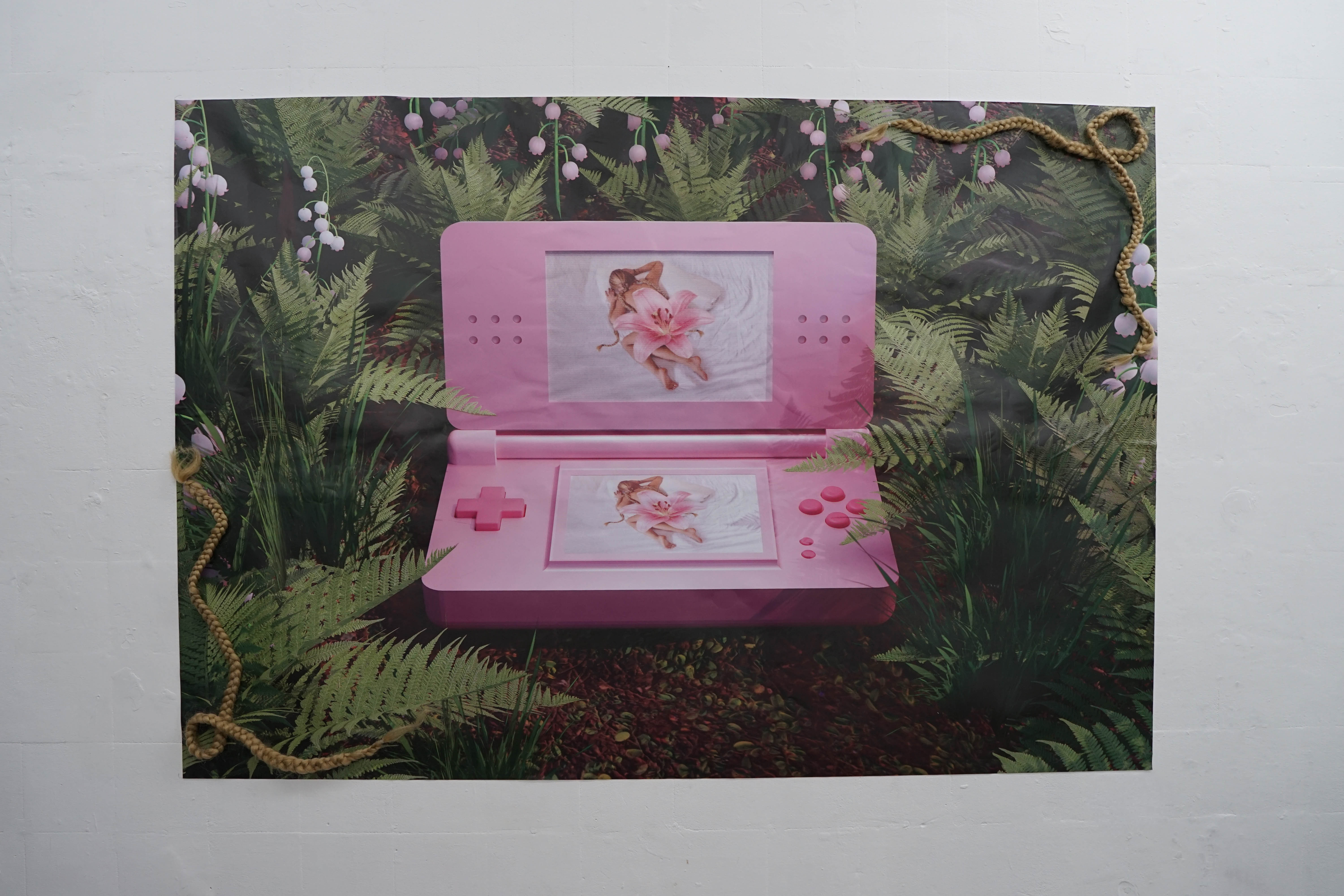
Near the window, the large vinyl print Fern Flower (2026) by Nataliya Belova pulls you in with a pink 2000s Nintendo DS set among ferns and lilies of the valley, with braided hair trailing across the print. It draws on Slavic folklore, in which a magical fern flower blooms only once a year, on Ivan Kupala’s night at midsummer, and only the bravest will find it and unlock the world’s wisdom. The artist uses the myth to examine her own recurring childhood dream of finding it. Is the knowledge she’s searching for already within her? Is she still playing a game to unlock the truth, or is it all a dream? Here, nostalgia is investigated through a childhood memory and inherited story appearing through the soft glow of a handheld screen.
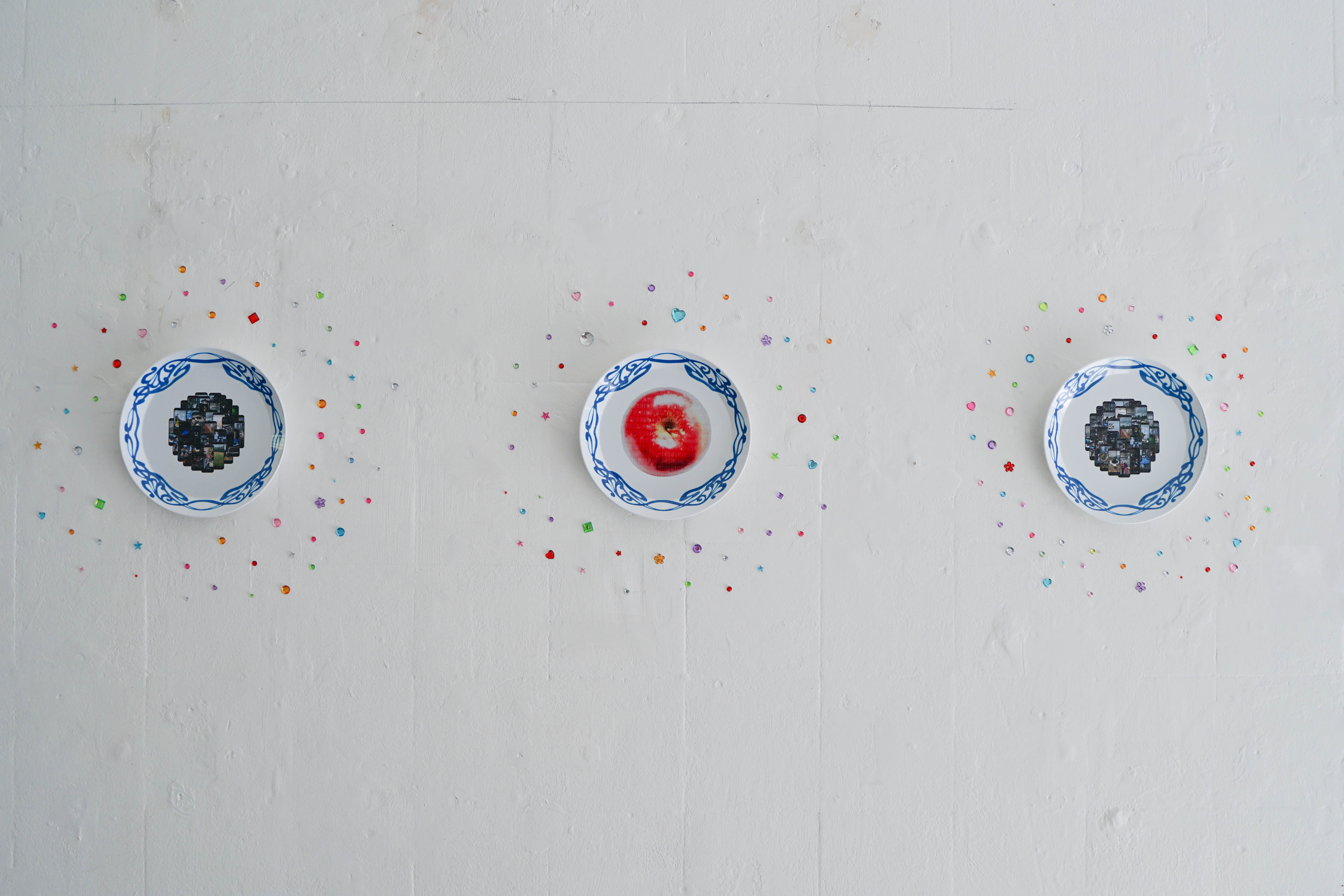
The collaboration between the two artists, a trio of wall-mounted plates, addresses the show’s question most directly. In Slavic folklore, an apple on a saucer is a magical mirror onto alternate timelines. Blue Rimmed Saucers (2026), by N. Belova and S. Rakitina, reimagine the plate as a mirror onto our digital pasts, a circular collection of stories.
Generative Cultures doesn’t seem to claim a particular side in the debate of whether culture can still grow on its own. What makes the work so effective is the convincing attempts to make the case that the scraps we scroll past, the nostalgia of it all, are worth a second look.
Generative Cultures ran from 30 September to 1 October 2026 at Filet, 103 Murray Grove, London N1 7QP.


