



Contemporary culture tends to celebrate peaks. We are taught to look toward milestones, breakthroughs, arrivals, revelations, and moments of transformation as the places where meaning resides. Yet some of this summer's most compelling exhibitions suggest something different. Across photography, painting, sculpture, installation, and immersive environments, these artists are less interested in climactic events than in what remains once they pass.
The figures that populate these exhibitions are rarely in pursuit of something. Instead, they wander through empty city streets after midnight, drift through remembered homes, linger in landscapes shaped by memory, or inhabit identities still in formation. They occupy spaces between certainty and uncertainty, attachment and release, presence and absence. In these works, freedom emerges not through accomplishment, but through surrender: to ambiguity, to change, to care, to the simple act of observing what remains.
Whether moving through Ryan McGinley's sleepless New York, Arash Nassiri's dreamlike diaspora landscapes, Patricia Piccinini's strange acts of tenderness, or Kevin Yuan's nostalgic interiors and reflections, each exhibition locates meaning in the aftermath. Together, they propose an alternative archetype for contemporary life—one that values wandering over arrival, openness over definition, and the overlooked hours after the main event has already ended. These are exhibitions for people who understand that some of life's most meaningful moments happen not at the peak, but in the quiet space that follows.
Ryan McGinley: Night Shifts
Jeffrey Deitch Gallery | 18 Wooster St, New York
June 13 - August 8
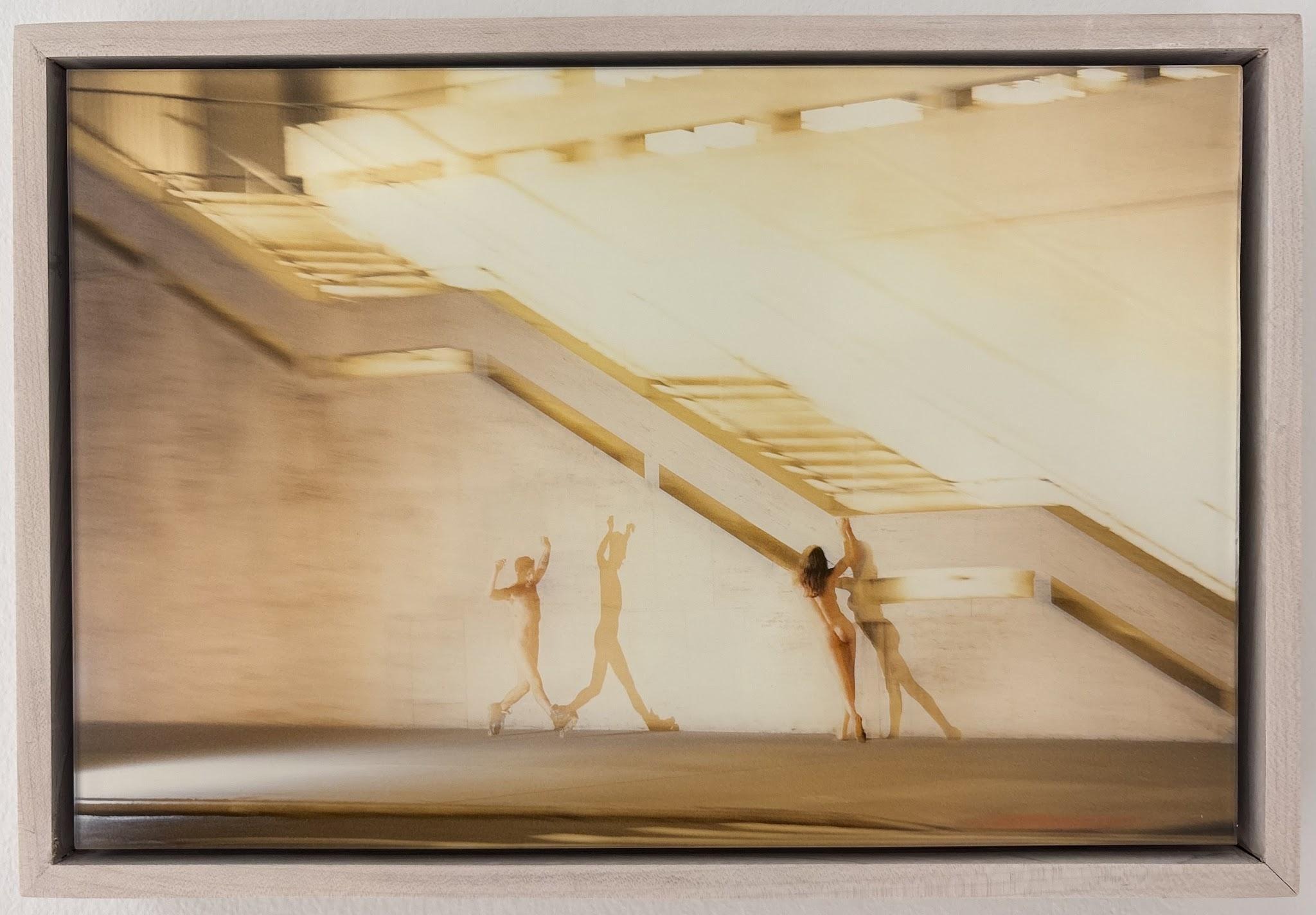
Night Shift, Ryan McGinley’s latest solo show with Jeffrey Deitch Gallery in Soho, New York presents large-scale photographs taken between 9:00pm-5:00am across all five boroughs of New York. What’s special about the photography is that it eludes hope, effervescence, and phantasmagoria (dreamlike illusion). Nude figures, familiar urban spaces, architecture, artificial light, and natural light all blend into compositions that are inherently free and infinitely alive. It highlights bodegas, famous landmarks, streets, etc to expose the quieter, lesser-seen hours of a “sleepless” city. Night Shift establishes a philosophy of what comes after the peak. The work projects the idea of what comes after a peak, what lingers once what preceded dissolved. The images suggest that freedom is not found at the height of experience, but in the aftermath. Of walking, wandering, uninhibited movement, existing without expectation.
McGinley’s work also pushes beyond traditional photographic constraints through its use of long exposures, low-light digital sensors, and a careful orchestration of artificial and ambient light. ability to capture movement, shadow, and illumination with this level of clarity allows the images to exist somewhere between documentation and construction—heightening their dreamlike quality while remaining grounded in real time and place. This technical fluidity mirrors the conceptual framework of the work itself: blurring boundaries between night and day, subject and environment, spontaneity and control, ultimately reinforcing the sense that these moments are both fleeting and deliberately preserved.
Arash Nassiri: Night Mode
Fondation d’enterprise Pernod-Ricard | 1 Cr Paul Ricard, 75008 Paris
May 11 - July 18
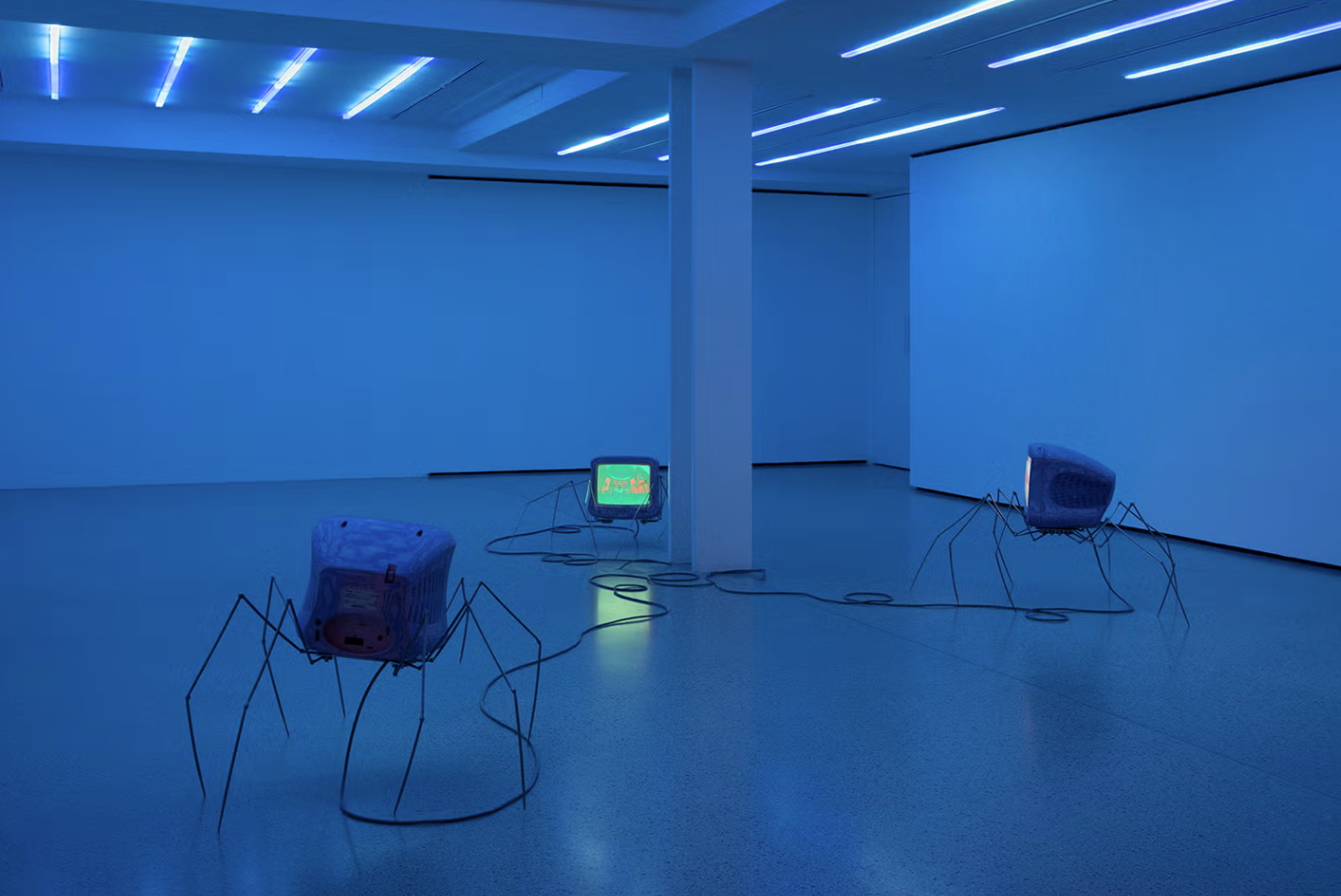
Night Mode, Arash Nassiri’s solo exhibition at the Fondation Pernod Ricard presents a new body of sculptures alongside an immersive video installation titled A Bug’s Life. The work explores migration, identity, and belonging, drawing from everyday consumer objects, pop culture, and architectural histories. Through this, the exhibition creates a dreamlike world where memory, displacement, and fantasy overlap. Centered around the nighttime journey of a bug through one of the last remaining “Persian Palaces” in Beverly Hills—homes built by members of the Iranian diaspora after the 1979 Revolution—the exhibition reflects on what it means to build a sense of home when home itself has changed. The title A Bug’s Life subtly echoes the familiar story of navigating a world much larger than yourself. Rather than treating identity as something fixed, Nassiri presents it as something we continuously reshape through the places we move, the memories we keep, and the worlds we create for ourselves. In a way that feels especially relevant today where belonging is less about where you started and more about the meaning you make along the way.
Rather than separating physical and digital media, Nassiri layers them together to mirror how stories, identities, and memories are experienced across screens and real spaces today. This technical approach expands the exhibition beyond traditional installation, creating a work that feels shaped by the visual language of the digital age.
David Spriggs
Arsenal Contemporary | 21 Cortlandt Alley, 2nd Floor, New York
June 20 - August 22
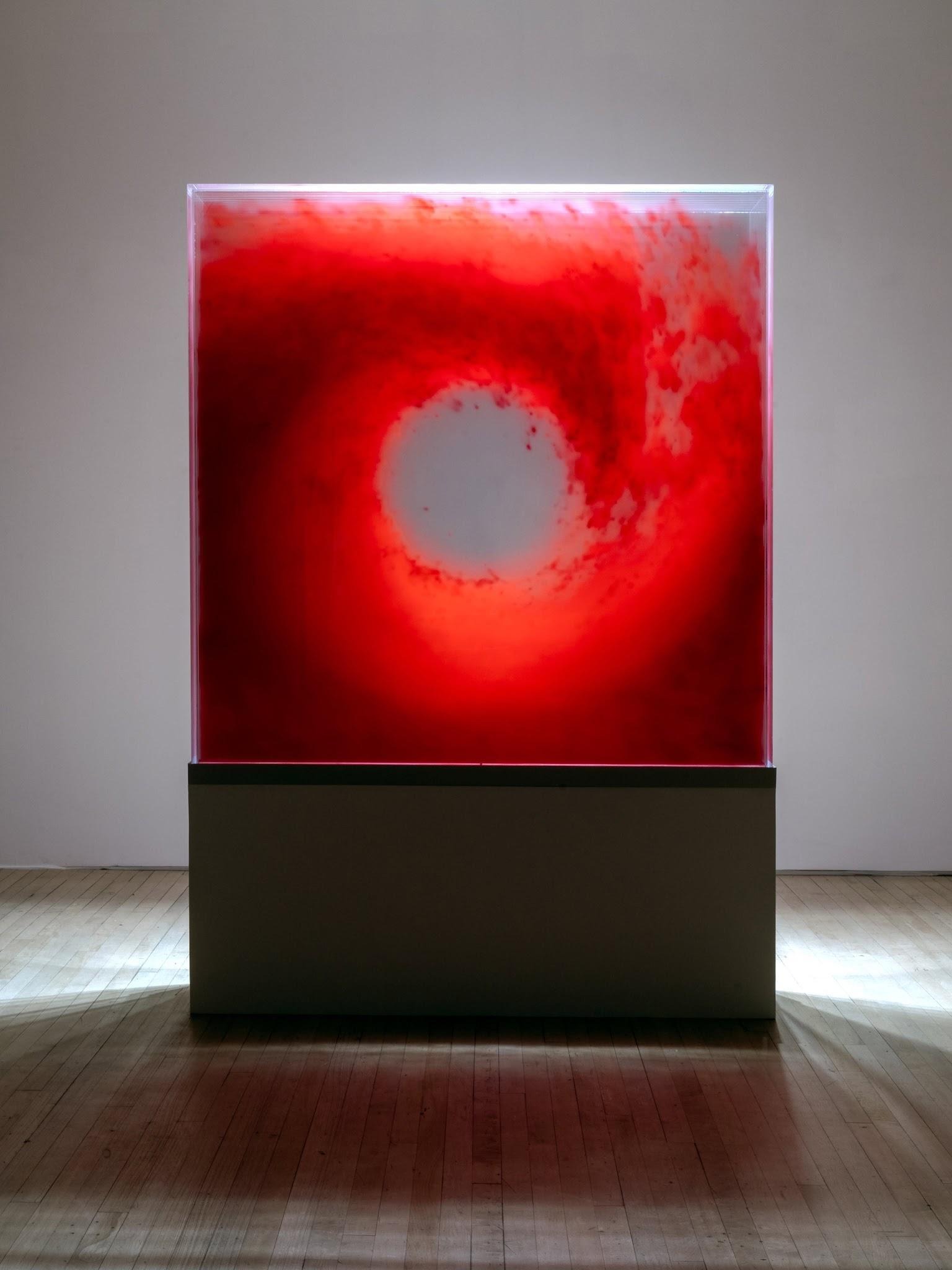
David Spriggs’ exhibition at Arsenal Contemporary presents a series of layered, three-dimensional works composed of painted transparent sheets suspended in space. What defines the work is its ability to create depth without mass. This selection of work highlights the transcendence emerging from emptiness; hope as something spatial rather than narrative. Forms appear to hover, dissolve, and reassemble depending on the viewer’s position. Color, light, and negative space come together in compositions that feel both minimal and expansive. When structure is stripped away, what exists once form begins to disperse is revealed. The images suggest that meaning isn’t found in solidity, but in openness. Of space, of light, of the possibility that emerges when nothing is fixed.
Spriggs’ work moves beyond traditional methods of creation through its use of layered transparency and spatial construction, allowing the image to exist across multiple planes rather than a single surface. The ability to shift between presence and absence depending on movement places the viewer in direct relation to the work, making perception active rather than passive.
Group Show: Sorores Liquidae and Desire Path
Carvalho | 110 Waterbury St, Brooklyn
June 26 - August 8
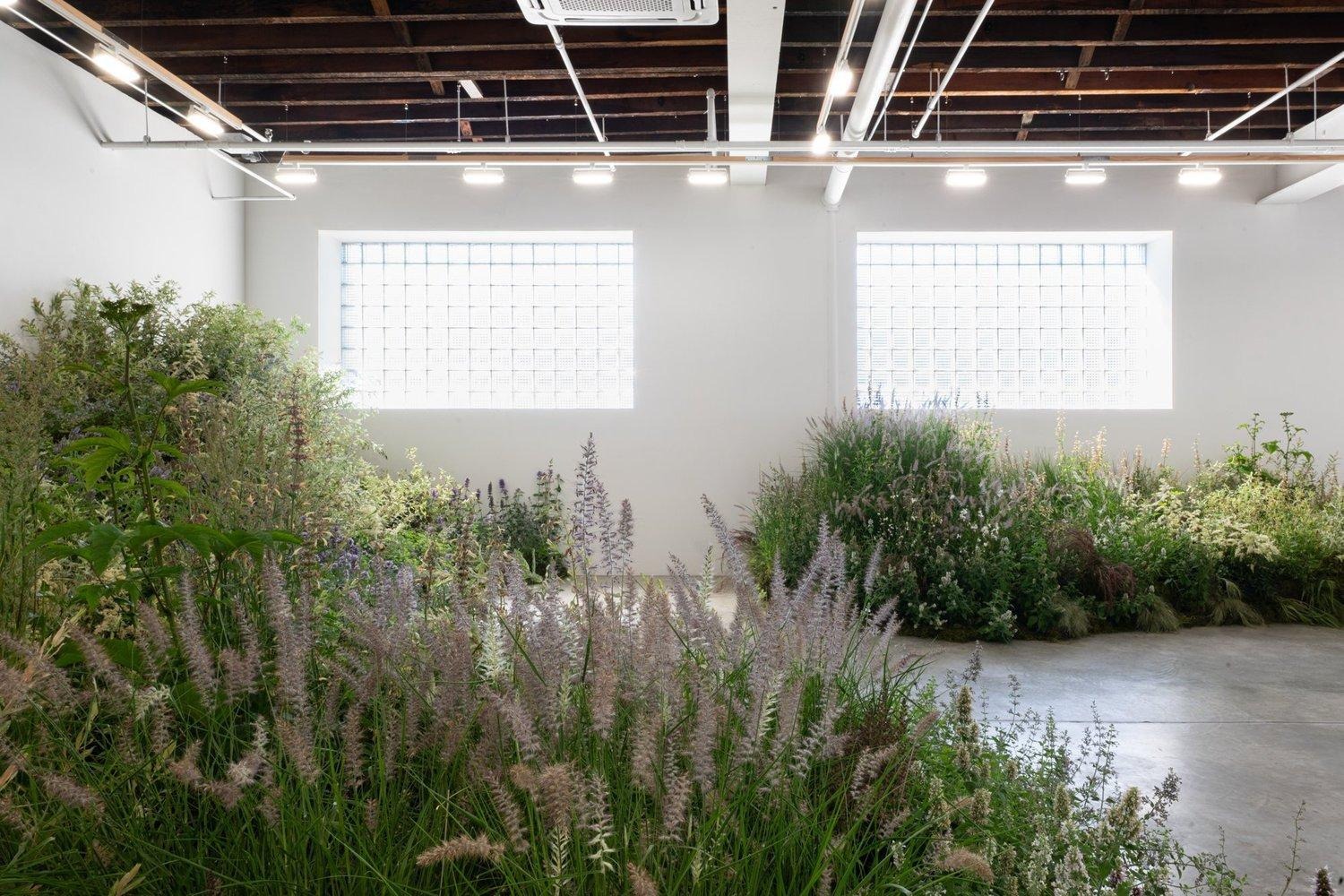
Sorores Liquidae brings together six artists who explore femininity through transformation, depicting women merging with water, plants, animals, and other organic forms. Across painting, sculpture, and installation, the exhibition presents identity as fluid rather than fixed, drawing from mythological narratives in which women transform into other beings and reimagining these stories as expressions of freedom rather than confinement.
Among the exhibition's strongest works is Carlotta Bailly-Borg's Spume, which continues ideas explored in her 2025 New York exhibition Sea Foam Shame. Faces, limbs, and bodies surface through swirling forms that recall sea foam itself, creating figures caught between appearance and disappearance. Cathleen Clarke's paintings place figures within lush gardens, overgrown landscapes, and richly colored interiors, creating scenes that feel both deeply personal and dreamlike.
Bronze sculptures resembling seaweed, roots, or flowering stems rise from the floor, with strands of pearls suspended through them like droplets of water caught midair. Nearby, paintings are saturated with flowing color and blurred figures, while flowers, water, and organic materials appear throughout the exhibition. The show closes with sprawling flower-filled scenes and a performance program that extends the exhibition's themes beyond the gallery space, reinforcing its vision of transformation as an ongoing state rather than a singular event. Just as notable as the exhibition's themes the group: Apollinaria Broche, Carlotta Bially-Borg, Cathleen Clarke, Sonya Derviz, Chantal Khoury, Bregje Sliepenbeek each bring distinct perspectives that make Sorores Liquidae feel remarkably cohesive despite its range.
Chloe Wise: Extrasensory
Kulturstiftung Basel H. Geiger, Spitalstrasse 18, 4056 Basel
June 12 - September 6
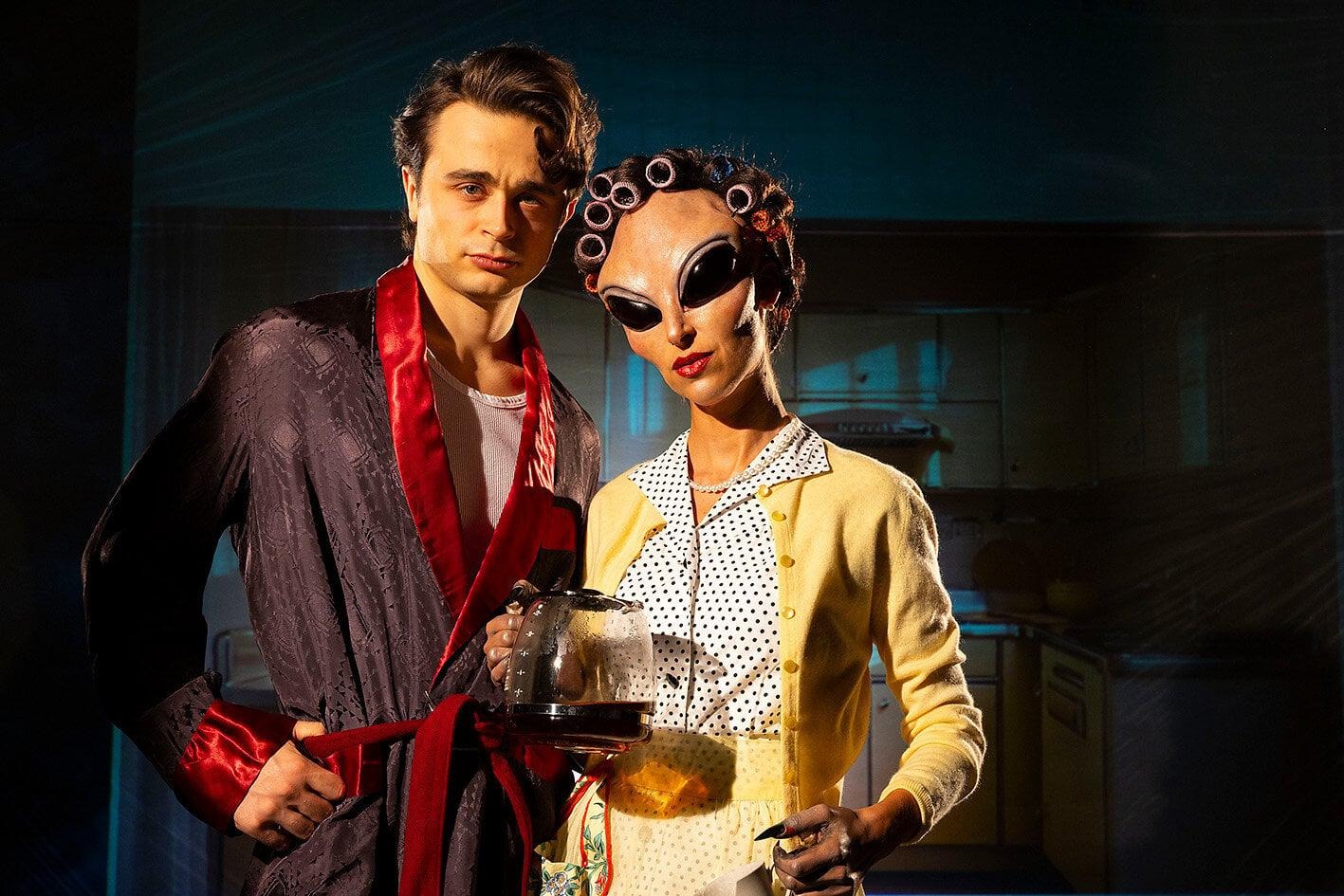
Extrasensory, Chloe Wise's first major institutional exhibition in Switzerland, how people create meaning when they encounter things they cannot fully understand. She looks at angels, UFOs, religious visions, supernatural beings, myths, and speculative stories to examine why human beings repeatedly invent frameworks to explain experiences that feel beyond language or proof. Through an immersive installation anchored by the multi-channel film PsyFi, Wise creates a space where certainty gives way to ambiguity by letting the exhibition linger in moments when language and logic begin to fail. Visually, the exhibits a cast of figures caught between states: human and mythological, physical and immaterial, familiar and unknowable.
The exhibit approaches belief as something that remains after explanation ends. Wise dwells in the space that follows it, suggesting that freedom is found not in certainty, but in the ability to remain open to mystery. Through immersive video, staged environments, and speculative narratives that move between religion, science fiction, and popular culture, Wise creates an exhibition that cannot be fully decoded. Rather than guiding viewers toward a single interpretation, the work asks them to sit with ambiguity, making uncertainty itself part of the experience. In a cultural moment increasingly shaped by competing realities, algorithms, and belief systems, Extrasensory is a fresh breath of confusion.
Kevin Yuan: Slow Burn
Megan Mulrooney Gallery | 7313 Santa Monica Blvd, West Hollywood
June 27 - August 15
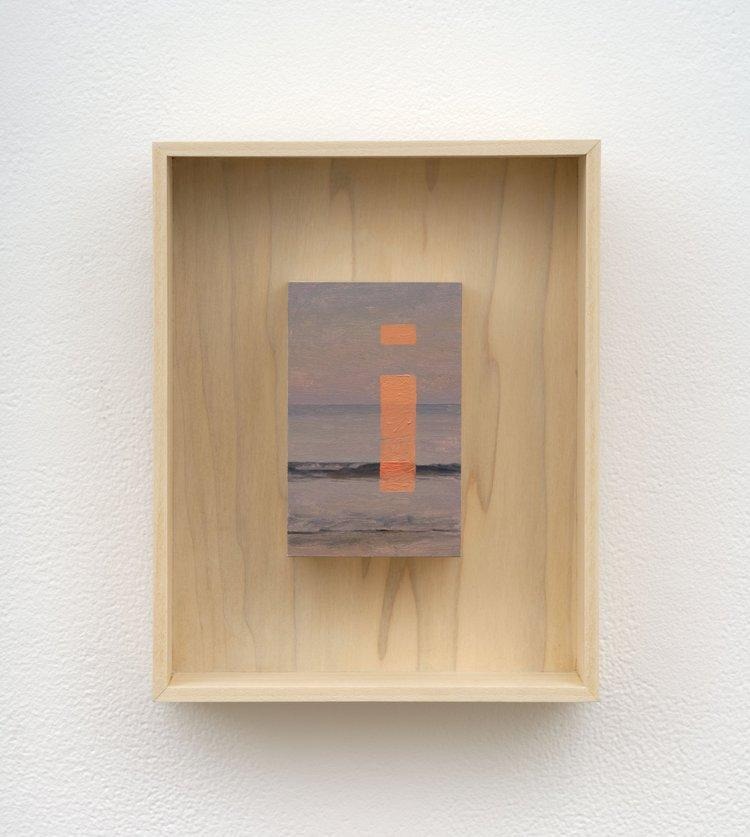
Kevin Yuan's Slow Burn presents a series of paintings that exist between interior and exterior worlds. Landscapes, architectural fragments, mirrors, windows, and reflections collide in compositions where boundaries remain unresolved. Drawing from observations gathered while moving through Southern California, Yuan frames home, displacement, presence, and reflection within beautiful nostalgic landscapes where familiarity feels simultaneously comforting and just out of reach, transforming ordinary moments into meditations on what remains after certainty has faded.
Rather than presenting landscapes as fixed locations, Yuan treats them as spaces shaped by memory, movement, and perspective. Windows, reflections, and architectural thresholds repeatedly interrupt the image, creating compositions where viewers are never fully inside or outside the scene. Yuan combines plein air studies, handmade frames, found materials, and layered surfaces to create paintings assembled from observation rather than a single viewpoint. Slow Burn is ultimately concerned in liminal spaces, where fixed boundaries begin to blur and experience becomes shaped as much by perception as by place.
Group Show: Portraits: Ourselves
Ranee Seoul at Frieze House | 224, UN Village-gil, Yongsan-gu, Seoul, Republic of Korea
June 25 - August 8
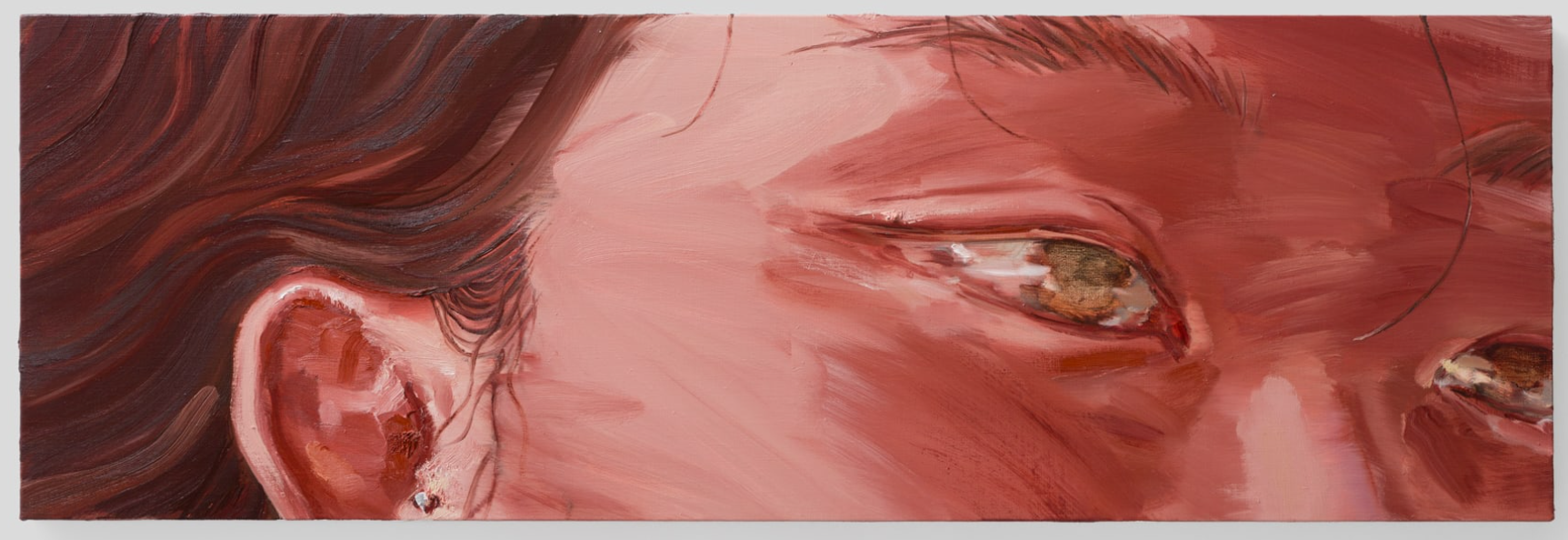
Portraits: Ourselves brings together fifteen artists who expand portraiture beyond traditional likeness, using painting, sculpture, and mixed media to explore how identity is shaped, performed, remembered, and continually revised. Throughout the exhibition, faces are stretched, layered, fragmented, masked, and reassembled through painting, sculpture, and mixed media, challenging the idea that a portrait must offer a single, stable image of a person.
Chansong Kim, whose paintings zoom in so closely on faces, hands, eyes, and skin that the body begins to feel unfamiliar. Rendered in dense reds, pinks, and flesh tones, his portraits often push against the edges of the canvas, cropping faces into fragments and turning ordinary gestures into something charged and intimate. Aggressive brushwork sits alongside moments of tenderness, transforming the familiar act of looking at oneself into something strange and unsettling. Younwon Shon approaches portraiture from the opposite direction. Rather than painting faces, she creates fractured busts and sculptural fragments that appear broken, worn, or partially erased. Displayed throughout the space like remnants of someone remembered rather than someone present, the works carry a quiet sense of absence while refusing to disappear entirely. Younguk Yi, whose recent exhibition at The Hole in Bowery similarly focused on repetition and distortion, fills his paintings with recurring figures, duplicated faces, repeated gestures, and subtle visual glitches. The effect resembles a digital image caught between loading states, where movement, memory, and perception collapse into a single frame.
For viewers drawn to the quiet moments after certainty begins to fade, Portraits: Ourselves offers portraits that feel unresolved in the most compelling way. Much like the other exhibitions in this selection, the show focuses on what remains after a singular version of identity gives way to something more open, fluid, and difficult to define. Rather than presenting fixed identities, the exhibition lingers on people who are remembered, reconstructed, distorted, or still taking shape. In that sense, Portraits: Ourselves finds beauty not in self-definition, but in everything that remains unfinished.
Patricia Piccini: Holding Tight and Letting Go
Ames Yavuz | 31 Grosvenor Hill, London
June 4 - July 11
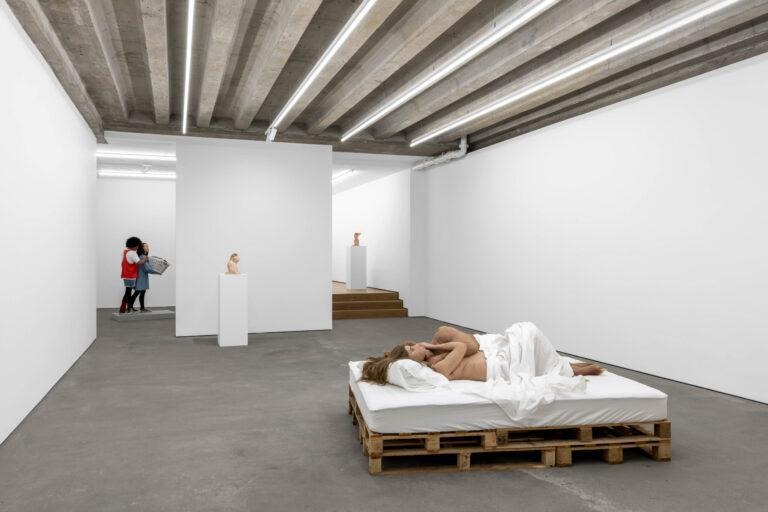
Holding Tight and Letting Go, Patricia Piccinini's latest exhibition at Ames Yavuz, presents a series of hyperreal sculptures and drawings depicting human-like figures that explore care, connection, and the complicated relationships that bind us to one another. Human, animal, and imagined forms appear intertwined, embracing, resting, and supporting one another in scenes that are at once tender and unsettling. Rather than focusing on separation or loss, Piccinini is interested in what remains after those experiences occur: the attachments, responsibilities, and forms of care that continue long after certainty has faded.
The show highlights the freedom and humanity in relationships that are imperfect, unfamiliar, or changing. Like Extrasensory, Holding Tight and Letting Go is populated by figures that exist just outside familiar categories. Both exhibitions are filled with strange yet deeply compelling beings, finding beauty in uncertainty and suggesting that some of life's most meaningful connections emerge only after certainty, explanation, or control has fallen away. Through painstakingly detailed silicone, fiberglass, and mixed-media sculptures, Piccinini creates figures so convincing that viewers are forced to confront their own instincts toward empathy, discomfort, and compassion. The result is an exhibition that suggests some of life's most meaningful moments occur not during transformation itself, but in the quiet process of learning how to hold on and let go at the same time.
Alex Gardner: Animals
Perrotin Los Angeles | 5036 W Pico Blvd, Los Angeles
June 6 - July 11
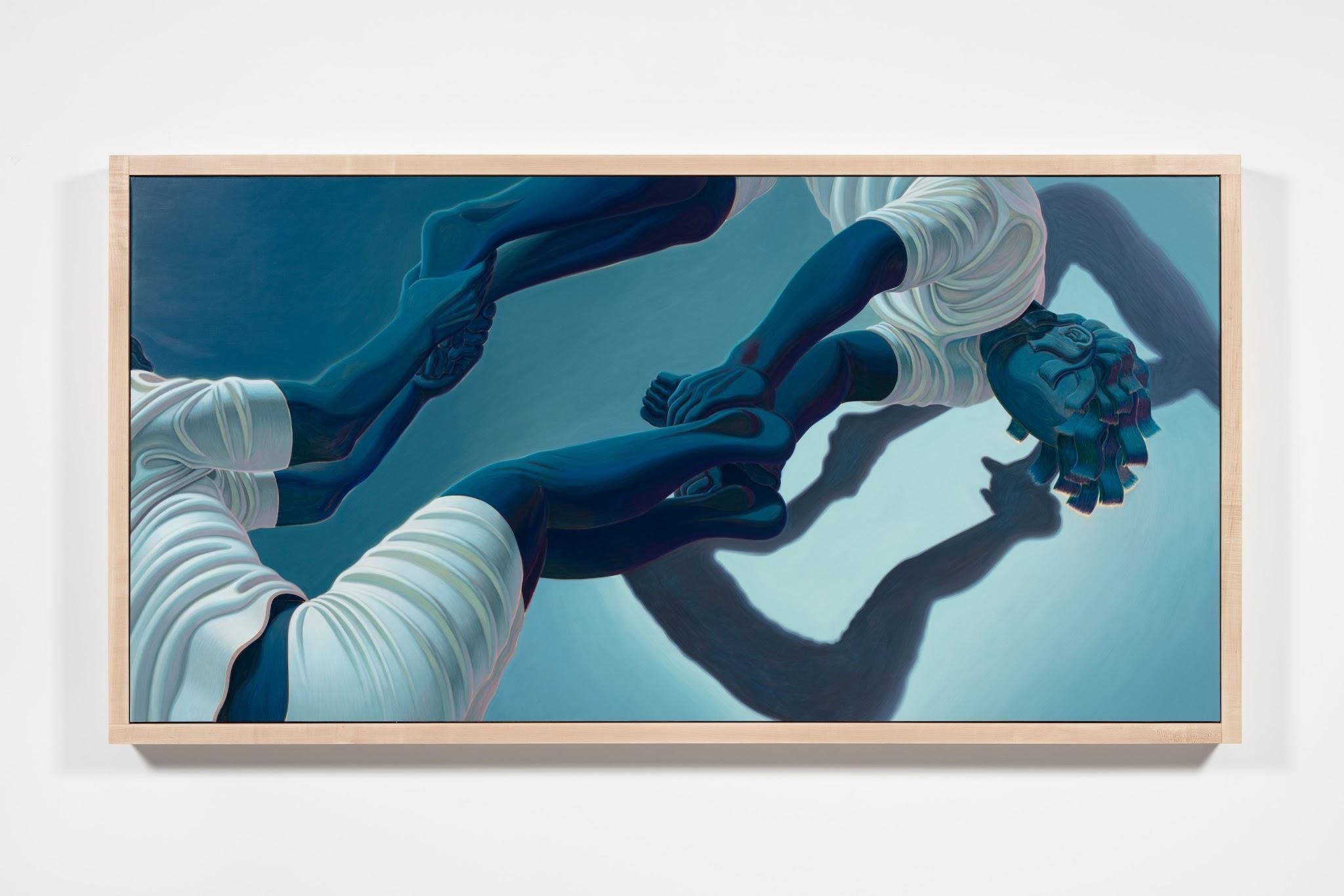
Animals, Alex Gardner's second solo exhibition with Perrotin Los Angeles, marks a noticeable shift in the artist's practice. Known for his faceless figures and psychologically charged paintings, Gardner's new body of work reflects the personal changes that have shaped his life since his last Los Angeles exhibition a decade ago. Having become a father of two, Gardner introduces children and family relationships into his paintings for the first time, using them as symbols of optimism, connection, and the future rather than focusing on the existential anxieties that defined much of his earlier work.
Rendered in bruised blues, deep greens, and luminous whites, the paintings depict bodies floating, embracing, carrying, and supporting one another within undefined spaces. Faces remain absent, but hands, limbs, and gestures become the emotional center of the compositions. In works such as Catapult, figures intertwine across the canvas, creating images that feel simultaneously intimate and universal. Some of the exhibition's most beautiful moments come from Gardner's use of color and composition. The paintings are cinematic in scale and composition, but their power comes from small moments of connection rather than dramatic action.
Gardner's figures are no longer searching for meaning as much as they are learning to live alongside one another. Like many of the exhibitions in this selection, the work finds beauty in what lingers after certainty, ambition, or individual identity gives way to something quieter. Rather than presenting isolated subjects, Animals suggests that freedom may be found in connection, responsibility, and the imperfect act of caring for others.
Group Show: Can’t See the Forest
Vestfossen Kunstlaboratorium | Fabrikkgata 11C, 3320 Øvre Eiker, Vestfossen, Norway
May 2 - September 20
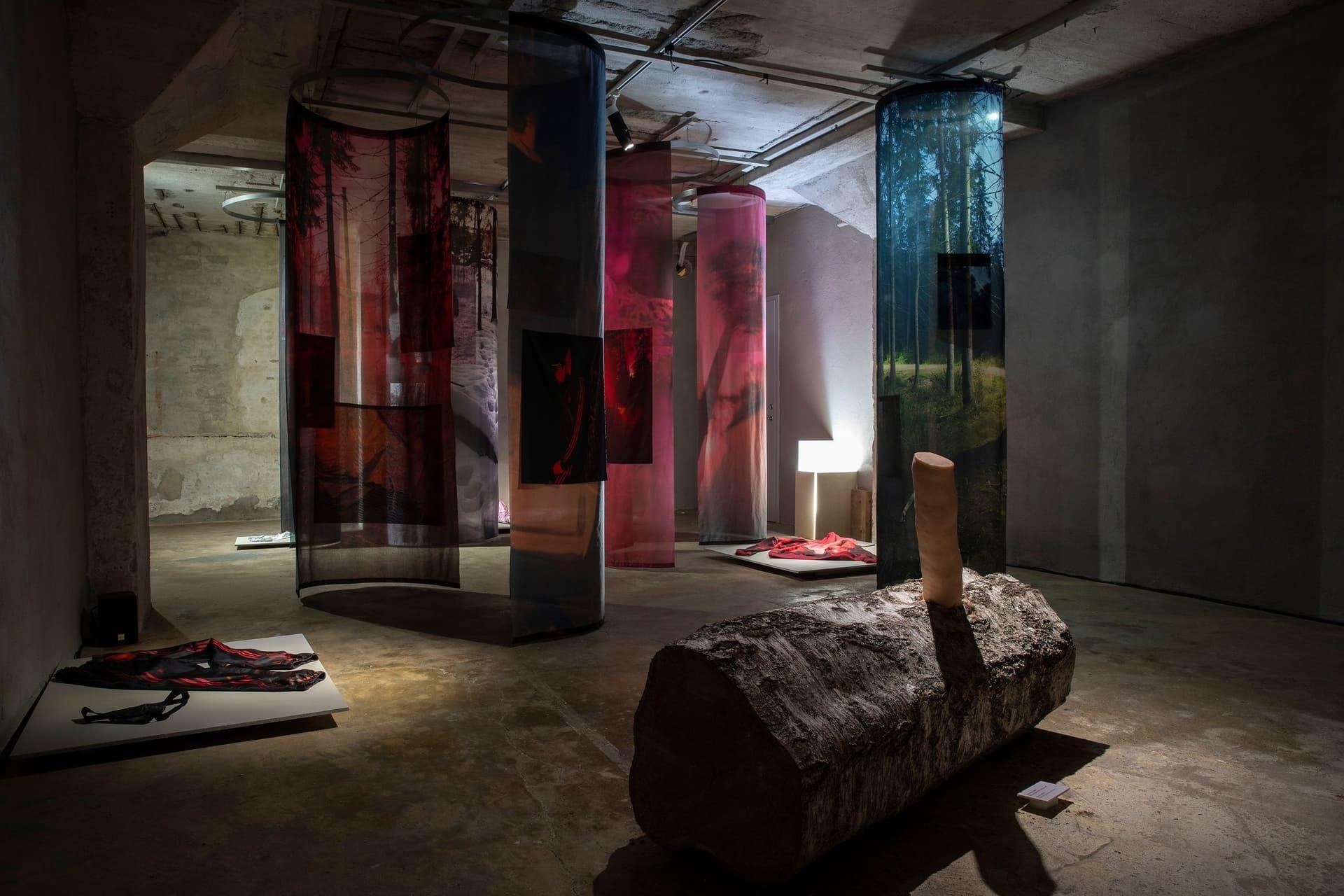
Can’t See the Forest transforms Vestfossen Kunstlaboratorium into something between a natural history museum, a fairytale, and a memory of the woods. Rather than presenting the forest as a landscape to look at, the exhibition invites viewers to move through it. Across the exhibition, carved animals, towering tree-like figures, woven textiles, photographs, and immersive installations create an environment where people, animals, and nature appear deeply intertwined.
While the exhibition spans multiple artists and mediums, one of its most striking works is Linda Soh Trengereid's monumental curved canvas, which stretches across the gallery like a forest panorama. Dense trees, fallen trunks, tangled branches, moss-covered ground, and filtered light extend across its surface, creating the sensation of standing inside the woods rather than looking at a painting. The slight curvature of the work reinforces this effect, pulling viewers into the landscape and encouraging a slower, more observational form of looking.
Unlike many landscape paintings, Trengereid's forest contains no obvious focal point. There is no dramatic event, heroic figure, or clear destination. Instead, the eye wanders through roots, undergrowth, and tree trunks, discovering small details hidden within the scene. In this way, the work shares a similar sensibility with Slow Burn, where meaning emerges through sustained observation rather than spectacle. What initially appears to be an uninterrupted woodland gradually gives way to hidden figures dispersed throughout the landscape, encouraging viewers to look more closely and spend time with the work. The painting reflects Trengereid's broader interest in how people inhabit, remember, and become part of the environments around them. Rather than presenting nature as a backdrop, the work suggests that identity, memory, and landscape are inseparable from one another. Like Slow Burn, the exhibition is interested in the relationship between people and place.


