

This October, childhood returns with a smudge over its face. Across New York, London, Paris, Seoul and beyond, artists are reaching for images that feel immediately recognizable: carousels, cartoons, family snapshots, portraits, domestic interiors and half-remembered landscapes. Yet certainty quickly begins to dissolve. Blur, distortion, fragmentation and visual disruption emerge as a recurring visual language across all of these exhibitions.
Does blur intensify nostalgia itself? Its softened contours and faded edges echo the visual qualities of memory, aging photographs, obsolete media and half-recalled experiences. By withholding detail, these images create space for projection, allowing viewers to insert their own histories into scenes that may never have belonged to them. Familiarity emerges precisely because the image remains incomplete. Or does the blur serve another function entirely? Rather than deepening nostalgia, perhaps it destabilizes it, exposing the distance between the stories we tell about the past and the reality that preceded them. What appears recognizable reveals itself as constructed, edited and continually rewritten.
We are often nostalgic for experiences we never had. Across this month's selection, artists repeatedly return to the visual language of commonality: family photographs, suburban landscapes, toys, folklore, cartoons and other fragments of everyday life. Such imagery possesses a peculiar familiarity. It seems to belong not only to individual memory but to a broader cultural imagination, producing feelings of recognition even among viewers who stand at a distance from the histories being depicted. What we recognize from this is the idea of memory itself.
Whether the stylistic choice functions as an agent of nostalgia or a challenge to it remains an open question, but to me, one thing becomes clear: memory emerges as an ongoing process of reconstruction, shaped by desire, distance, hindsight, and loss. Childhood appears as something both known and elusive: a place we recognize immediately yet struggle to fully recover.
Emma Beatrez: Candy Apple
HAIR+NAILS | 39 Henry St, New York
Until October 25
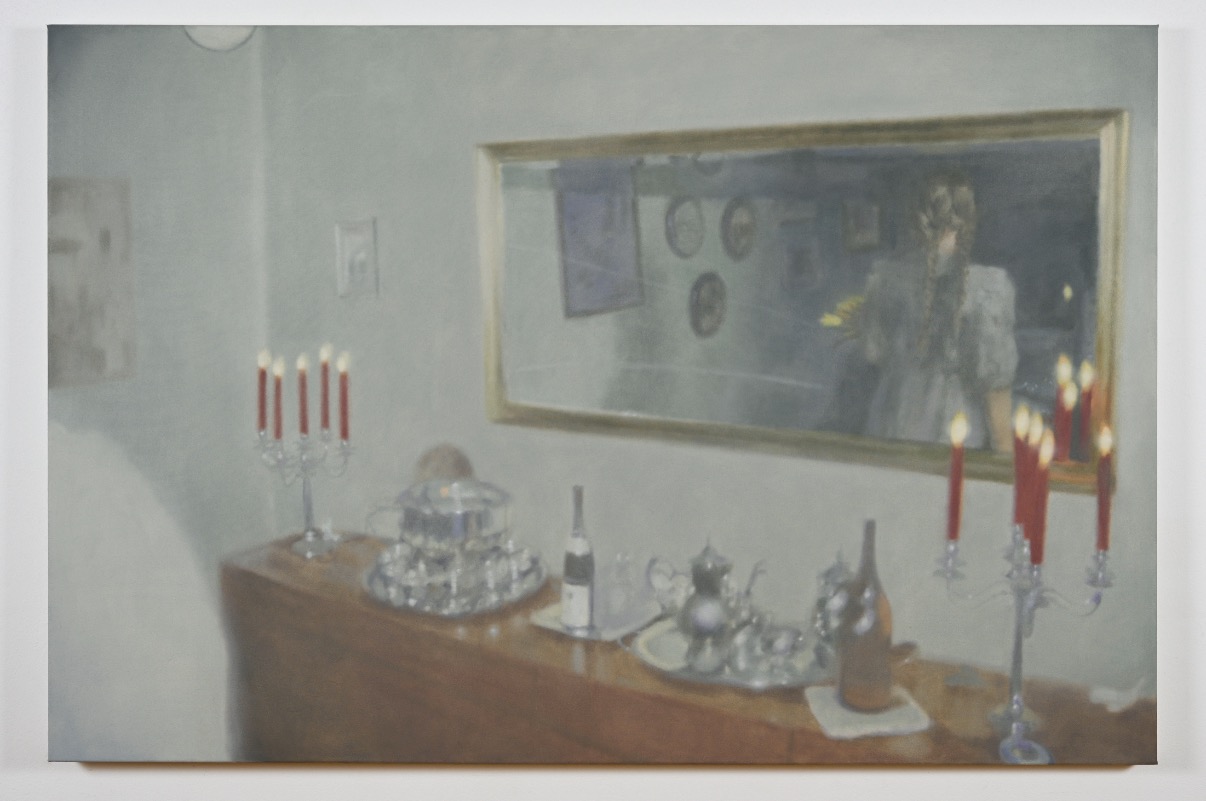
A carousel should be among the safest images in the visual canon. It belongs to county fairs, family albums and the convenient fiction that childhood was somehow simpler than the present. In Candy Apple, Emma Beatrez turns that assumption inside out. Her carousels, chandeliers, mirrors and ghostly figures emerge through layers of atmospheric haze, appearing less like observations than recollections halfway through dissolving. The effect is uncanny: the paintings feel intensely familiar while withholding the certainty of recognition.
Drawing from Midwestern symbolism, occult traditions and dream logic, Beatrez constructs scenes that seem to hover between memory and premonition. The lone figures reflected in mirrors evoke the peculiar sensation of discovering an old photograph and not quite remembering who was holding the camera. The viewer oscillates between participant and observer, apparition and witness
If nostalgia often promises comfort, Beatrez offers something more interesting. The paintings suggest that memory is less an archive than an active collaborator, quietly rewriting the past while insisting it is merely preserving it.
Lawrence Perry: Careless Rapture
LBF Contemporary Gallery | 13 Tottenham Mews, London
Until October 22
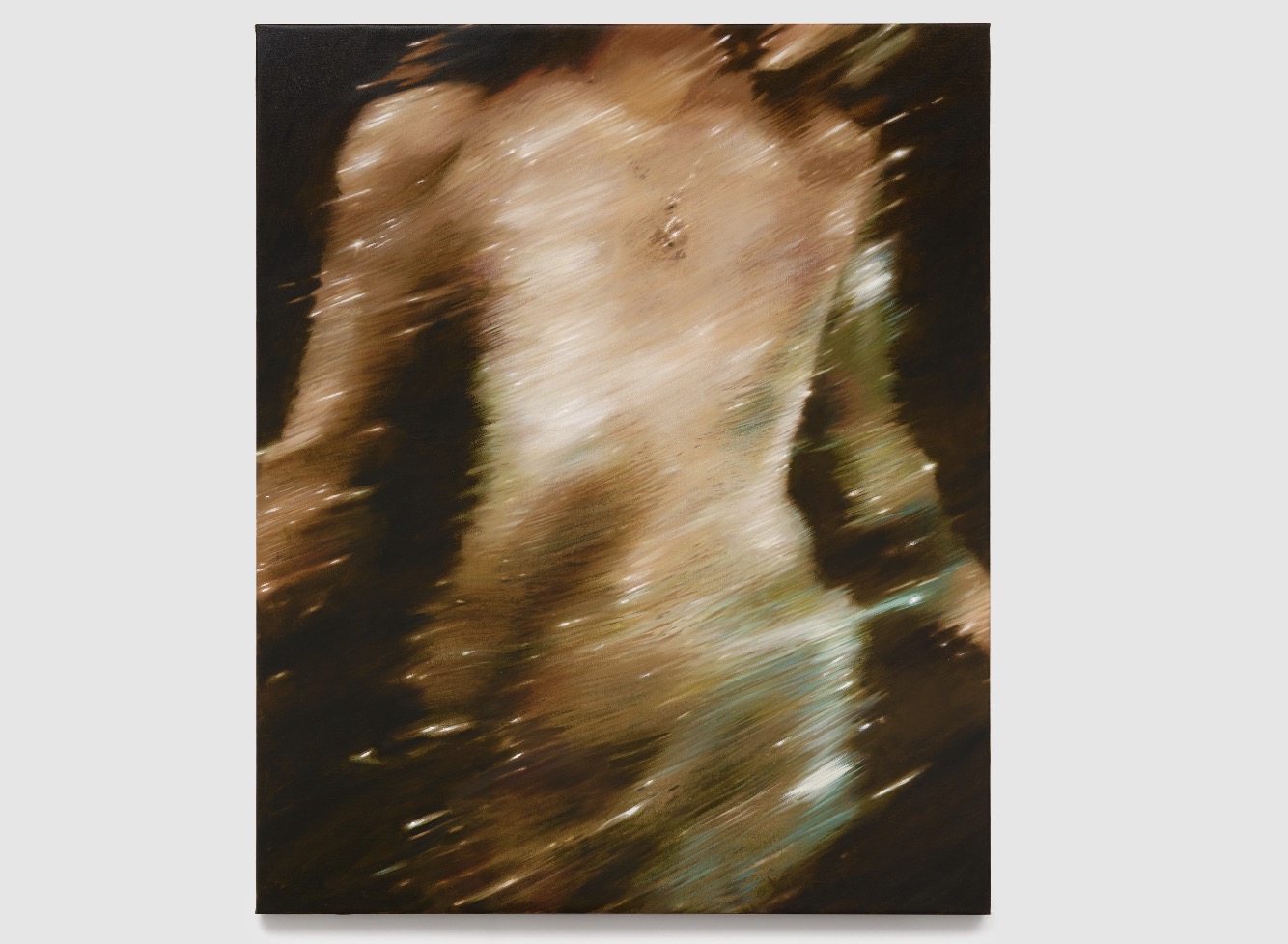
If Emma Beatrez paints memory as a dream, Lawrence Perry approaches it through the language of the photograph. His newest body of work is preoccupied with the visual imperfections that generations of image-makers once sought to eliminate: motion blur, overexposure, grain, lens flares, and moments of failed focus. Yet rather than treating these as technical shortcomings, Perry painstakingly reconstructs them by hand. What emerges are paintings that feel less concerned with documenting a scene than preserving the sensation of encountering it.
The work occupies an unusual space between historical reference and contemporary image culture. Drawing from sources that range from Pre-Raphaelite painting and Victorian poetry to analogue photography, Perry creates pictures that seem suspended outside a clearly identifiable moment in time. Nothing feels entirely historical, yet nothing feels fully present either. The imperfections become particularly important here. A blurred figure, washed-out highlight, or fractured composition often carries more emotional weight than a perfectly rendered description ever could. These disruptions do not obscure meaning so much as redirect it, encouraging the viewer to focus on atmosphere, sensation, and recollection rather than narrative certainty.
Within this month's theme, Perry raises an interesting possibility: perhaps what stays with us is not the image itself, but the distortions that accumulate around it. At a moment when photographs arrive increasingly sharpened, corrected, and optimized, his paintings suggest that flaws may be among the most enduring components of visual memory. We rarely remember the world with perfect clarity. Perry's paintings seem to understand that, leaving viewers to wonder whether the imperfections are obscuring the past or bringing them closer to how it was experienced in the first place.
Erik Foss: Dream a Little Dream
Future FWD Gallery | 378 Broome St, New York
Until November 1
For many millennials, childhood was mediated through a rotating cast of mascots, cartoons and corporate characters. We learned morality from puppets, emotional regulation from sponge-shaped sea creatures and consumer loyalty from smiling tigers. Erik Foss understands that these images never actually left us.
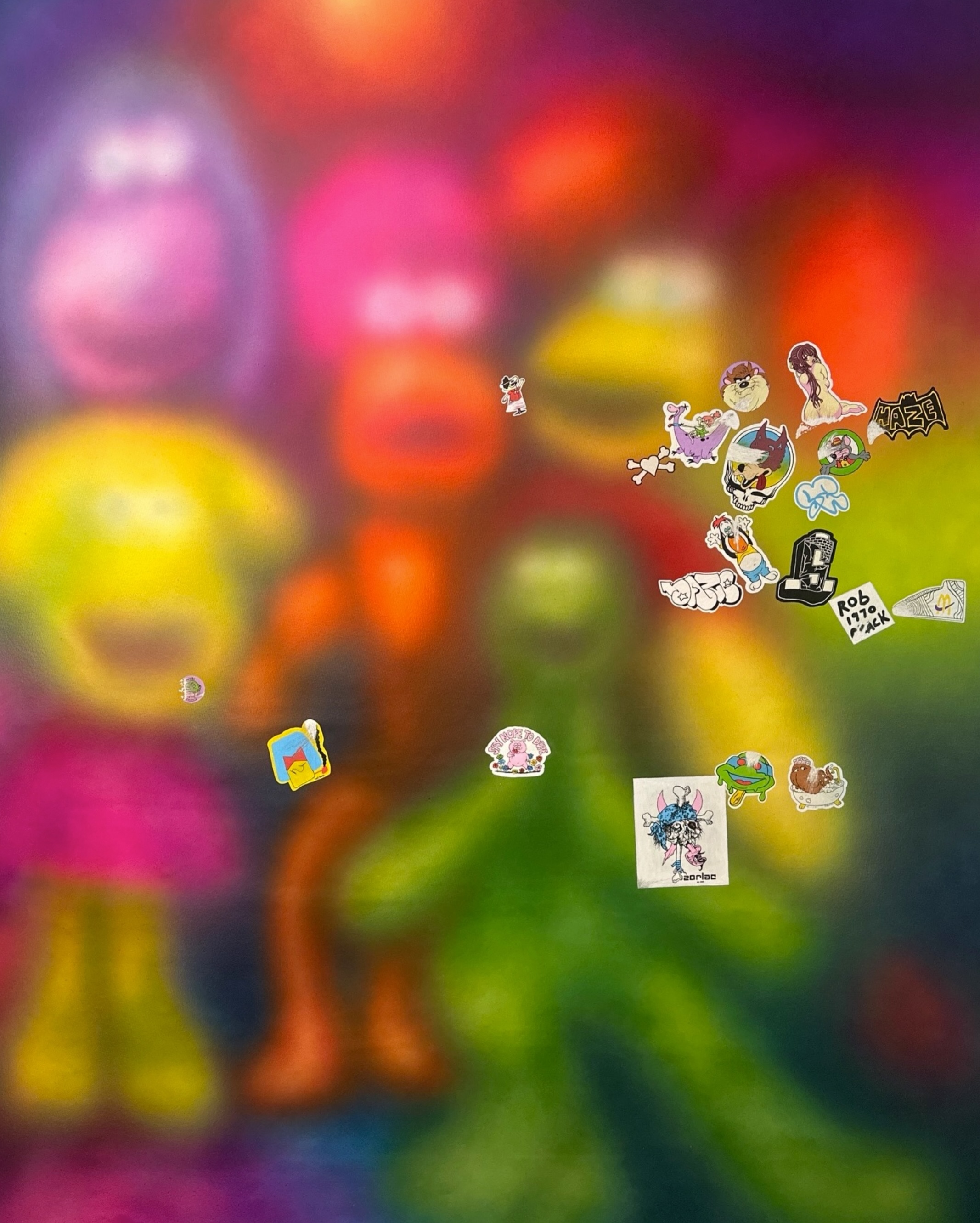
In Dream a Little Dream, hazy airbrushed figures drift through atmospheric fields before colliding with painstakingly rendered stickers depicting Garfield, SpongeBob, Grimace and other icons of collective visual memory. Foss presents these characters not as objects of irony but as artifacts. They function almost like archaeological remnants excavated from the subconscious.
The show's greatest achievement lies in its refusal to dismiss popular culture as disposable. Foss argues that these images formed a shared education of sorts, shaping how generations learned to see and understand the world. Looking at these paintings feels strangely like encountering an old classmate after twenty years: immediately recognizable, yet difficult to explain.
Group Show: No One Belongs Here More Than You
ROCH20 | 20, rue Saint-Roch, Paris
October 16 - November 1
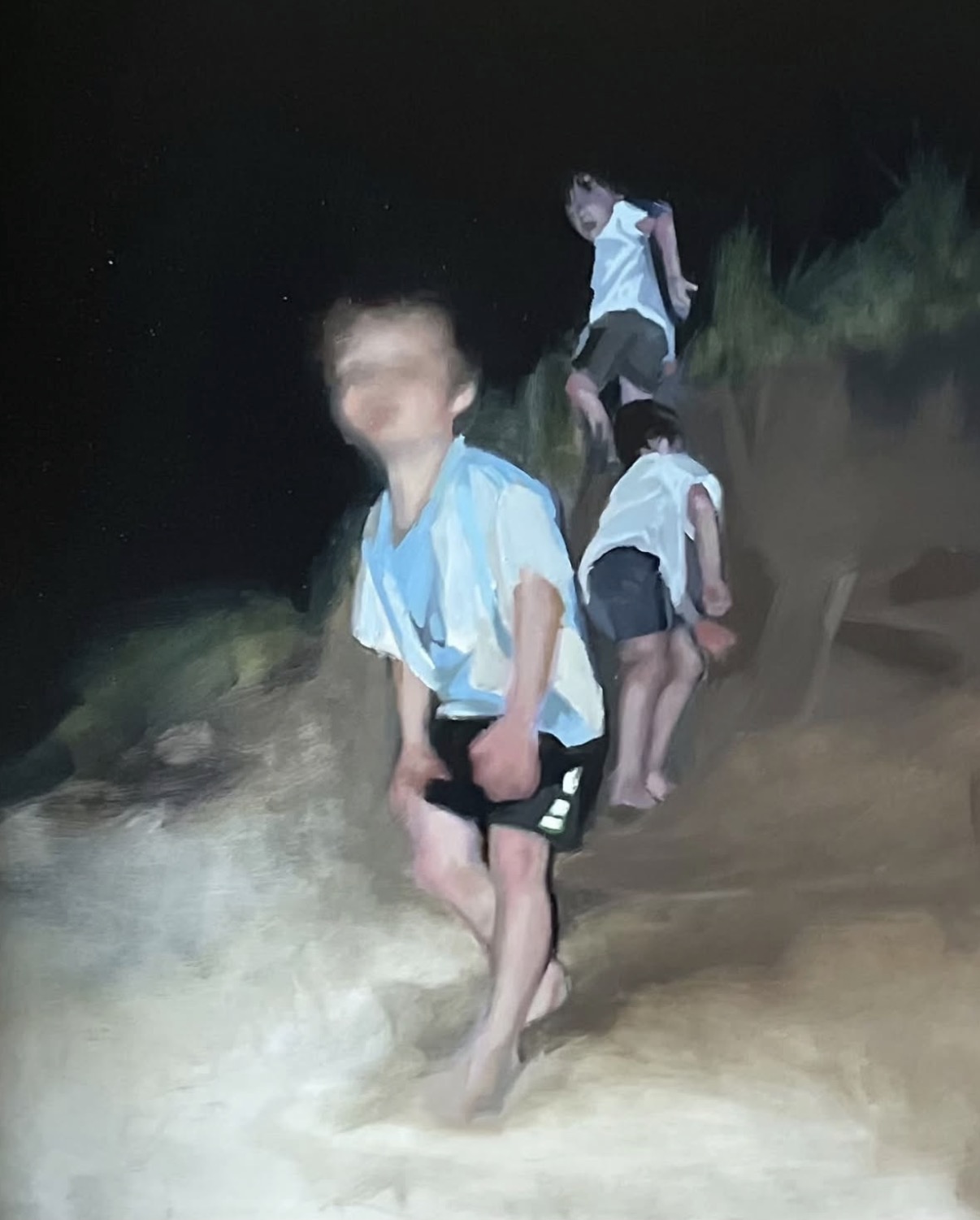
Bringing together seventeen artists, No One Belongs Here More Than You at ROCH20 centers on figurative painting that deliberately destabilizes its own subjects. Faces blur, bodies dissolve and details disappear, leaving behind images that resemble paused home videos or photographs taken by accident. Recognition remains possible, but access does not. Looking at these paintings can feel like entering someone else’s memory without permission, close enough to witness its fragments but never to understand the experience from which they came.
This tension takes different forms in the work of Michal Siwak, Sarah Quick, and Zbyněk Sedlecký. Siwak slowly rebuilds photographs captured in motion through layers of paint, preserving the luminous pull of an image while holding it near disappearance. His work is less detached than suspended, balancing visual beauty with the feeling that something is about to be lost. Quick pushes this uncertainty toward something more ominous. In works such as Fragments, Dissipate and Eroding, figures remain visible but difficult to enter, as though the viewer has arrived at a private scene with no explanation for what came before or after. Sedlecký, meanwhile, begins with photographed impressions before translating them into paint, separating the final image from the lived moment that produced it. His cropped and isolated forms feel distinctly uncanny: physically close, yet narratively inaccessible.
What holds the exhibition together is not simply blur, but the boundary that blur creates between the viewer and the lives being depicted. These images do not invite us to complete them so much as remind us that some memories cannot be made ours. Their resemblance to corrupted family records only intensifies that discomfort, particularly when the subjects appear young and the images retain the tenderness of something once preserved with care. Why that tenderness turns unsettling is difficult to explain, and perhaps that uncertainty is part of the exhibition’s appeal. In a culture that treats every image as accessible and immediately available for consumption, these paintings allow their subjects to remain partially hidden. Not every image wants to become content.
Salman Toor: Someone Like You
The Denise Coates Exhibition Galleries, Courtauld Gallery | Somerset House, Strand, London
October 2 - January 10
The figures populating Someone Like You inhabit spaces that feel both intimately contemporary and faintly theatrical. Domestic interiors, friendships, private rituals and fleeting social encounters unfold through Toor's distinctive green atmospheres, where affection and uncertainty often occupy the same space. What initially appears familiar gradually reveals itself to be more emotionally complicated. A glance across a room, a conversation between friends, or a quiet moment alone becomes charged with questions of intimacy, belonging, and self-awareness.
Within this month's framework, Toor feels less concerned with childhood than with the experience of inhabiting the present while recognizing how quickly it may become the past. His paintings frequently center everyday moments, yet they rarely allow those moments to remain ordinary. Vulnerability lingers beneath casual gestures, while intimacy and distance exist simultaneously within the same scene. The result is a body of work that asks viewers to look more carefully at experiences that might otherwise pass unnoticed. Rather than treating memory as something recovered, Toor suggests that memory is already forming around us, attaching itself to seemingly insignificant moments before we fully understand why they matter.
Toor's paintings offer a reminder that familiarity does not diminish complexity. Sometimes the things closest to us remain the hardest to fully understand.
Han Jihyoung: Vibe Era
Ilmin Museum of Art | 152 Sejong-daero, Jongno-gu, Seoul
Until October 25
Han Jihyoung's paintings introduce a distinctly contemporary form of disorientation. At first encounter, it is the blur that commands attention. Figures emerge and recede, bodies merge with their surroundings, and familiar visual cues seem unable to fully settle into place. The distortions feel simultaneously playful and suffocating, creating the sensation of looking at an image that is still in the process of becoming. In works such as You Look Like a Memory and Following in their Ancestors' Footsteps (Last Lullaby), multiple viewpoints appear to fold into one another, producing compositions that feel less observed than assembled.
What makes these paintings particularly compelling is the way they collapse the distinction between seeing and processing. Rather than recalling the haziness of memory, Han's images evoke the experience of encountering reality through layers of screens, algorithms, and digital mediation before we have the chance to experience it directly. Forms stretch, fragment, and dissolve into one another, creating the uneasy sensation of multiple moments colliding at once. The result is less nostalgic than disorienting. If many of this month's artists ask how memory changes over time, Han raises a different question altogether: what happens when images arrive before experience itself? The paintings linger in that uncertainty, leaving viewers to wonder whether we are remembering the world around us or merely remembering its images.
Nicolina Morra: Upcoming Exhibition
Marge Gallery | 4 Cortlandt Alley, New York
Opening October 30
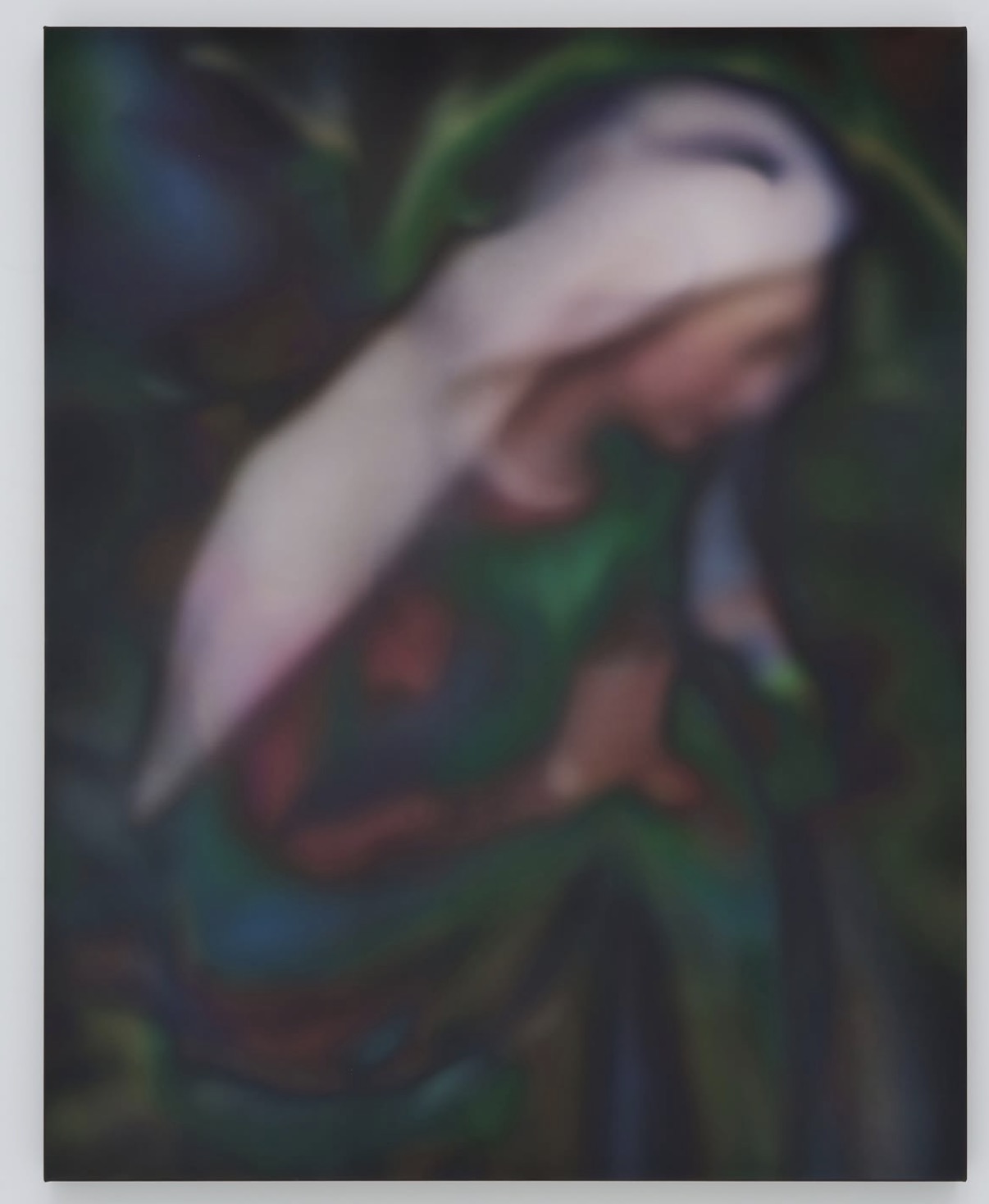
Even before the exhibition opens, Nicolina Morra's recent practice makes her a fitting inclusion within this month's selection. Working from found photographs and digital archives, Morra draws together consumer objects and famed figures through a visual language shaped by longing, perception, and belief. Her paintings are often built from images that already carry emotional and cultural weight, yet their blurred surfaces make certainty difficult to hold onto. In my reading, this blur feels distinctly grief-stricken. Rather than lending the image movement or whimsy, it suggests the difficulty of holding onto something as it slowly recedes from view. Whether the subject is devotional, cultural, or deeply personal, Morra's paintings seem occupied by the gap between an object and the meaning we attach to it. Objects remain, but the feelings invested in them become less stable. What emerges is a form of nostalgia that feels less like recovery than reflection, asking what happens when the symbols through which we once found comfort, belonging, or belief persist long after our relationship to them has changed.
The work feels particularly well-suited to Marge Gallery, an unconventional exhibition space housed within a stairwell between SHRINE and Oolong Gallery in Tribeca. Rather than existing as a destination entirely unto itself, the gallery occupies a transitional space between two distinct programs: SHRINE's commitment to emerging voices and Oolong Gallery's conceptually driven contemporary program. There is something fitting about encountering Morra's paintings in a place designed around passage rather than arrival. Like the stairwell that houses them, her images seem suspended between belief and doubt, attachment and distance, recognition and uncertainty. I cannot wait to see what she brings to Marge Gallery, and whether these lingering feelings find a new form within the space.
Louise Giovanelli: British Art Show 10: A Chorus of Strangers
The Mead Gallery, Warwick Arts Centre | University Of Warwick, Coventry CV4 7FD, UK
October 2 - January 10
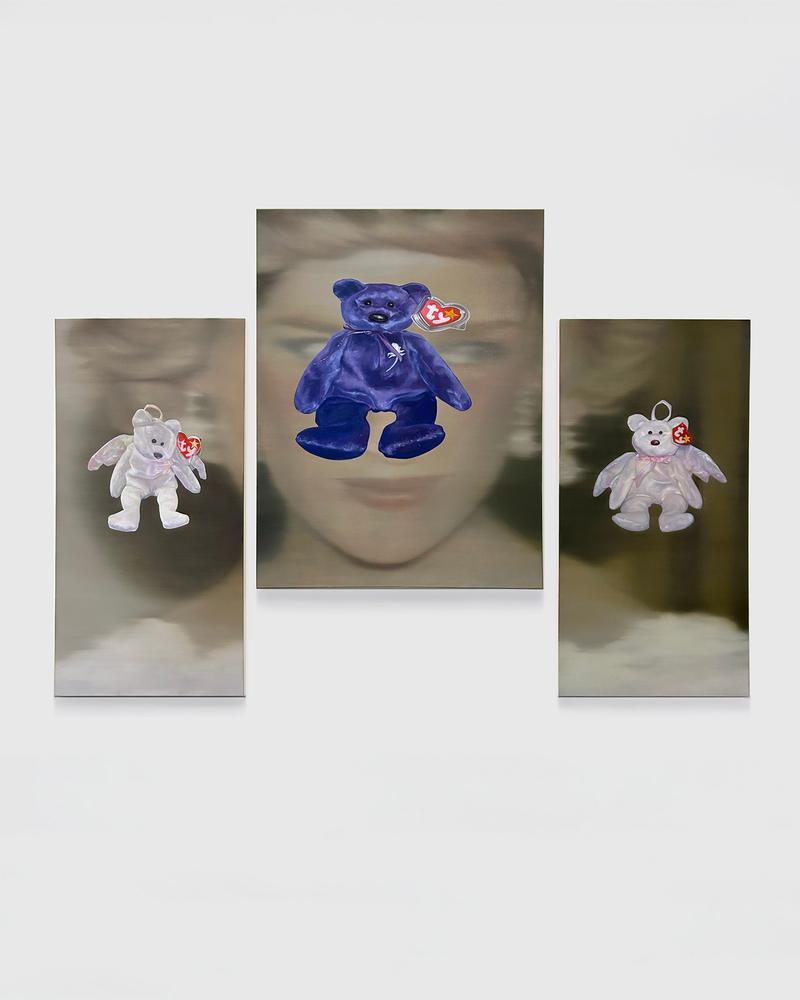
Among the strongest contributions to British Art Show 10: A Chorus of Strangers are the paintings of Louise Giovanelli, whose works in the Mead Gallery feel caught between dream and recollection. Working from fragments of film, photography and art history, Giovanelli transforms familiar source material into something dreamlike and indeterminate. Curtains, lights and cropped female figures emerge through layers of luminous paint, hovering between recognition and abstraction. Faces blur and expressions remain ambiguous, reducing the female subject at times to hair, skin, posture or an open mouth. Femininity appears both performed and withheld, shaped by the tension between beauty and unease, visibility and concealment. The monumental scale of the canvases draws the viewer into their atmosphere, yet Giovanelli never makes her subjects fully available to us. Her blur evokes the visual texture of the past, recalling old photographs and half-forgotten scenes while simultaneously obscuring the very thing we feel we know. In this sense, Giovanelli’s paintings sit at the heart of a question running throughout this month’s selections: does distortion deepen nostalgia by allowing us to project ourselves into an image, by protecting the female subject from the viewer's intrusive gaze, or by reflecting the passage of time, reminding us that the past we long for was never as fixed as we imagine?
Max Bennett: VOL. II | Cuerpo de Obra
Consigna | Kepler 101, Mexico City
October 2 - December 13
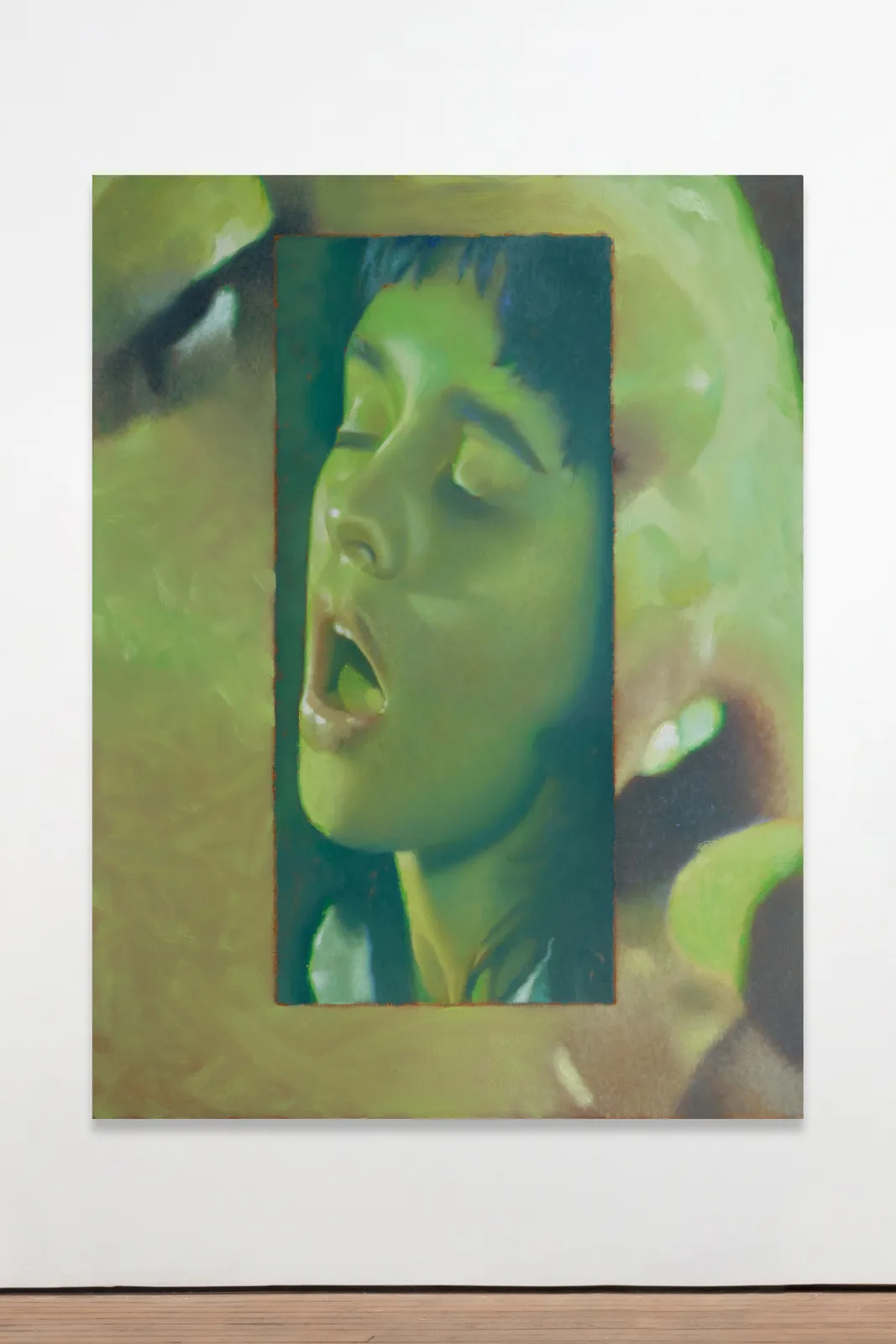
Max Bennett's paintings begin with archival photographs but ultimately concern themselves with everything a photograph fails to preserve. In VOL. II | Cuerpo de Obra, details soften and edges dissolve as Bennett translates found images into carefully layered oil paintings. Bennett starts with old photographs, not direct experience. His paintings explore what happens as those photographs pass through time and become memories. Faces, gestures, and environments remain recognizable, yet never entirely fixed. Looking at the work feels less like revisiting the past than observing its slow transformation.
What I like about the work is its willingness to trust this transformation. The paintings never suggest that memory's distortions are failures to be corrected. Instead, they become part of the image itself, carrying traces of affection, distance, loss, and revision. Photographs promise preservation, whereas Bennett's work seems equally interested in what survives despite being forgotten. The resulting paintings feel suspended between presence and disappearance, where the act of remembering becomes just as important as the thing being remembered.
Julia Wachtel: Return to Content a/b
Jahn und Jahn | BaaderstraBe 56 C 80469, Munich
Until October 31
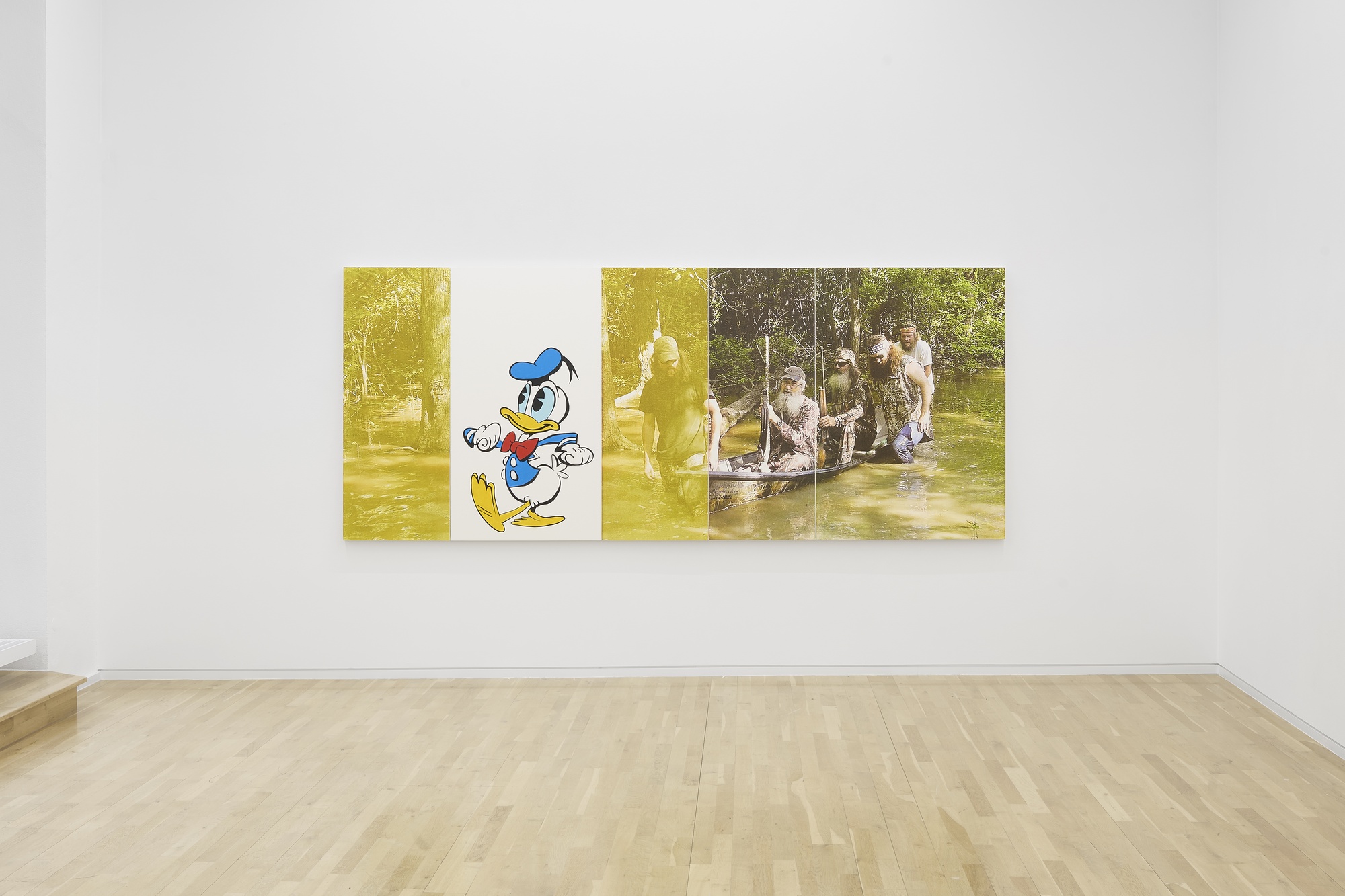
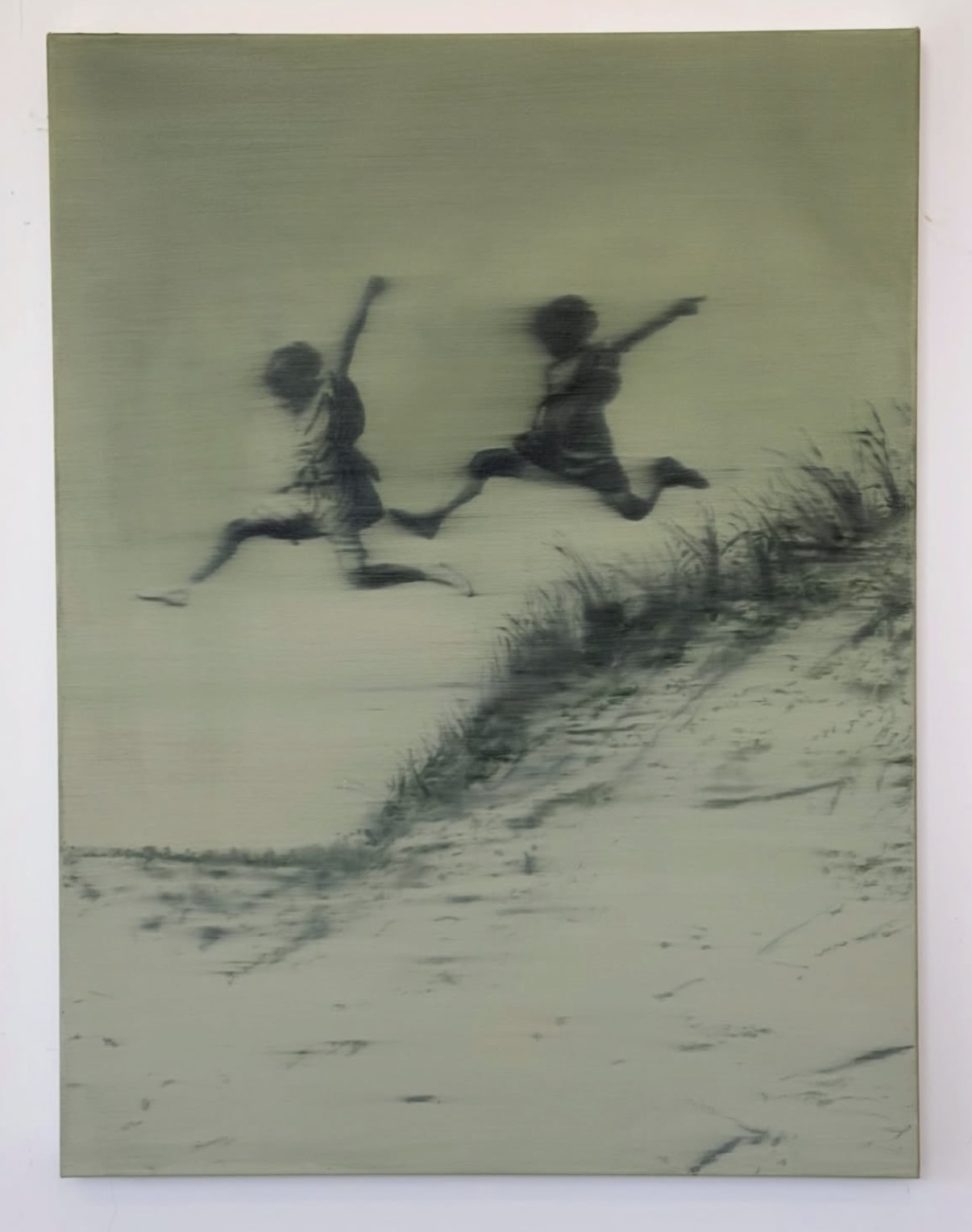
Julia Wachtel's Return to Content a/b approaches memory from an altogether different angle. Rather than looking toward childhood, family archives, or personal recollection, Wachtel turns her attention to the vast image environment through which contemporary life is increasingly experienced. Cartoons, advertisements, news photographs, memes, screenshots, historical documents, and fragments of popular culture collide across expansive multi-panel paintings, creating visual constellations that feel simultaneously familiar and difficult to fully grasp. What emerges is not a narrative but a condition: the experience of attempting to navigate an endless flow of images without ever arriving at a stable conclusion.
The exhibition's title proves unexpectedly revealing. Removed from its original context as a television prompt, "return to content" becomes a strangely poetic description of contemporary life, where attention continually cycles between lived experience and the screens through which that experience is filtered. Wachtel embraces contradiction rather than resolving it, placing children's characters beside newspaper archives, internet imagery beside painted passages, and moments of political urgency beside fragments of popular culture. These juxtapositions rarely produce clear answers. Instead, they expose the strange ways images accumulate meaning as they move through time, media, and memory.
If several artists in this month's selection explore how personal memories fade, distort, or linger, Wachtel examines the collective image-space from which many of those memories now emerge. The exhibition feels at once poignant and critical, asking what happens when our understanding of the world is increasingly constructed from fragments of media rather than direct experience. Looking at these paintings, one begins to realize that it is no longer possible to separate memory from the images that helped create it.