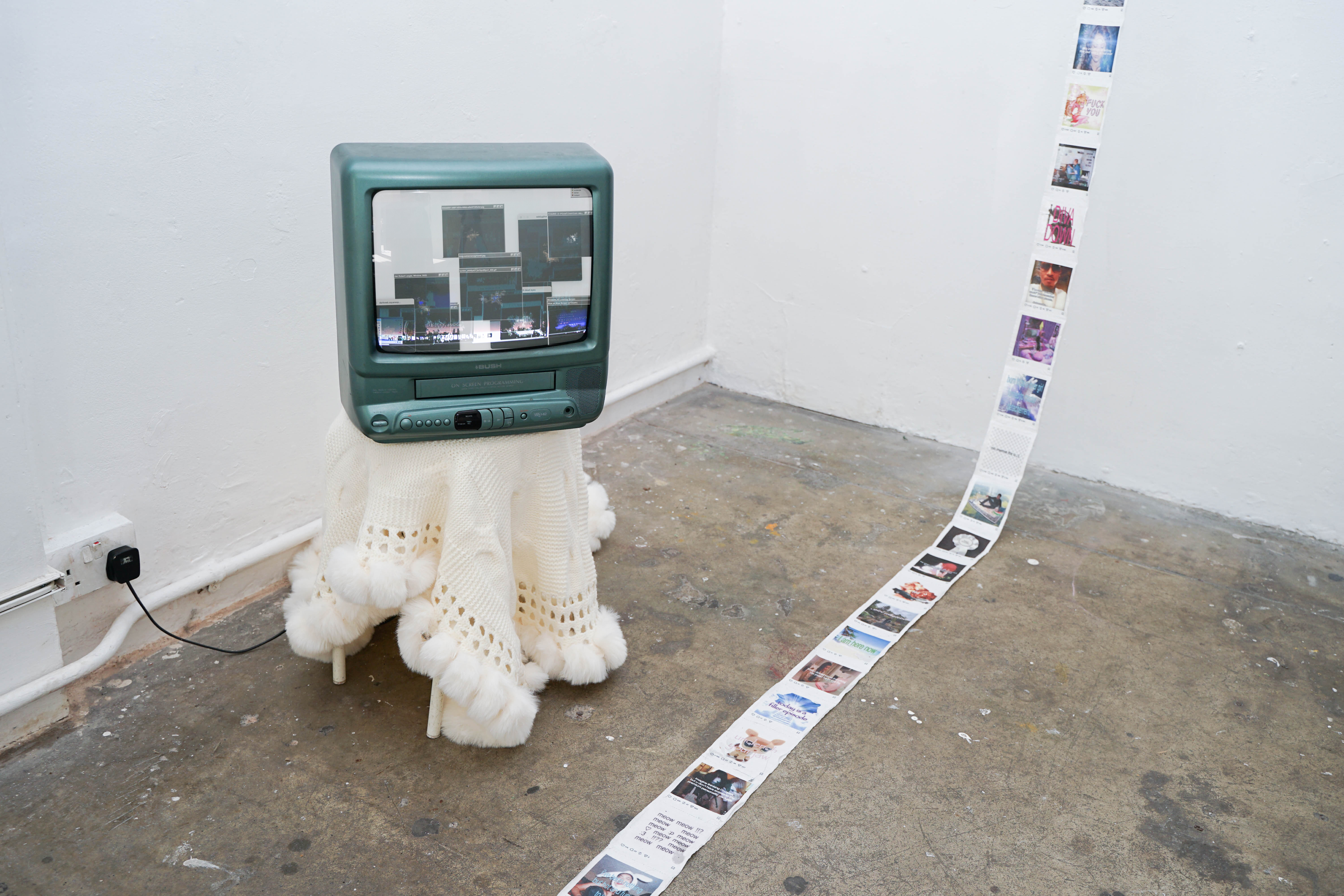




Pain is a fascinating feeling. Beyond the fact that it relies entirely on individual perception and an oscillating tolerance, its true peculiarity lies in how care begets the very discomfort and hurt that follow it. For a rudimentary example, when light pressure is placed on your forearm, you might feel absolutely nothing. Now add tenderness: a bruise beneath the same patch of skin, and suddenly the very same touch hurts. Nothing about the pressure has changed; what has changed is the condition of what receives it. Perhaps caring works in much the same way. Consider your job, the person you are seeing, or the idea you hold of your own success. Imagine that tomorrow, you lose whatever allows those conditions to continue as they do today: you are fired, ghosted, injured, or otherwise displaced from the life you have built. Is the event itself inherently devastating? Rationally isolated, the object of our concern is rarely unique. There will be other jobs, other relationships, other achievements, and other lives we might construct. Yet, care refuses to isolate its object. It gathers meaning around it until what is replaceable begins to feel singular.
Perhaps that is why we live so cautiously around what we have built, protecting the present from imagined future loss. We declare each new attachment the most important, each success the greatest, and each rupture the worst, mistaking the intensity of a feeling for evidence that it will last. How many of these emotional climaxes have already passed? A breakup, a promotion, an engagement, a firing: each once seemed capable of dividing life into before and after, only to lose some of its magnitude with time. Perhaps emotional intensity is not evidence of permanence. It is evidence of care, of the meaning we have allowed something to accumulate, and of our willingness to experience whatever follows.
Emily Coan: My Alchemical Vessel
Dimin Gallery | 406 Broadway Fl. 2, New York
Until December 5
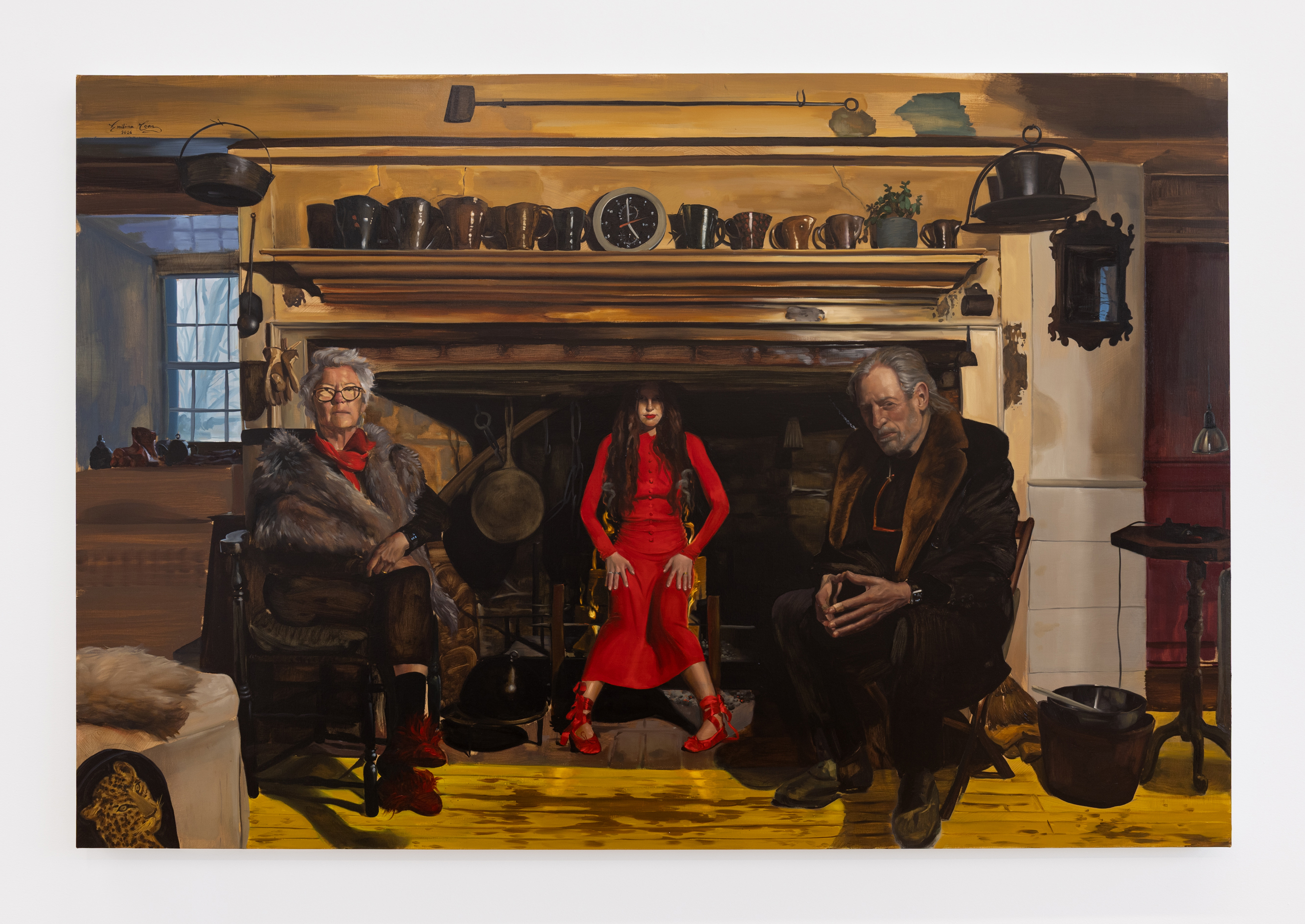
Upon approaching Dimin’s booth at the 2025 Armory Show, I was transported from a hectic fair grid to a somnambulant oasis created by Coan’s massive compositions. Anchored by breathtaking pieces, the booth wrapped me in a heavy, twilight world, showcasing a masterclass in feminist world-building. The canvases were lush, beautifully uneasy, and completely unforgettable. Standing there, under the spell, it hit me just how deeply and quickly I had fallen in love with Coan’s practice.
I ended up visiting Coan’s studio this summer, where I saw several of the paintings now gathered in My Alchemical Vessel while they were still unfinished. Coan turns toward an eighteenth-century farmhouse in Ghent, New York, owned by her in-laws and expected to one day become her home. What emerges is less a portrait of a future life than an interrogation of how much power we give the lives we imagine for ourselves. The house gathers associations of continuity, family, intimacy, and belonging, pleasures Coan does not reject, while raising a more unsettling question: when we care deeply about a particular vision of life, how much of ourselves do we begin reshaping to fit within it?
The figures inhabiting these rooms are drawn from Coan’s friends and family, though they resist straightforward portraiture. Familiar bodies instead become vessels through which different possibilities of the self take form. Coan appears only once, in Nigredo, yet the exhibition continually refracts her through others, including the divergent possibilities represented by Meg, Amy, and Laurie from Little Women: domestic fulfillment, artistic becoming, and the desire to belong. The conflict is not simply between domesticity and freedom, but between loving a life and fearing the prescriptions that can quietly accompany it. The same future we want can make us wonder what parts of ourselves we might have to surrender to reach it. What matters to us gains the power not only to hurt us, but to remake us.
That tension enters the paintings formally as well. Across candlelit rooms, Coan summons the dramatic shadows and devotional stillness of Johannes Vermeer, Georges de La Tour, and Jan van Eyck, only to let an iPhone, tarot cards, or a discarded Doritos bag slip into the scene. I don’t read these contemporary intrusions as ruptures in the historical fantasy so much as what keeps it alive. Coan borrows the visual machinery of an older domestic world without embalming it, allowing centuries-old images of interiority, femininity, and domestic life to absorb the odd debris of actually living now.
The exhibition’s alchemical framework ultimately makes this negotiation feel less like a choice between two lives than a process of becoming. The farmhouse becomes one vessel within the exhibition, while nigredo, the alchemical stage of darkness and decomposition preceding transformation, gives uncertainty a necessary place within it. Maybe inheritance is not simply receiving what came before us, but discovering what remains after it encounters who we are becoming. Like the alchemical vessel, neither inheritance nor inheritor emerges from that encounter entirely unchanged.
Caleb Hahne Quintana: Don't Get Lost in Heaven
Newchild Gallery | Geuzenstraat 16, 2000 Antwerpen
Until November 19
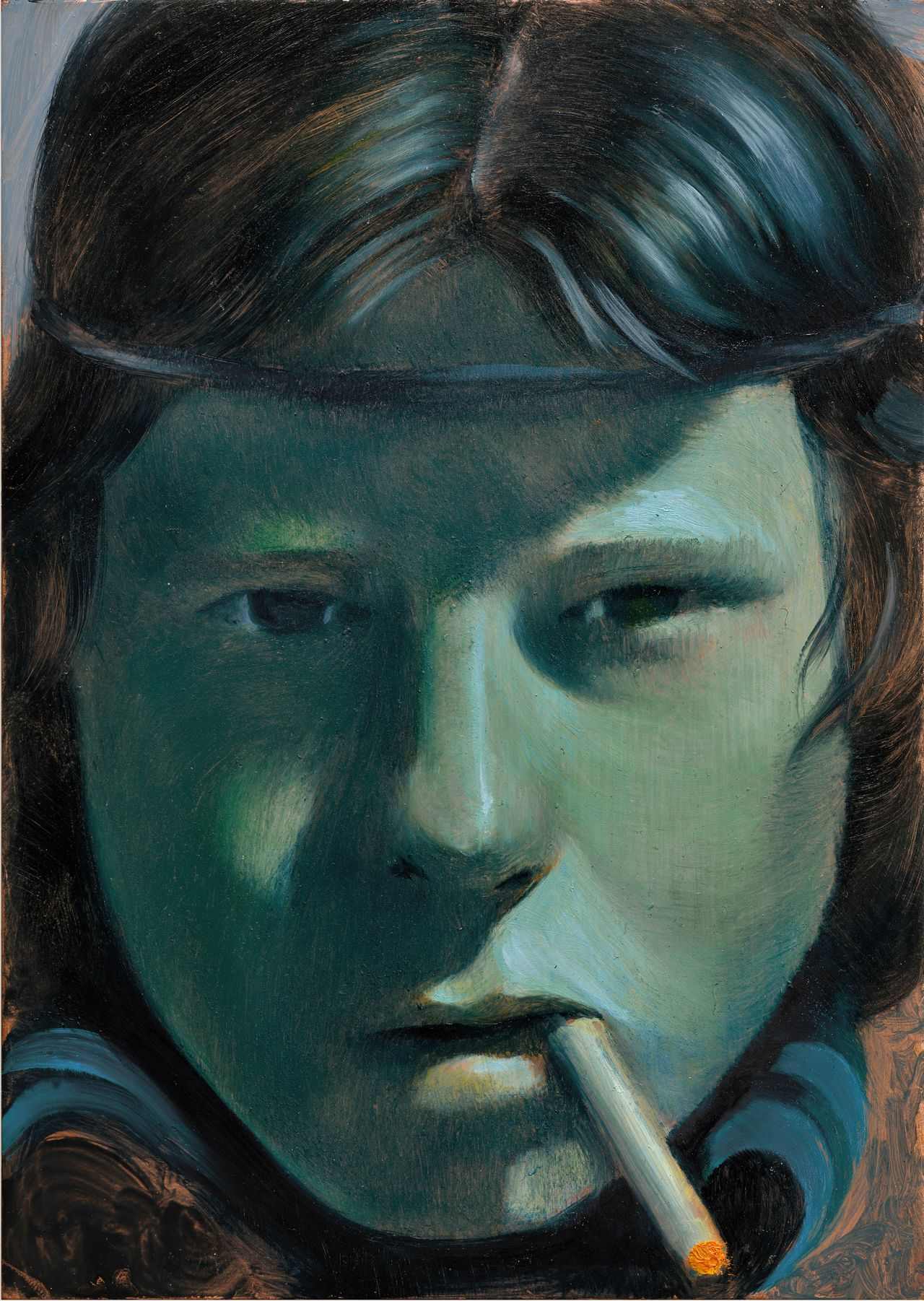
I find that tension even more interesting knowing where Hahne Quintana’s work has recently been. In the artist’s 2025 exhibition A Boy That Don’t Bleed at Anat Ebgi, one of my favorite shows of the year, Hahne Quintana examined the expectation that young men should remain impervious to emotional or physical damage. The artist described young people confronting themselves without necessarily having “the tools, the space, the language or an outlet” to process what they experience. Don’t Get Lost in Heaven feels like an extension of that thought, though here I am less interested in whether these figures can be hurt than in the period when they can still behave as though hurt will never quite reach them.
That youthful relationship to time becomes particularly interesting beside Coan’s My Alchemical Vessel. Hahne Quintana’s figures occupy a moment when the future still feels expansive and consequence distant; Coan approaches the future after enough life has accumulated to understand how much there can be to lose. Pain seems to change direction with time. We begin believing ourselves invincible, only to find the past increasingly populated by people, places, and versions of ourselves we want back, while the future fills with things we are afraid to lose. Pain starts reaching us from both directions. Hope remains, but it is no longer weightless. It now carries the memory of what mattered before and the knowledge that what matters now may someday join it.
That gives Don’t Get Lost in Heaven a different kind of warning. The danger is not caring too much, but mistaking possibility for permanence. The more we allow to matter, the more there is to miss, protect, anticipate, and eventually lose. Heaven starts to resemble less a place without pain than the fantasy that anything we love could ever remain untouched by time.
Group Show: Afterimage
Haricot Gallery | 205 Royal College St, London
Until November 14
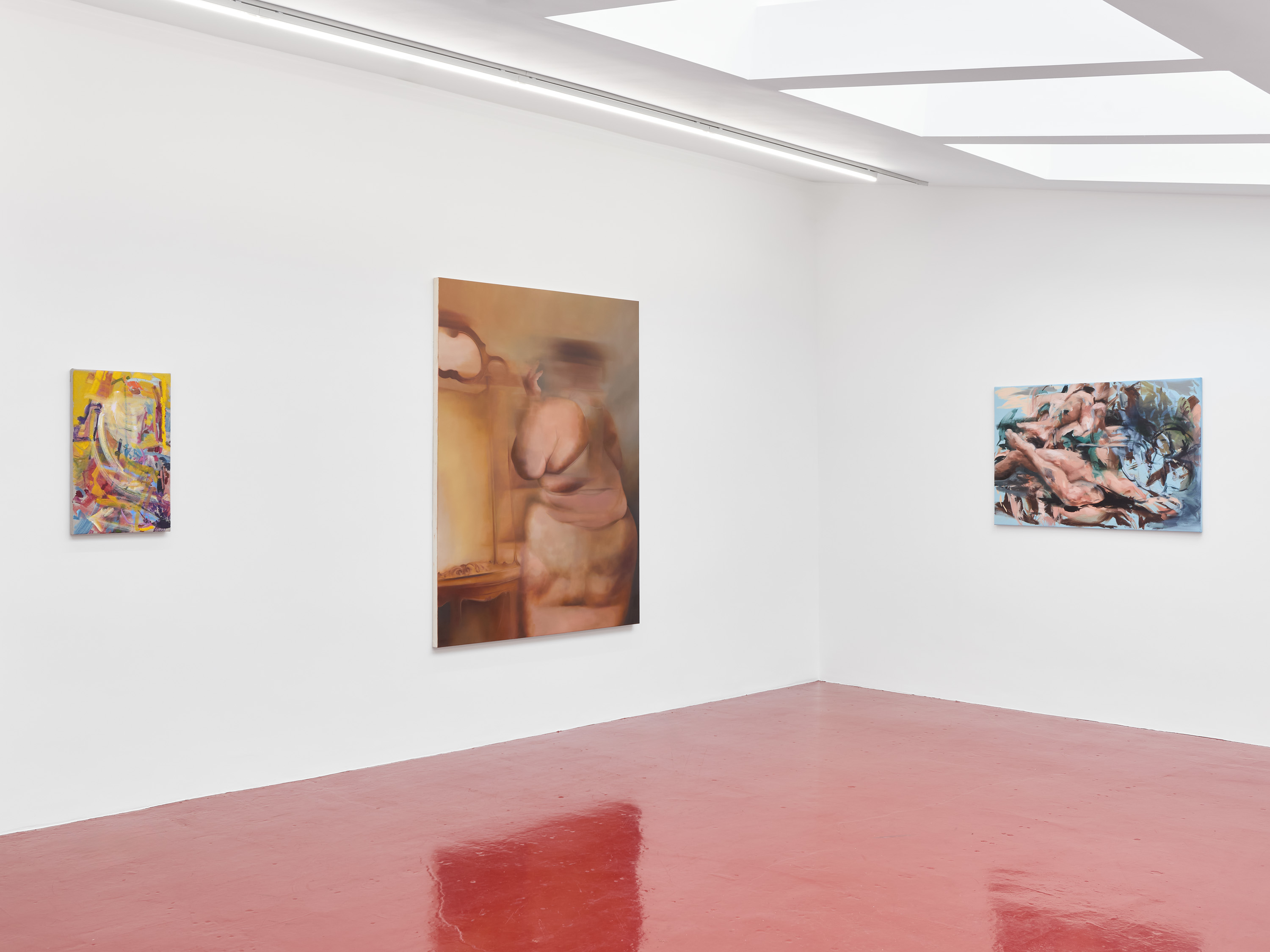
Maybe I was already primed for the exhibition after last month’s archetypal highlight, which had me thinking about what happens to an image as it moves further from its source. Here, I realize we revisit what matters because we do not want to lose it, yet each return gives us another opportunity to alter it. Afterimage pushes that thought into memory itself, where photographs, film, childhood, mythology, and lived experience become material continually reshaped by remembering. Care keeps the image alive, but it cannot promise to keep it unchanged.
I was excited to encounter Johnson again after loving Entanglements, Johnson’s two-person exhibition with Lydia Makin at Harper’s Chelsea 512 this past January. There, Johnson’s faceless, tangled bodies tumbled somewhere between play and violence, while pentimento allowed previous versions of figures to remain beneath later decisions. That process feels almost uncannily suited to Afterimage: alongside Moon’s dissolving forms and Scarlett Budden’s cropped, deliberately staged bodies, the figure becomes something increasingly difficult to hold still.
I think that is exactly memory’s bargain with caring: the things that matter remain with us, but not necessarily as they were. They soften, overlap, disappear beneath newer versions, and occasionally return when we thought they were gone. We do not carry the past forward intact. We carry what attention, attachment, and imagination have made of it.
Elizabeth Dimitroff: The Pale Hour
The Dot Project | Maxstoke Castle, Birmingham - By Appointment Only
Until November 15
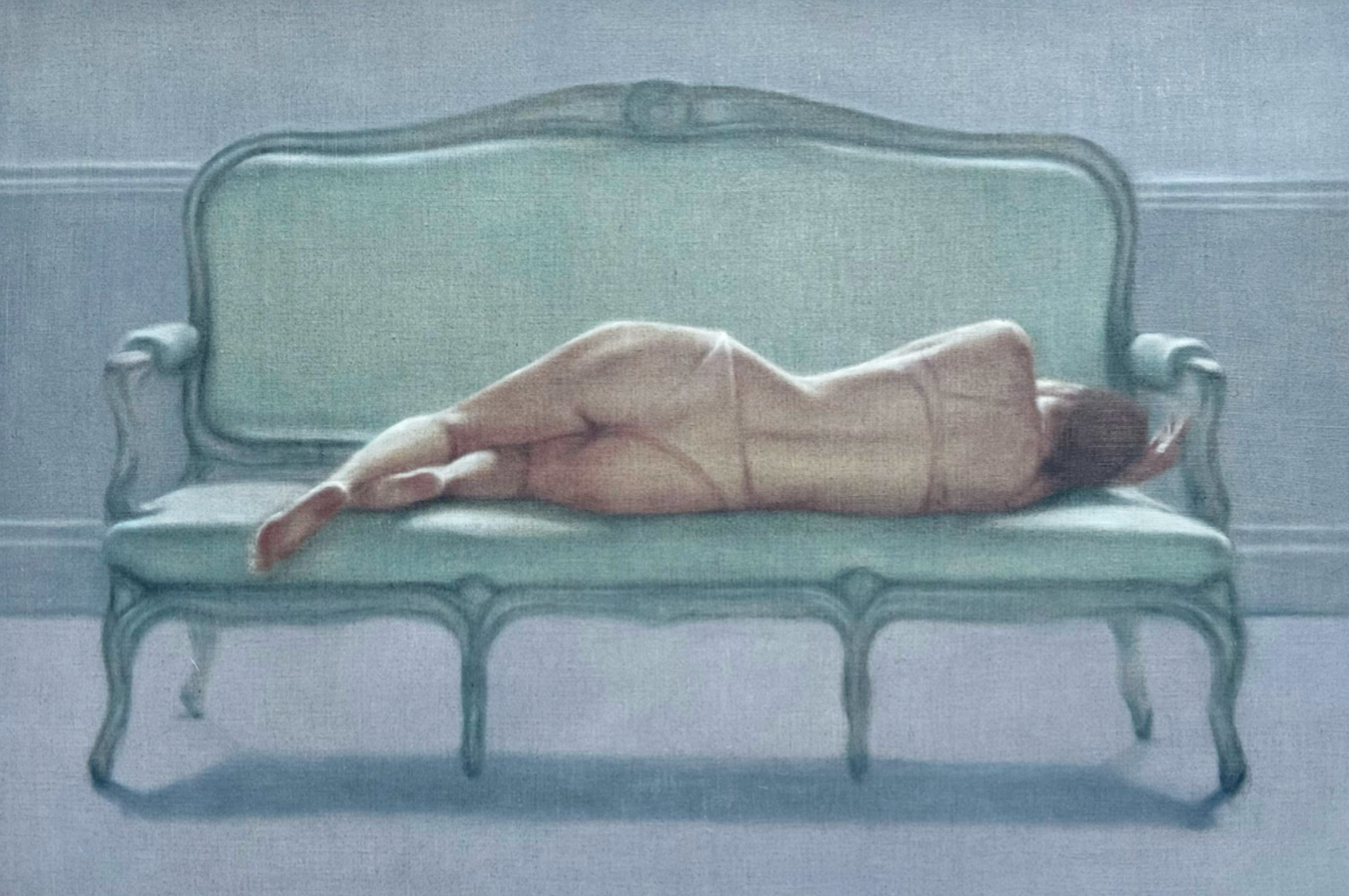
That idea feels particularly present in Dimitroff’s The Pale Hour, created during a three-week residency this September at Coughton Court, a Tudor house that has remained home to the Throckmorton family since 1409. Six centuries of living have left the house heavy with history. Hidden priest holes recall periods when Catholic worship meant risking one’s life, while the family became entangled in the religious and political tensions surrounding the Gunpowder Plot, the failed 1605 attempt to destroy Parliament and kill James I. Knowing that this history forms both the backdrop for the works’ creation and the setting in which they are now displayed changes how the place is received. A wall is just a wall until you learn someone once needed to hide behind it.
Dimitroff’s work has been sitting with me since I saw it this spring in What Holds, What Lingers at LATITUDE Gallery in New York. I really liked the strange suspension of those paintings, where figures occupied spaces that felt familiar without ever quite resolving into somewhere I could place. Seeing Dimitroff take that same uncertainty somewhere as historically loaded as Coughton Court feels fitting. Dimitroff has spoken about returning to the site of a strong memory and experiencing “multiple versions of time” at once. Her paintings seem to operate similarly: forms emerge, soften, and partially disappear, never quite settling into a single version of what was there.
The Pale Hour now returns those paintings to the very place that produced them, folding Dimitroff’s brief encounter with Coughton Court into its much longer history. On display is another consequence of allowing something to matter: a place itself does not need to change for our experience of it to become permanently altered. Once we attach something to it, we can never quite enter the same place again.
Lindsay Merril: Daughter
Enari Gallery | Overtoom 147, 1054 HG Amsterdam
Until December 20
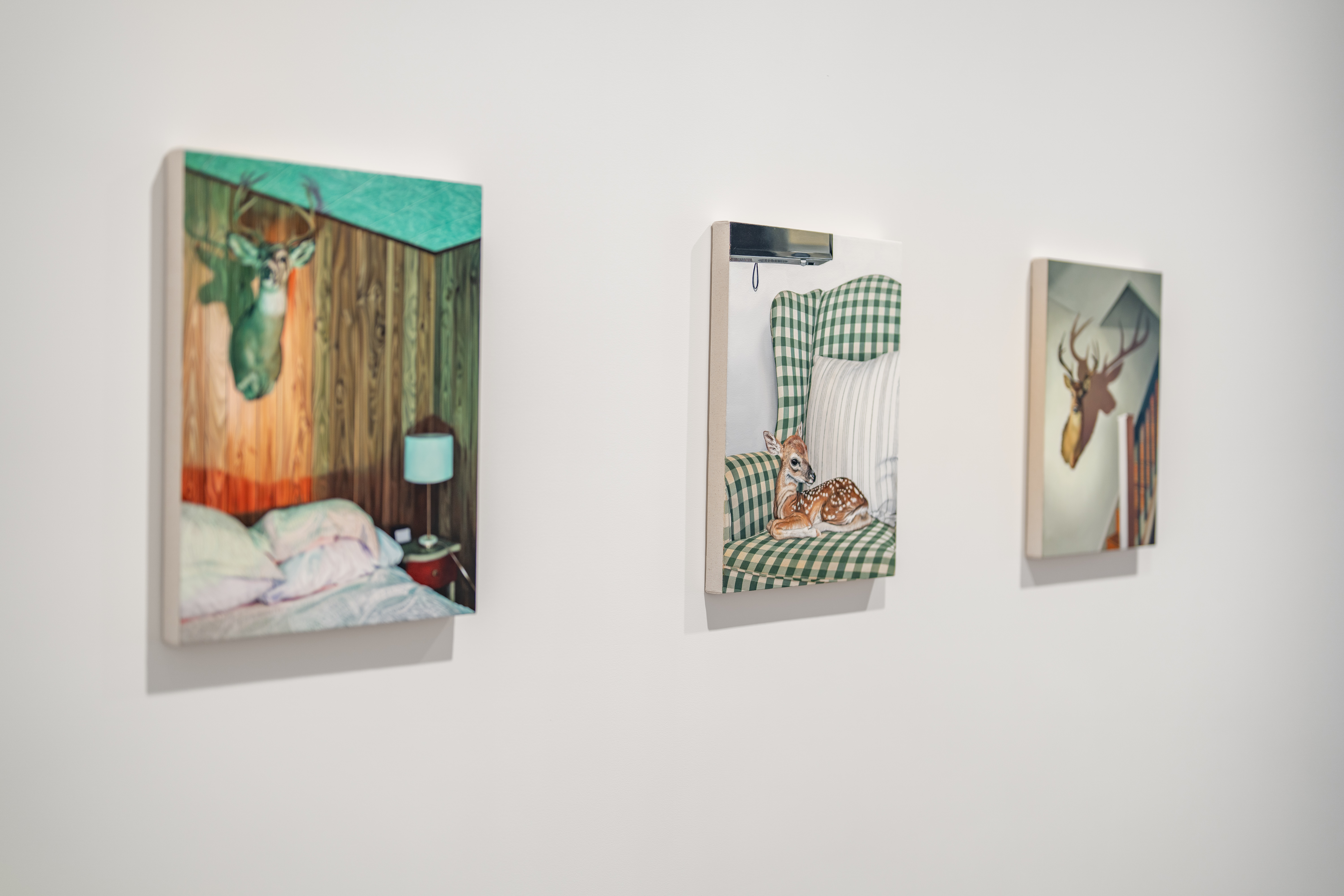
The work itself is beautiful, but the title really changed how I understood the work. Being a daughter implies someone defined by relationship not simply someone who exists. With the title, Merrill extends that idea of family toward the animals in these paintings, giving them a kind of dignity we normally reserve for ourselves. The deer has not changed, but calling the exhibition Daughter changes the way I looked at the subjects. A trophy begins to feel less like an object and more like something that once had a life of its own.
I have focused on what happens after we care: how attachment changes our relationship to the future, the past, a memory, or a place. Daughter asks what happens before that: who or what gets to matter in the first place? If caring can make something feel singular, then choosing not to care has consequences too. The animal does not need to change for its value to change. We do.
That makes Lindsay Merrill’s references to Ovid’s Metamorphoses, Greek mythology, and sacred imagery particularly fitting. Merrill approaches painting as a way of giving life back to something that has been made still. But the transformation here is not really the animal’s. It is ours. Value is subjective, shaped by where we choose to place our attention and what we are willing to see as worthy of care. By shifting the deer from trophy to Daughter, Merrill does not tell us what it is worth. She changes the relationship through which we are asked to consider its worth. In the end, allowing something to matter may be less about discovering value than deciding to look closely enough for value to take hold.
Syed Hussain / Kris Knight / Alireza Shojaian: There is a Field, I’ll Meet You There
Edji Gallery | Rue du Page 15, 1050 Bruxelles, Belgium
Until November 14
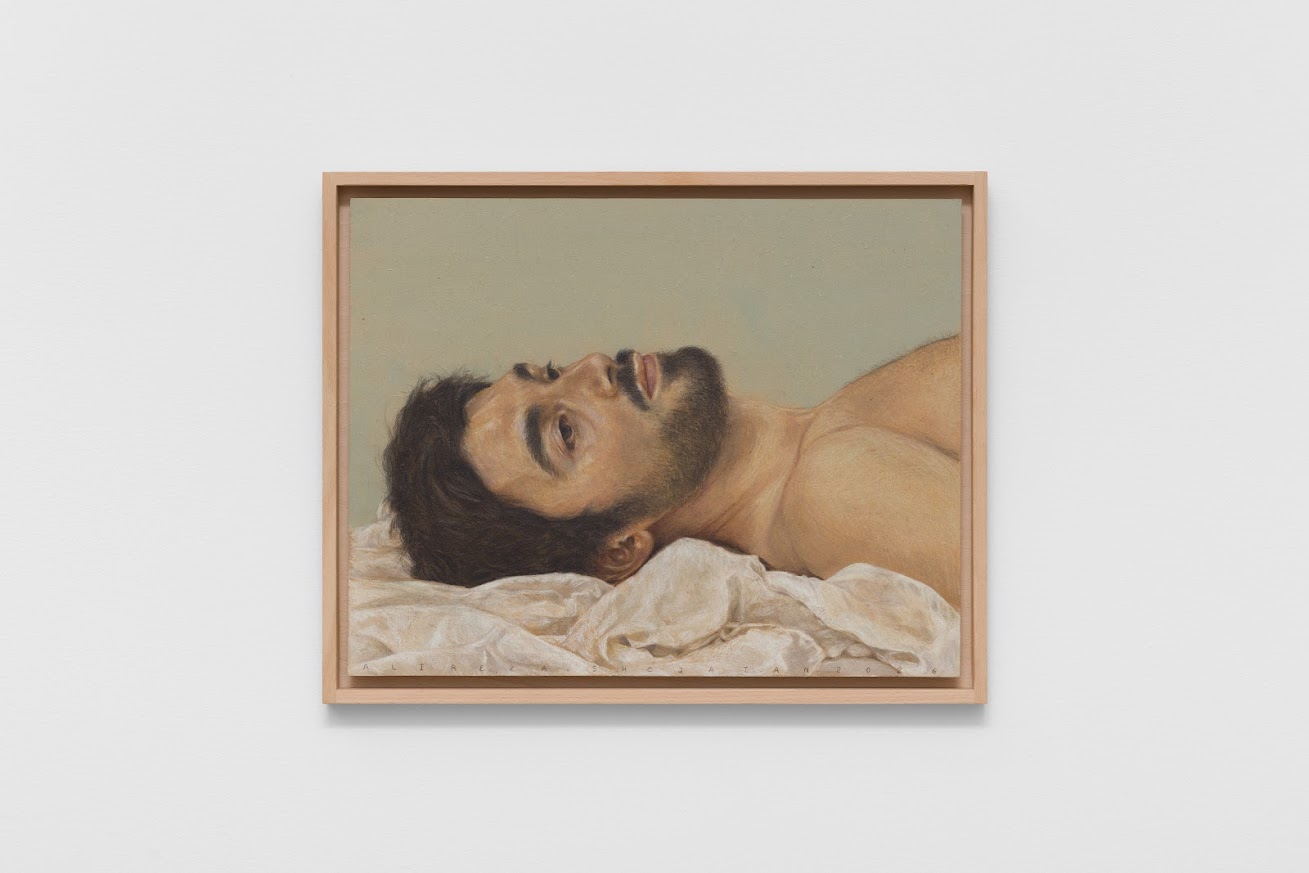
Until now, I have largely considered caring as the starting point: something matters to us, so we allow it to affect us. This exhibition makes me wonder if that order can be reversed. We encounter people, histories, and experiences that have nothing to do with us, yet by giving them our attention, we allow ourselves to be affected before we have decided that we care. That effect might actually be where caring begins. It also does not require us to fully understand another experience or translate it into something familiar. We often care easily for what we recognize ourselves in. The harder exercise is allowing something completely outside our own experience to matter anyway. There Is a Field, I’ll Meet You There creates room for that encounter without asking difference to disappear first.
Group Show: The Table
Homecoming Gallery | Frederiksplein 45, 1017 XL Amsterdam
Until January 30, 2027
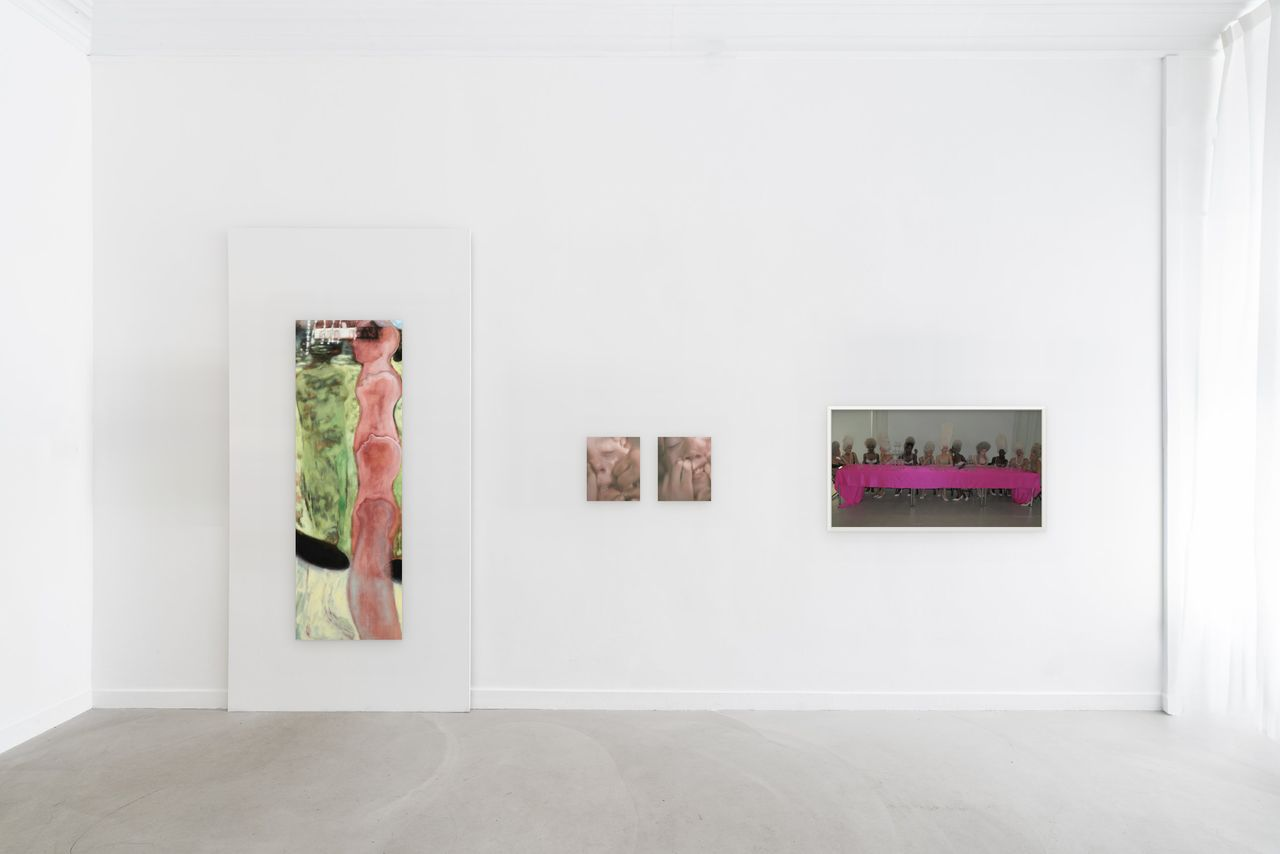
The Table takes that familiar object and expands its meaning outward, contrasting the everyday table of conversation with the far smaller tables of power where decisions affecting everyone else are often made. The exhibition itself grew from a conversation about efforts to bring basic human-rights principles into the development of new technologies. Suddenly the question is not only what happens around the table, but who gets a seat at it.
So much of this month has dealt with significance on a personal scale: the memories, relationships, homes, places, and futures that become important because we care about them. There Is a Field, I’ll Meet You There asks us to care about experiences that may sit completely outside our own. The Table takes that idea one step further: once we recognize that something matters beyond ourselves, are we willing to give it a place in the decisions we make together?
Something does not become less important simply because its consequences belong to someone else. Caring also means recognizing the weight of experiences, voices, and futures that may never be our own. A table, then, is meaningful precisely because it is rarely about the table. Its value comes from who we allow around it, what we are willing to hear once they arrive, and whether their presence actually changes what happens next.
Group Show: Celălalt / The Other
IOMO Gallery | Bulevardul Maria 9, Bucharest
Until November 28
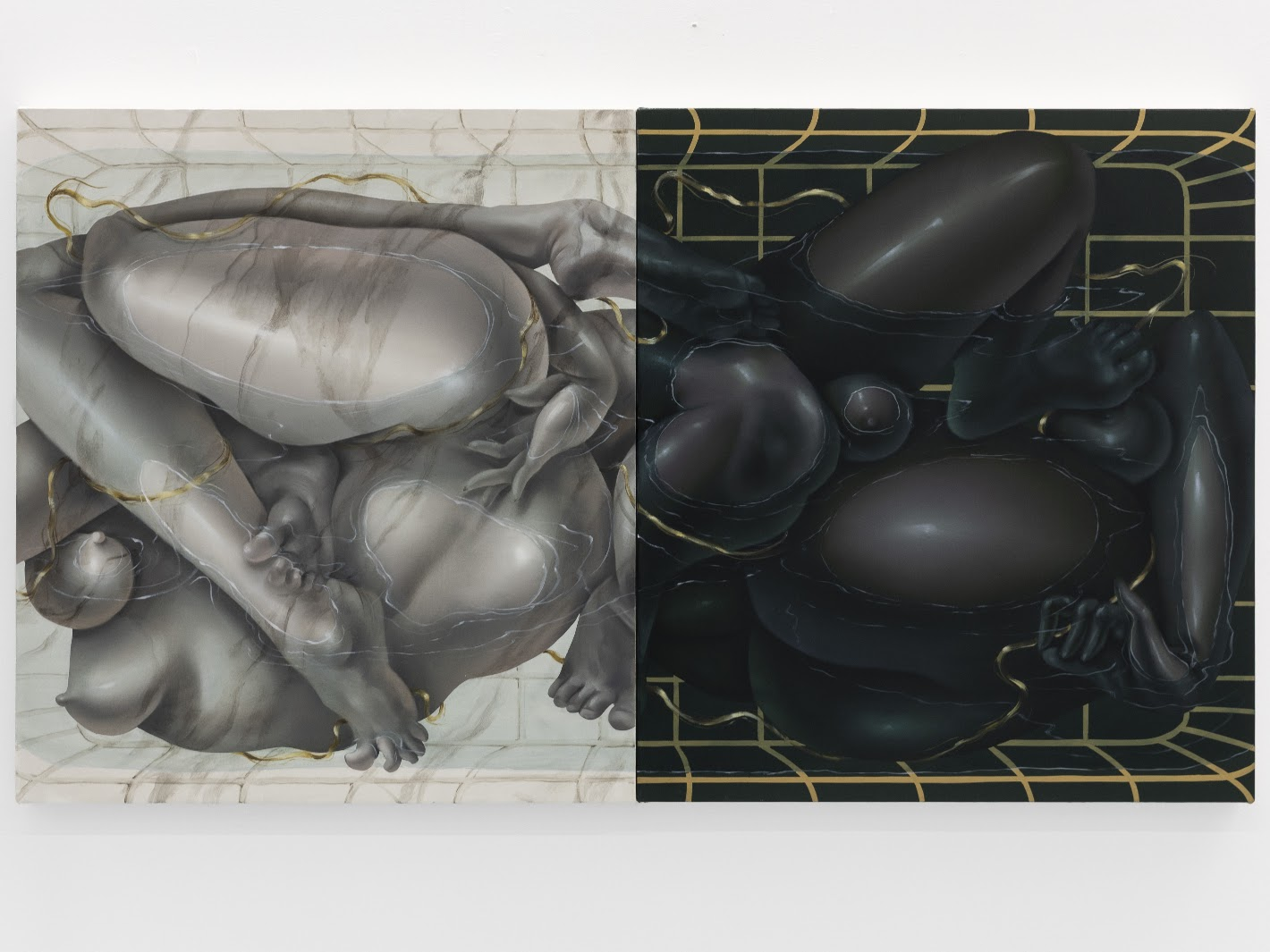
That idea stuck with me. We spend so much effort trying to be accepted into the center that we rarely question why the center gets to decide the terms. Across sixteen artists, the exhibition treats otherness less like a problem requiring correction and more like a position with its own possibilities. If something feels strange, unfamiliar, or difficult to place, our first instinct is often to decide how much attention it deserves based on how closely it resembles what we already know.
Celălalt / The Other turns that instinct around. What sits outside our understanding can still matter without first becoming familiar, and its unfamiliarity may be precisely what makes the encounter useful. Sometimes the thing standing outside the circle is not the thing that needs reconsidering. It is the circle.
Alicja Pakosz: Tipping Points
ADA Project | Via Dei Genovesi, 35, Rome
Opening November 11
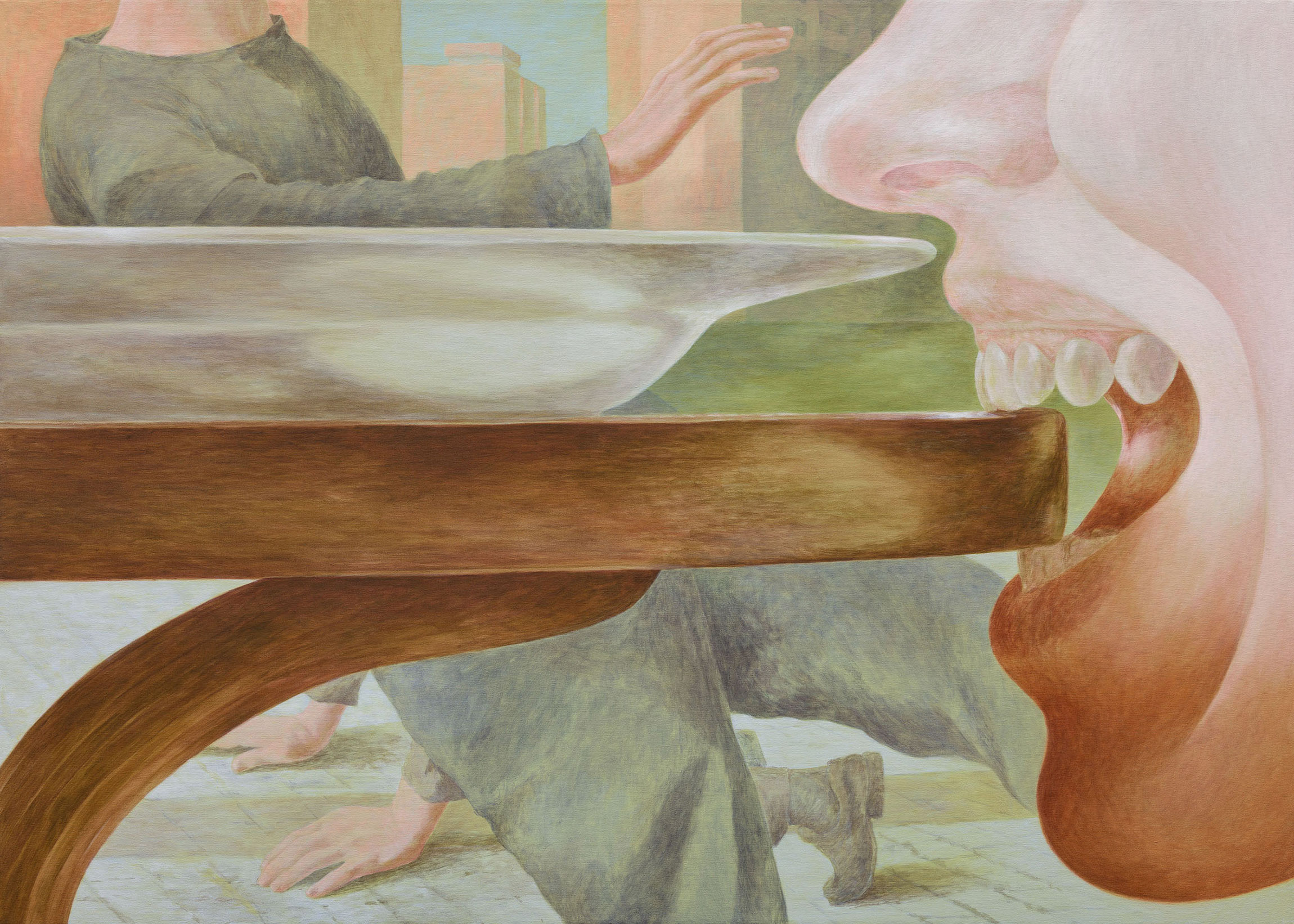
Nothing reaches a tipping point all at once. It takes accumulation: enough pressure, repetition, or time until something previously manageable suddenly feels capable of changing everything. That feels fitting for Alicja Pakosz, whose practice begins with an ongoing archive of small A4 paintings before selected images develop into larger canvases, installations, and dioramas. Personal and family histories similarly expand throughout the artist’s work, opening onto broader questions of memory and identity.
Pakosz renders bodies and objects with careful specificity, allowing surreal shifts in scale and perspective to feel physically convincing. The body has long operated as a measure of pressure in the artist’s practice. In the earlier 2025 exhibition Fight, Flight, Freeze, Friend at ADA, different bodily positions served as metaphors for our instinctive responses to threat and uncertainty.
What interests me, however, is how much finality we assign to a tipping point after it happens. We love turning moments into dividing lines: before the breakup and after it, before the firing and after it, before everything changed. But life rarely respects those divisions as neatly as we do. A firing does not erase the career that preceded it or determine where that career can go next. A relationship ending does not make everything experienced within it meaningless. Positions change, circumstances reverse, people return, and lives that appeared to be moving in one direction can move somewhere else.
A tipping point may matter less as a permanent break than as a moment whose meaning depends on what we do with it afterward. Care gives these events enormous weight, but that weight does not have to fix us permanently in the position where they left us. What matters can hurt, alter, or temporarily overwhelm us without becoming the final definition of what follows.
Johanna Bath / Emma Currie / Anastasia Kuznetsova / Sondria Meszaros / Jordan Schiffer / Marie Tomanova: Tender / Tender
Her Clique Lisbon | Largo do Contador Mor 4, Lisbon
Opening November 6
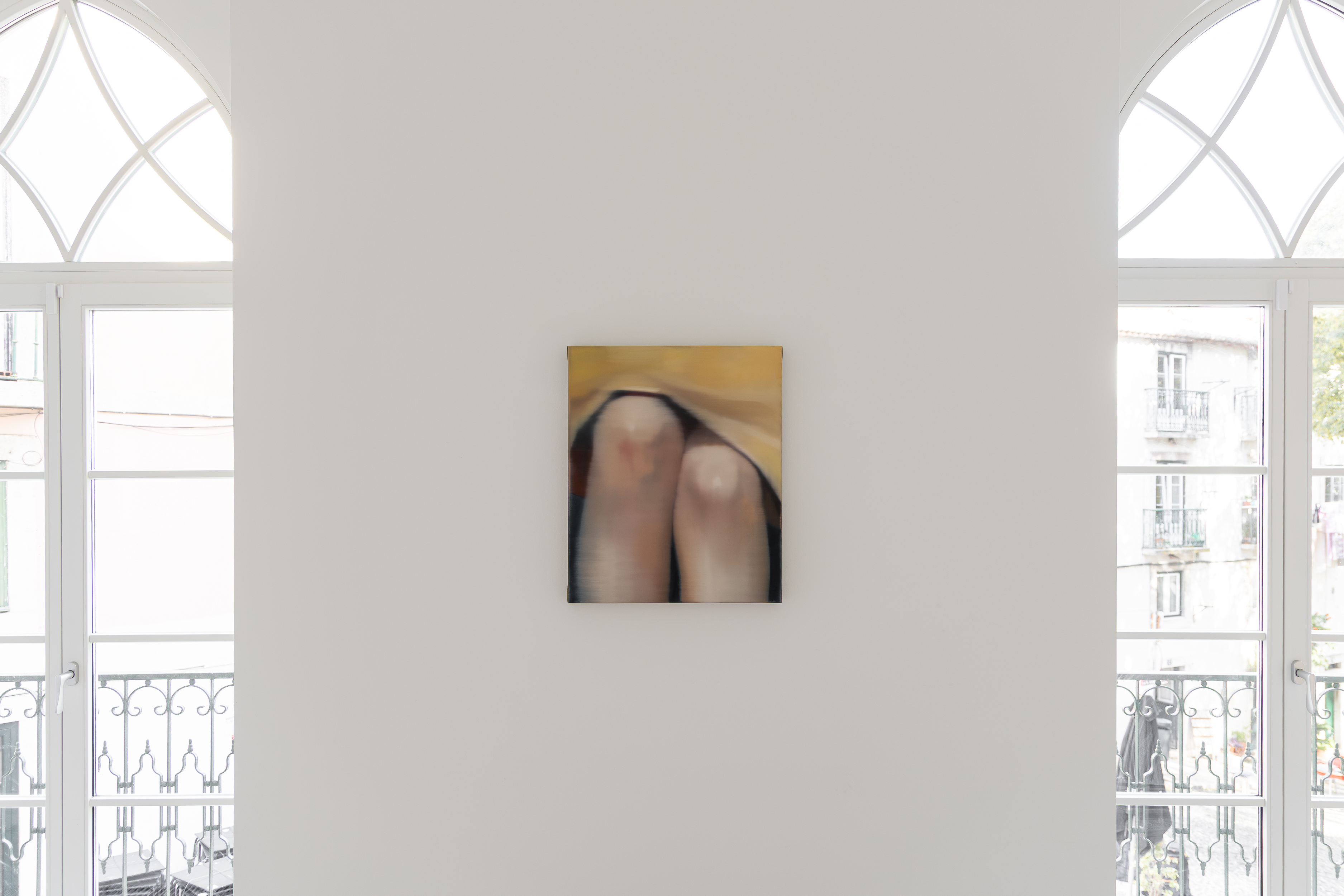
There are exhibitions that fit neatly into an idea you are already developing, and then there are exhibitions that change the idea itself. Tender / Tender did the latter for me. Curated by Izabela Depczyk, the exhibition begins with the double meaning hidden inside a single word: tender can describe the act of caring for something, but it can also describe the place that hurts when touched. That contradiction flourished into much of what I have been thinking about throughout this month’s column. To care is to become sensitive to what happens next.
I was already excited by the inclusion of Bath, whose paintings stood out to me after encountering the artist at The Armory Show with no other than Enari Gallery earlier this year. Here, Bath withholds as much as the paintings reveal: a cropped frame, covered knee, or glimpse of skin allows intimacy without making the figure completely available to us. Across the exhibition, that push and pull takes different forms. In Emma Currie’s Bite and Hold, affection sits uncomfortably close to possession; Meszaros cuts apart vintage images of women and reassembles the visual histories through which desire has been packaged; Marie Tomanova places the body against saltwater and cacti, where contact can quite literally leave a mark. Anastasia Kuznetsova turns toward the way an old intimacy can unexpectedly return through dreams, while Schiffer considers love through the traces it leaves after the moment itself has passed.
What I love about Tender / Tender is that none of this requires tenderness to be innocent. Care can comfort, but it can also grip. Intimacy can protect us while giving another person access to the places where we are easiest to hurt. A memory can preserve something we loved while making us experience its loss again. The bruise from my introduction suddenly becomes less of an analogy than a useful definition: touch alone does not determine whether something hurts. The condition of what receives it does.
And that brings me back to the very argument for this month’s archetype. Caring is not simply deciding that something is important. It changes our sensitivity to it. A stranger’s silence means little; the silence of someone we love (or like… or even as little as have an affinity towards) can consume an afternoon. A place is just a place until something happens there. A memory can be harmless until the person inside it begins to matter again. The amount of pressure may be ordinary, but care changes how deeply we feel it.
Tender / Tender brings the contradiction I had been circling throughout these exhibitions into focus: what gives life its emotional weight is often the same thing that makes that weight difficult to carry. Caring exposes us to hurt, but removing that risk would also mean removing much of what makes an experience meaningful. Tenderness is not something to overcome. It is what allows the touch, the care, and sometimes the hurt, to register at all.