



Sometimes, the internet breaks. Not in the catastrophic sense—just for a moment. A loading error. A broken link. A 404 page. In these moments, the illusion of seamless digital connectivity slips. The scaffolding beneath the internet is revealed, and you can do nothing but stare at your reflection looking back at you through the glass of your phone screen. You’re waiting.
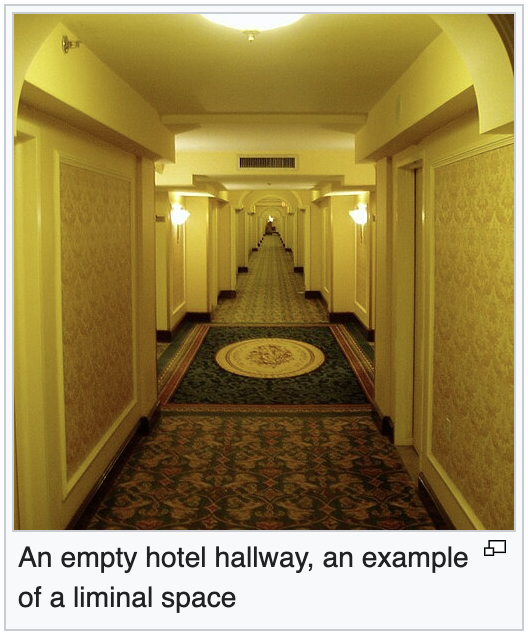
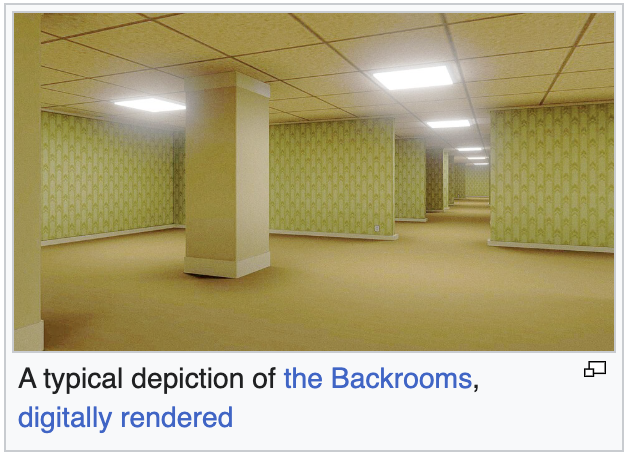
If you were anywhere on the internet in 2019, you might have come across the viral obsession with liminal spaces—that is, these empty, eerie, and surreal places that feel disorienting, yet familiar. One of the most popular examples of a liminal space was the Backrooms: a maze of empty rooms with nothing but “the stink of old moist carpet, the madness of mono-yellow, the endless background noise of fluorescent lights at maximum hum-buzz, and approximately six hundred million square miles of randomly segmented empty rooms to be trapped in.” Since then, internet explorers from all over have shared countless other liminal spaces, all evoking the same feelings of discomfort and in-betweenness.
The internet is interesting to me because it is a place, for all intents and purposes, that is simultaneously exempt from placeness. Much of my recent work as an artist, designer and researcher has been concerned with this phenomenon, among other facets of digital culture.
Online, you can log on, be present, speak, post, whatever—but also be nowhere.
You’re in a browser tab. And whether that tab is a social media site, blog, or Wikipedia article, it holds weight. It’s a place in the sense that it is an environment where people gather, although not subject to physical restraints. Dislocated from geography, boundaries are blurred and your experience of presence is fragmented. It’s a place that resists being a place.
This concept of liminality intrigued me. When the phrase was coined by Arnold van Gennep in 1909, it was described as the middle phase of a rite of passage, or a person’s transition from one social stage to another. Liminality is the in-between; the ambiguous, transitional state where normal rules are suspended and identity is fluid.
Online, I see loading errors as digital liminalities. There is a jolting feeling of presence in absence. Each time Instagram goes down or I visit a broken link, I’m reminded of myself. I’m acutely aware of my body and my mind and the screen that separates me from this vast digital world. It’s like breaking the fourth wall, or catching your reflection in the subway window.
But why does digital liminality feel so uncomfortable? Of course, it’s frustrating when you expect something to work and it doesn’t, but there’s something more to say about the mental experience of being suspended between digital spaces. Author and theorist Mark Fisher describes the absence of something expected as the eerie—an unsettling feeling of something not quite right. Digital liminalities are moments where you anticipate the structure of the internet, and you’re met with…nothing. It’s quietly uncanny. The bones behind the drywall are revealed for just a moment, and you are face-to-face with a structure that is not functioning the way it is supposed to. You’re reminded that the internet is not forever and always. The central discomfort here is the loss of agency—or rather, the illusion of it. Because if we are not in control of whether the internet works the way it should, then who is? The presence of absence forces us to reckon with the structures that govern our digital lives, and this is inherently uncomfortable.
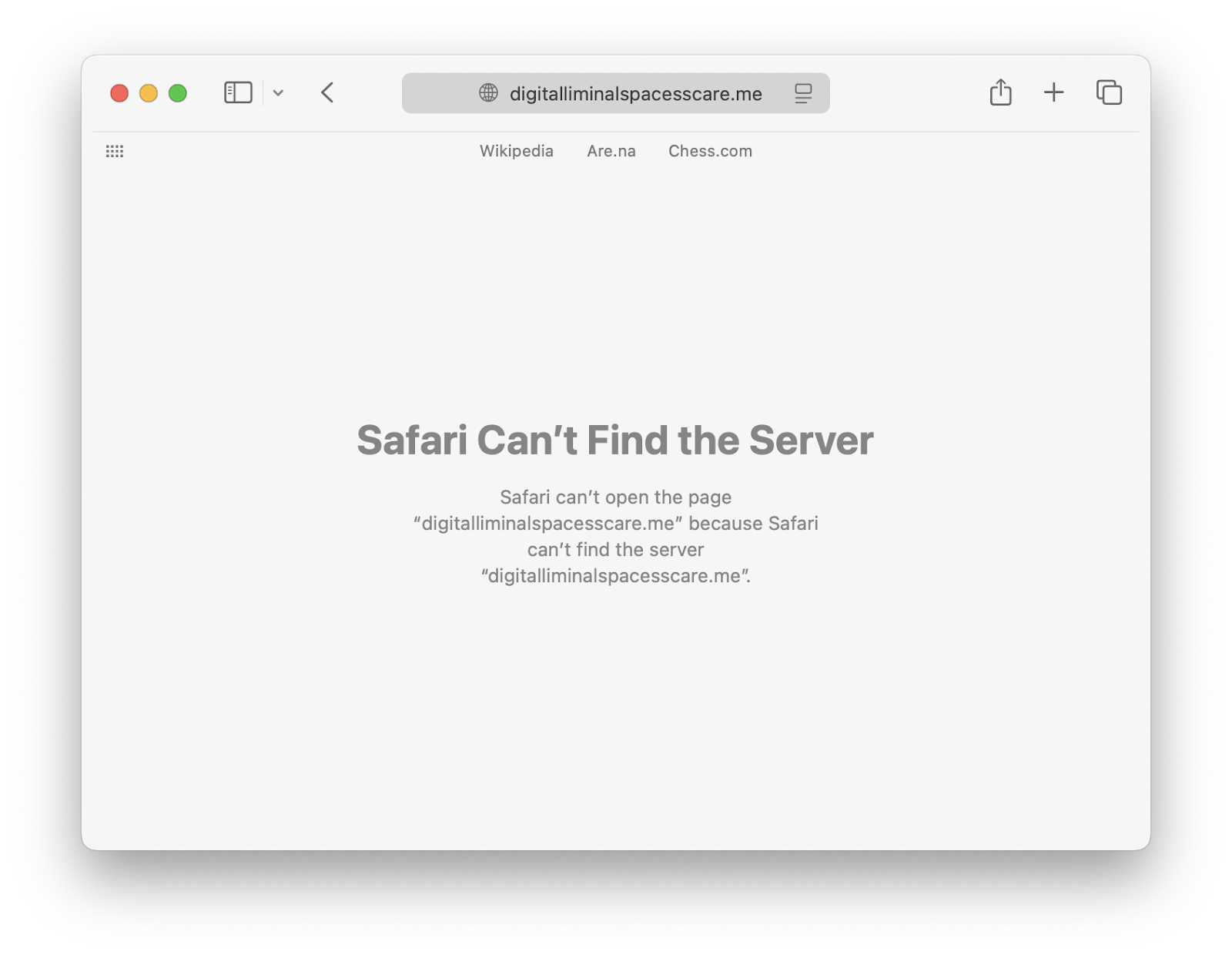
In a liminal state, you’re temporarily suspended from pre-existing structures, making space for a raw, unmediated connection between people outside of their usual roles.
Being online today is weird. The internet is not a place in the same way it was in the confines of the 2000s computer room, when walking away from the desk meant walking away from the online world. Today, we’re always online, or at least able to be online, which is mostly the same thing. The internet is omnipresent like an electrical grid or the air we breathe. And this isn’t necessarily a bad thing—I love the internet and the person I get to be because of it. But it can be exhausting playing the role of an internet explorer at all times, and jarring when that illusion breaks.
Maybe digital liminality is an opportunity for reflection and reorientation for our online selves. The next time Instagram goes down, look for communitas in the crowd of people flocking to tweet about it. When a webpage won’t load, reflect on what it means (and doesn’t mean) to be behind a screen. In these suspended moments, we’re no longer just consumers gliding through cyberspace; we become witnesses to the limits of the internet, and maybe even to our own dislocation. In every lag, glitch, and error, there’s room to recalibrate and sit with the strangeness of being online, together.