



What if the runway's most theatrical moments aren't just distractions, but deliberate responses to our chaotic world? In 2025, fashion's embrace of fantasy isn't mere escapism, it's a way to reconnect with ourselves.
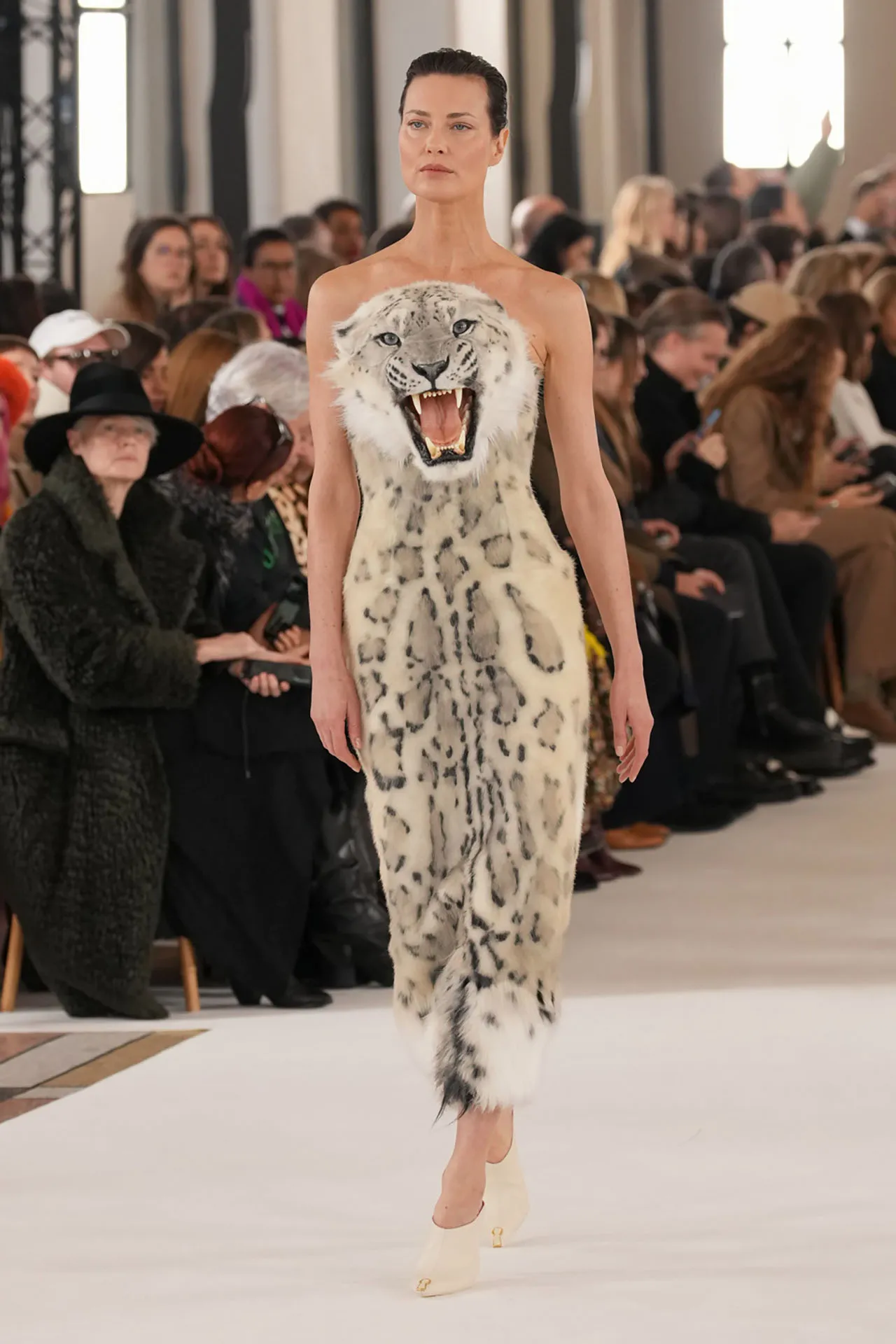
We’re living through a moment where fashion is leaning hard into fantasy. LOEWE sends pixelated coats and melting shoes down the runway. Diesel builds a literal mountain of denim and screens a 90-minute erotic film before showing its collection. Schiaparelli crafts sculptural lion heads and gilded organs into couture gowns that feel pulled from myth, not moodboards. The spectacle is inescapable and deliberate. But here’s the twist: it doesn’t feel hollow.
These spectacles aren't about escaping reality but confronting it.
They invite us to pause, reflect, and find meaning amidst the madness. In a world that often feels overwhelming, fashion's surreal turn offers a moment of clarity, a reminder that even in chaos, there's beauty to be found.
If the early 2020s gave us beige minimalism and “clean girl” energy (see: TikTok, Hailey Bieber, and that relentless oat-toned aesthetic), the current cycle, one defined by maximalism, camp, and surrealist excess, feels like fashion's backlash. Designers aren’t whispering wellness anymore like in Jacquemus’ lemon-toned serenity or Loewe’s anthurium-embellished calm, they’re screaming symbolism. And in the chaos, literal and conceptual, there’s something grounding.
Surrealism is not just about distorting reality; it mirrors its chaotic rhythm, drawing from a tradition that stretches back to Salvador Dalí and the dreamlike disorientation of postwar Europe. As art historian Dawn Adès once wrote, “Surrealism is destructive, but it destroys only what it considers to be shackles limiting our vision.” In fashion today, that vision is messy, symbolic, and definitely alive.
Take LOEWE. Jonathan Anderson’s recent collections are dreamscapes: pixelated puffer jackets, balloon-animal shoes, rosette-covered coats that make models look like walking bouquets. It’s playful, yes, but also oddly emotional.
There’s a vulnerability in fantasy.
These pieces don’t pretend to solve the world’s problems, but they ask us to look at them differently. To pause. To imagine softness as strength. To imagine absurdity as honesty. To imagine a world where dressing up is less about control and more about feeling seen, unreal, and alive.
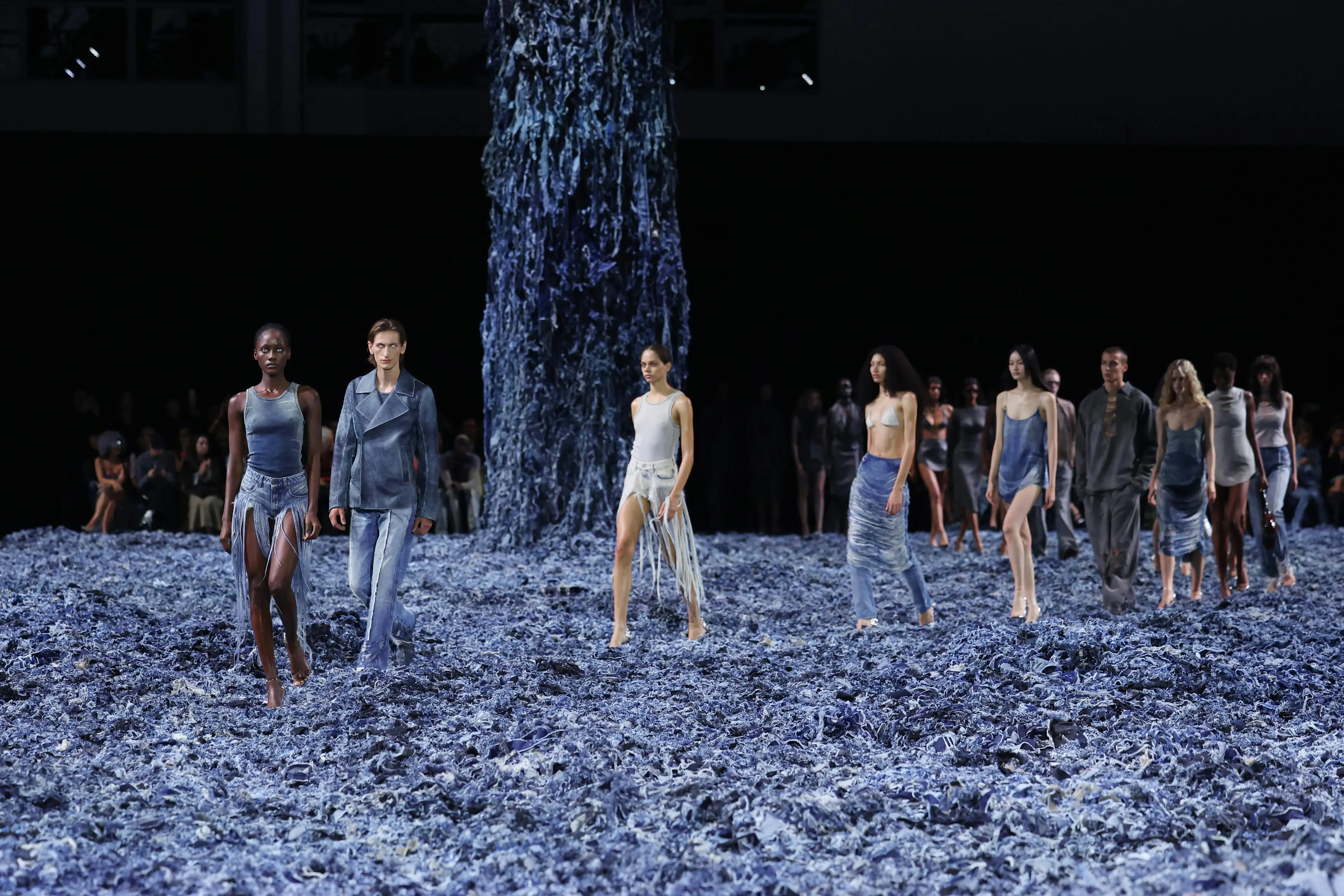
Or consider Diesel under Glenn Martens, the reigning king of chaotic energy. He floods runways with industrial wastelands, casts real couples making out in the front row, and turns deadstock denim into sculptural statements. It’s messy, maximalist, sometimes absurd, but it’s not mindless. In fact, it feels almost meditative. When everything is screaming for your attention, you become hyper-aware of what you're feeling.
Maybe that’s the point. Maybe fashion, at its most fantastical, is less about escape and more about encounter. When a show unsettles us, when it’s weird, or too much, or tender in unexpected ways, it forces a kind of stillness. We stop doom scrolling. We forget the group chat. We feel something.
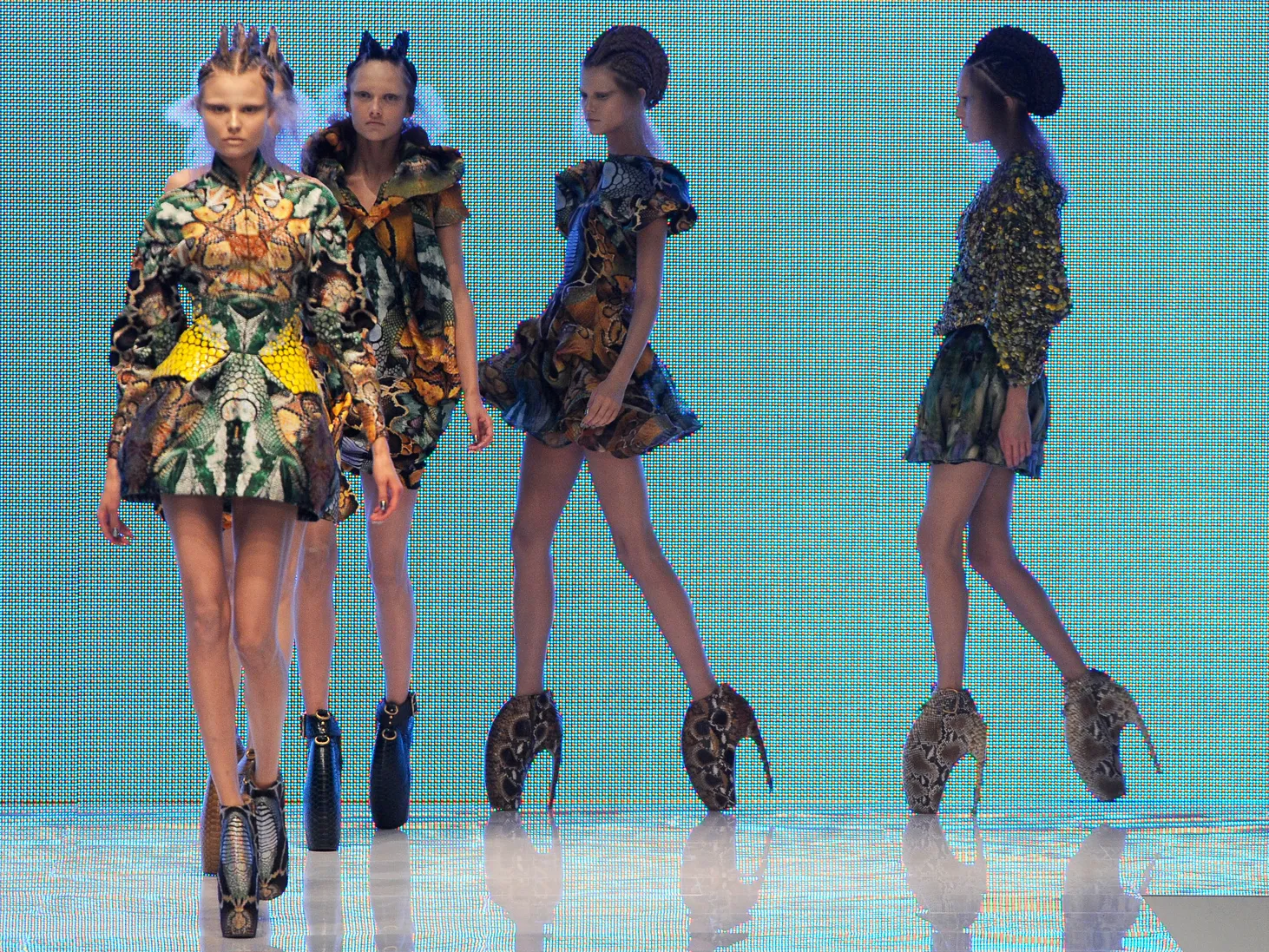
Escapism in fashion isn’t new. From the wartime couture of the 1940s to Alexander McQueen’s gothic dreamworlds, fashion has always offered sanctuary. But today’s escapism isn’t about looking away. It’s about looking through, about building portals, not blindfolds. There’s a difference between fantasy that hides and fantasy that heals. Think of Dior’s 1947 New Look, a silhouette built to distract from austerity, versus Schiaparelli’s recent SS24 collection, where sculptural surrealism and gilded anatomy confront beauty, mortality, and the body head-on. One offered escape; the other, reckoning.
So yes, escapism wears Prada. But she also wears Coperni’s glass handbags, Balenciaga’s theatrical nihilism, and any garment that turns the runway into ritual. In a world that feels too fast, too fractured, too much, these shows slow us down. They invite awe. They make space for feeling. And in that moment of pause, sparkly, strange, and just a little surreal, we find ourselves again.
Surrealism doesn’t pull us away from reality, it refracts it, distorting it just enough to make it visible.
As artist Leonora Carrington once said, “The task of the right eye is to peer into the telescope, while the left eye peers into the microscope.” These surreal visions allow us to look far away and up close, holding the vast and the intimate in the same frame. They remind us not of escape, but of presence. Inviting clarity not in spite of the chaos, but through it.
They lead us back into reality, more awake, more grounded, and more human than before.