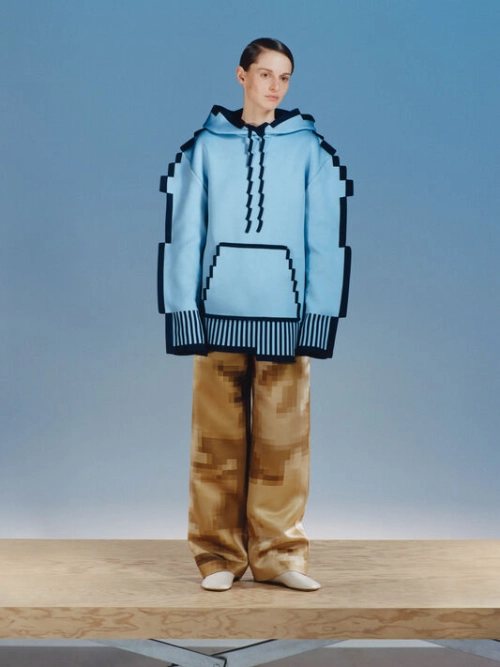




A plumber, a leather daddy, and a cowboy strut onto a New York runway, all in the name of gay sheep. Yes, gay sheep. The “I Wool Survive” show November 13 served up a spectacle like no other: clothes created entirely from the wool of “male-oriented rams.”
Humans aren’t the only ones waving pride flags. One in twelve rams prefer males and refuse to mate with females. These sexually non-conforming rams are usually sent to the slaughterhouse. German sheep farmer Michael Stücke started rescuing some of these rams a couple years ago and selling their wool under the brand Rainbow Wool.
Designer Michael Schmidt, internationally known for fashioning looks for pop icons such as Cher, Megan Thee Stallion, and Sabrina Carpenter, joined forces with Stücke and Grindr, the gay dating app, to create a project with a gravitas that extended way beyond the runway. “I don’t view this really as fashion. I view it as an art project,” Schmidt said. That, and “an animal rights story… a human rights story.” The message that resounds throughout every piece is this: queerness is a natural part of the world, and not in any way “abnormal.”
The beautiful and valuable sheep are a metaphor for all of us: sometimes disregarded and misunderstood, and yet when we find our flock, we build networks.
And those networks become our power and our strength,” said Tristen Pineiro, vice president of marketing and communications at Grindr.
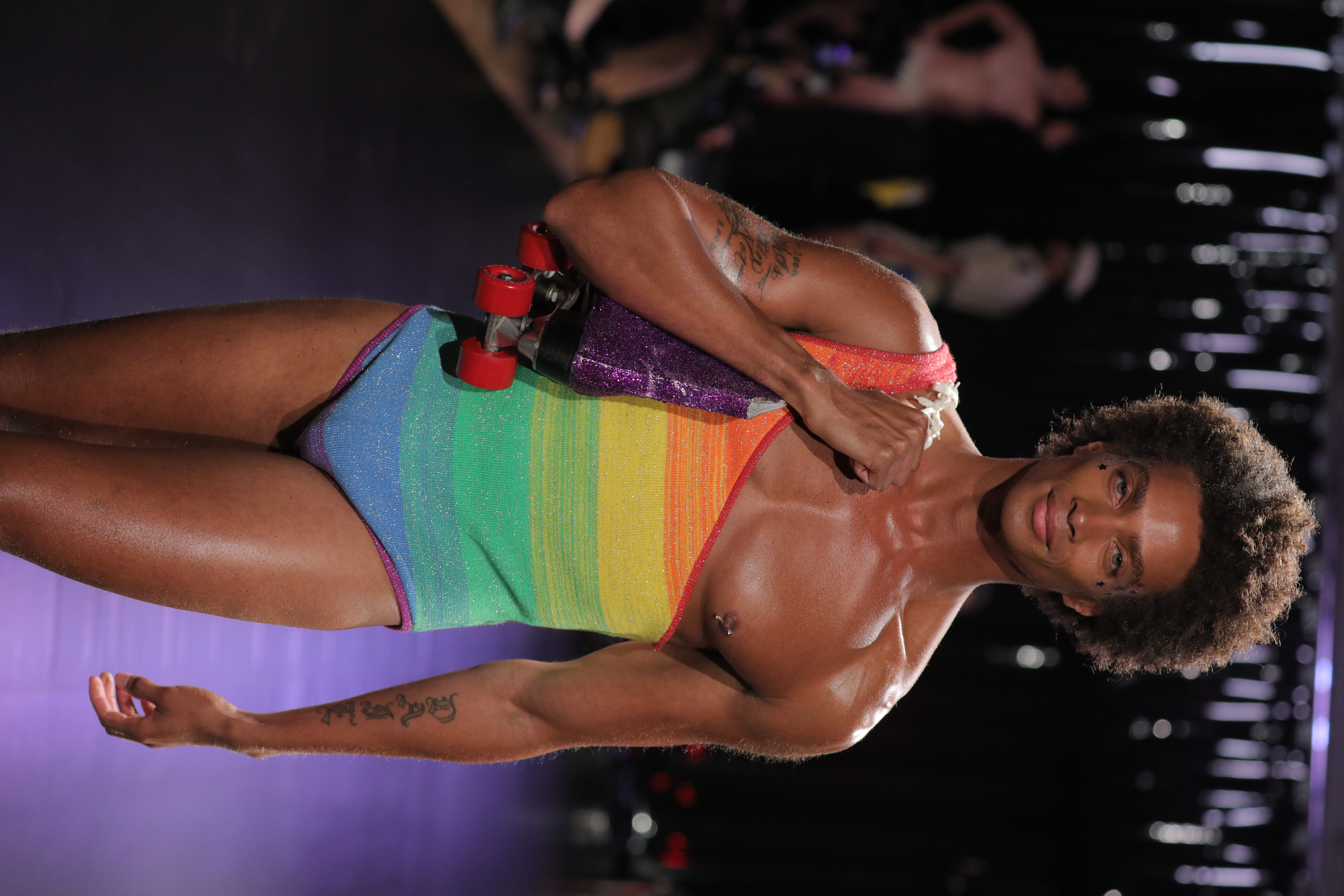
Each outfit embodied a campy, queer-leaning archetype, equal parts sexy and symbolic. “Sailor,” “roller disco baby,” “pool guy,” “lumberjack,” “daddy next door,” and, a crowd favorite, “leather pup” were among the thirty-six looks the collection flaunted. Stylist Alec Malin peppered this tour de force with sartorial subtleties that furthered the allure: a partially exposed groin spotlighting a defined V-line; a provocative pop of the collar; shoes that tarried the line between fetish and function.
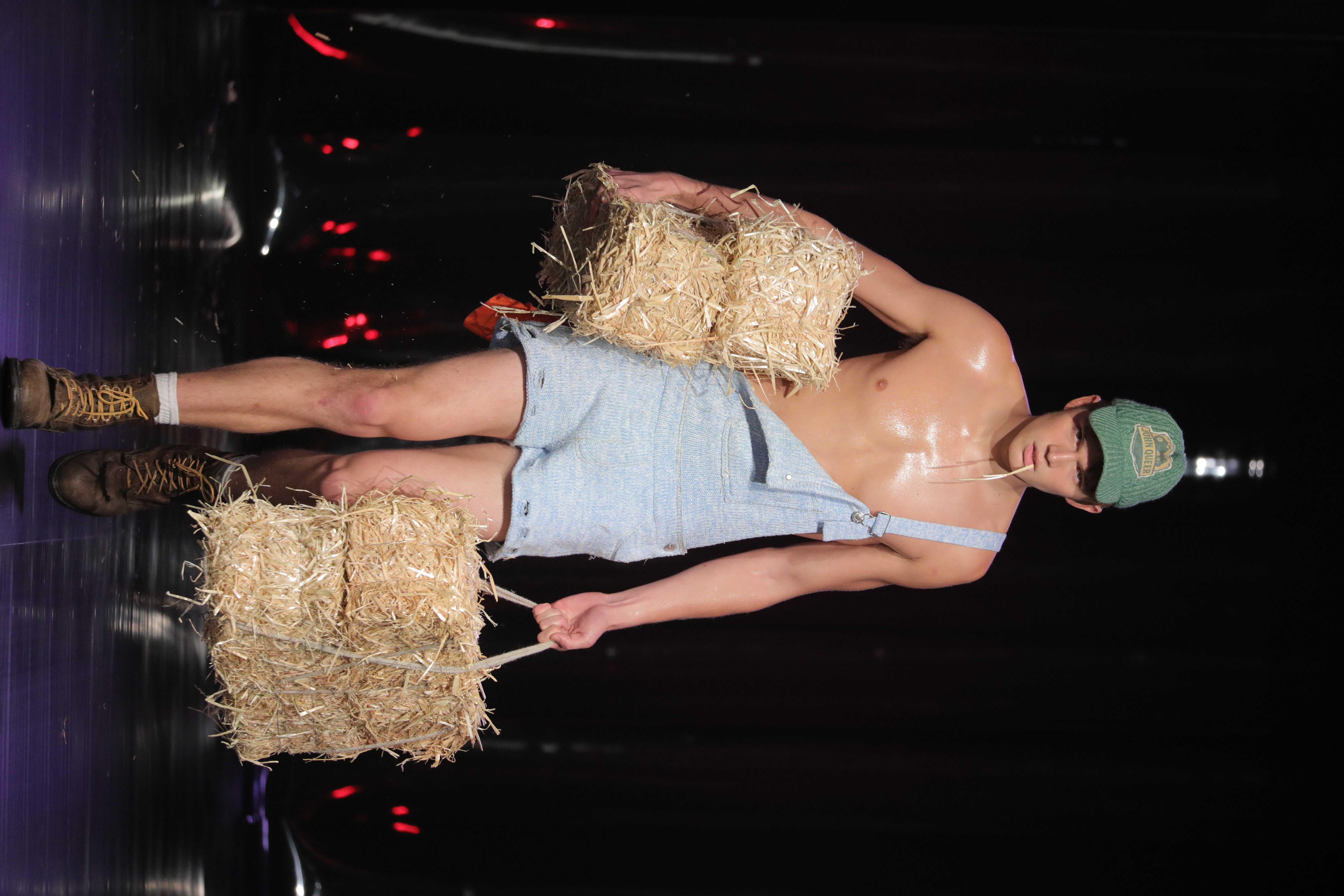


The personas felt like a playful subversion of Jungian archetypes, figures assumed to be universal symbols and themes in our collective unconscious. These archetypes, according to fashion historian and curator Valerie Steele, have long inspired designers, whether consciously or not. The use of wool from gay sheep aside, Schmidt’s looks break the mold and gesture toward a more radical and fringe collective unconscious. One that is specific to queerness—and, more generally, diversity—and representative of its nuances.
These looks aren’t just titillating spectacles meant to enthrall every gay boy from Harajuku to San Fran. They’re defiant heroes hellbent on disrupting the dogmatic narratives dictating who we can and cannot be.
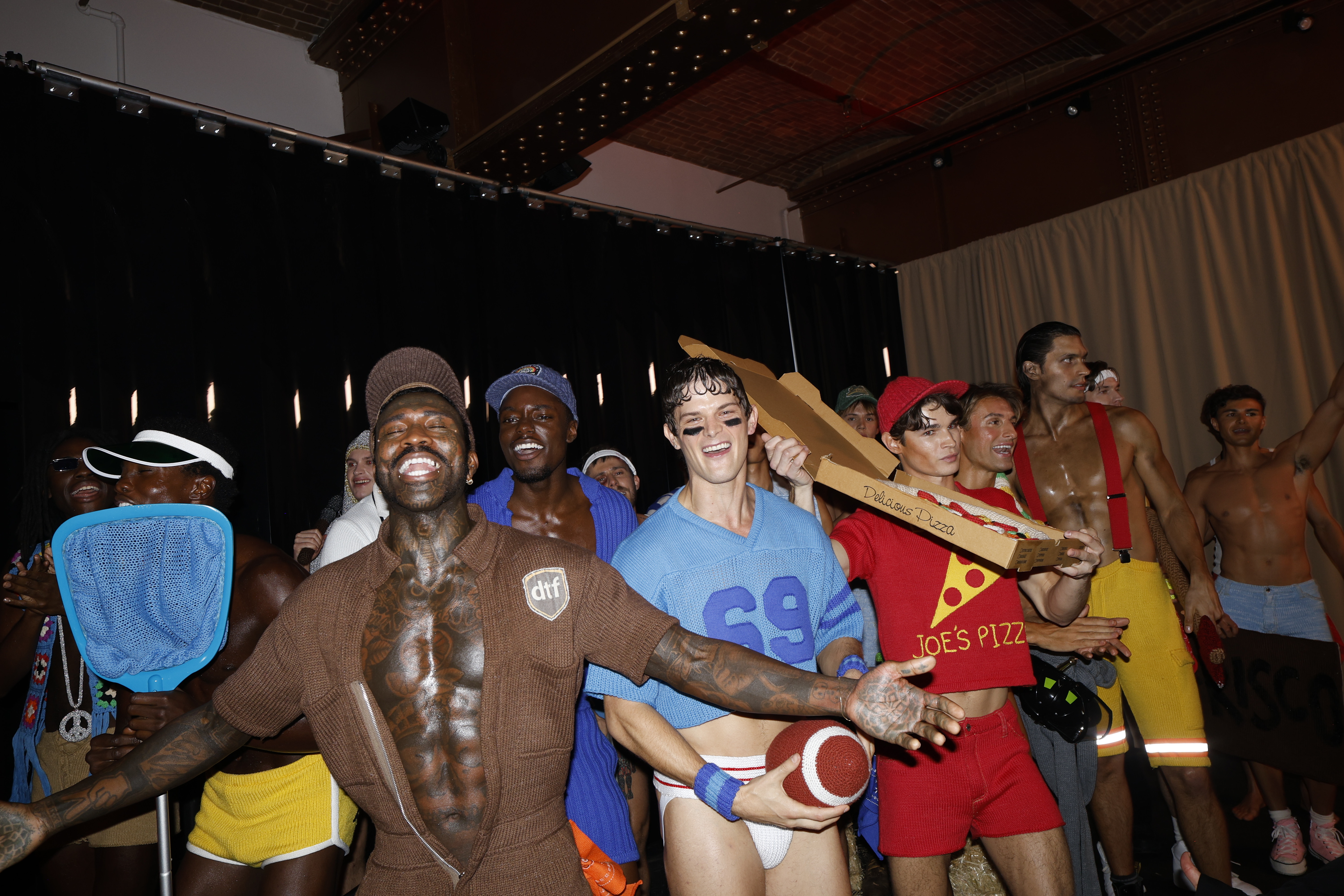
Gender and cultural studies scholar Stella North said that clothing is “a replaceable, updateable skin.” Anyone who’s experienced the dopamine hit of donning a good outfit on a bad day would likely agree that clothes function as what the psychoanalyst Didier Anzieu called the “skin ego,” the psychic container responsible for keeping us together when we’re falling apart. The “skin ego” really shone through each and every look in Schmidt’s collection. At a time when the Trump administration is attempting to dismantle LGBTQ+ rights, curtailing support and funds that are crucial to the survival of gay and trans people—such as instructing the national suicide prevention hotline to stop offering specialized support to LGBTQ+ callers—, “I Wool Survive” pushes back against an outwardly oppressive regime, bolstering the livelihood of queer people around the world.
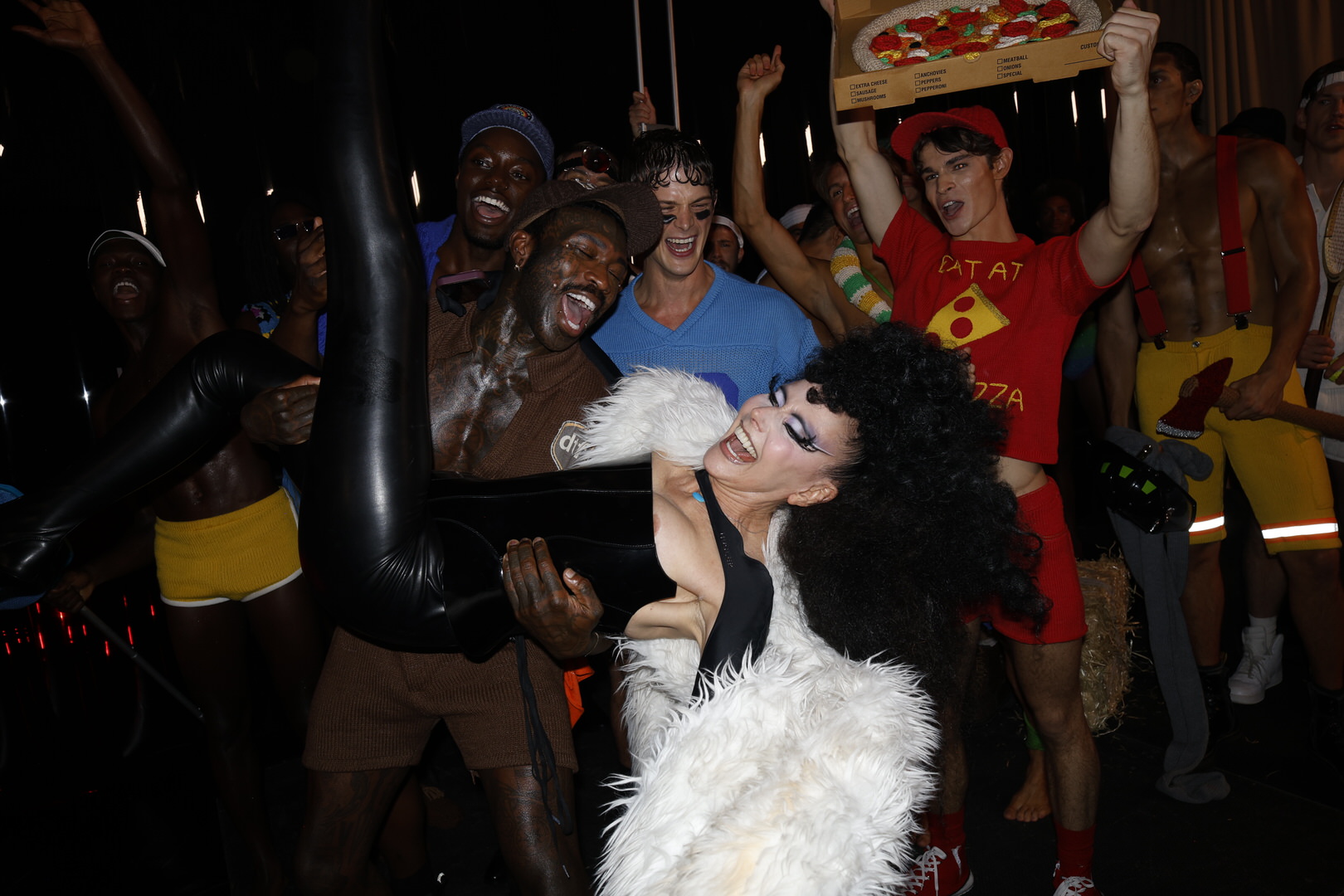
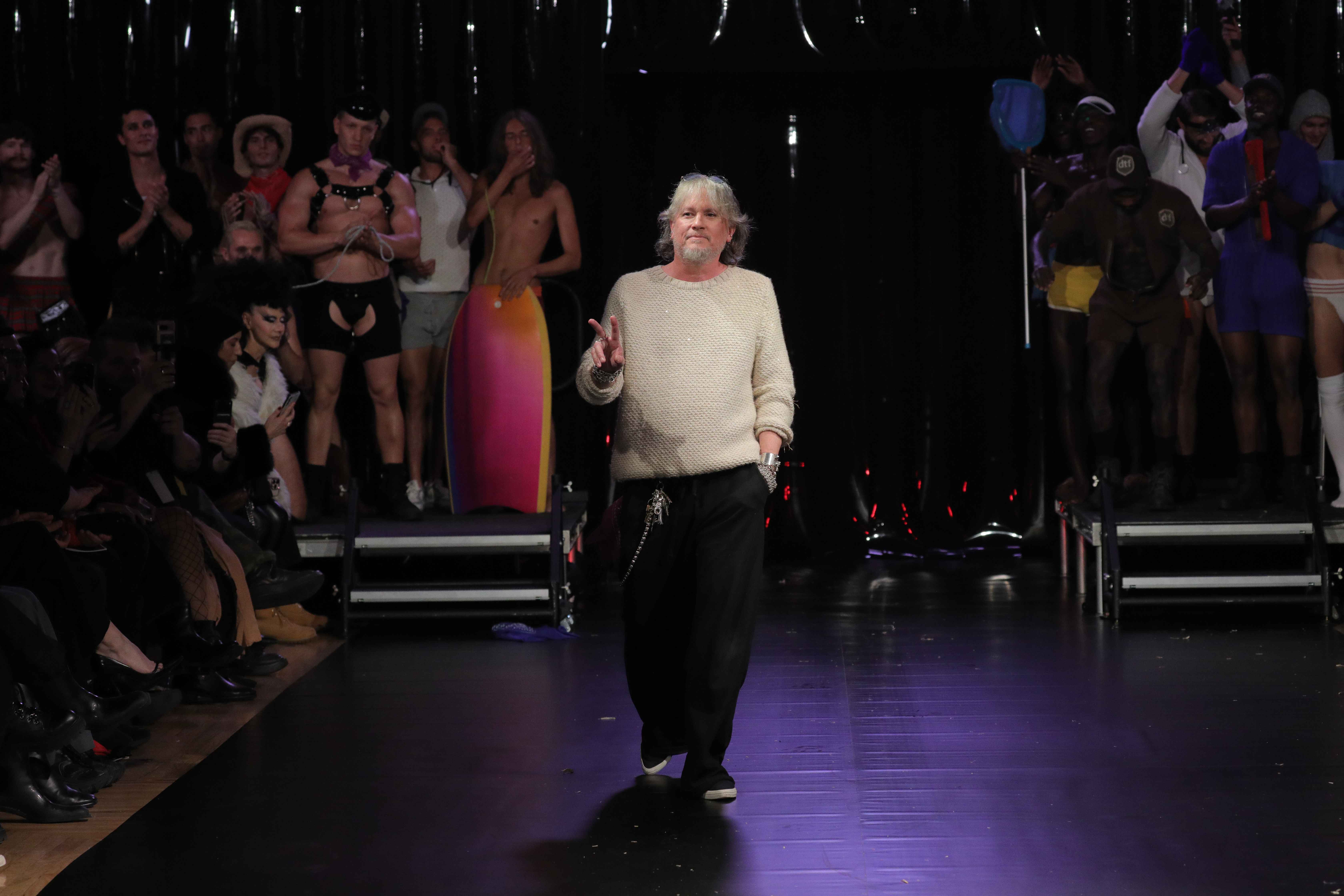
The models, ass cheeks ablaze under the sultry yellow lights, seemed to carry a distinct and liberating statement: “Look at me. Accept what I represent. Accept desire. Accept love.” The show concluded with Schmidt walking down the runway to Gloria Gaynor’s “I Will Survive,” and spectators rushing the stage where the models energetically danced along, saturating the room with a joie de vivre that was, well, very gay.
The party continued that night at The Eagle, the legendary gay bar in Chelsea. The gathering was graced by nightlife doyenne Susanne Bartsch, who flitted about in black leather pants and a feathery shawl, looking, as always, fierce as fuck. Amidst all the revelry reigned a four letter word that has suffused New York City this month, especially with the recent mayoral election: hope. Hope for equality. Hope for justice. Hope for acceptance, be it of two men, two women, a pansexual polycule, or gay sheep.