
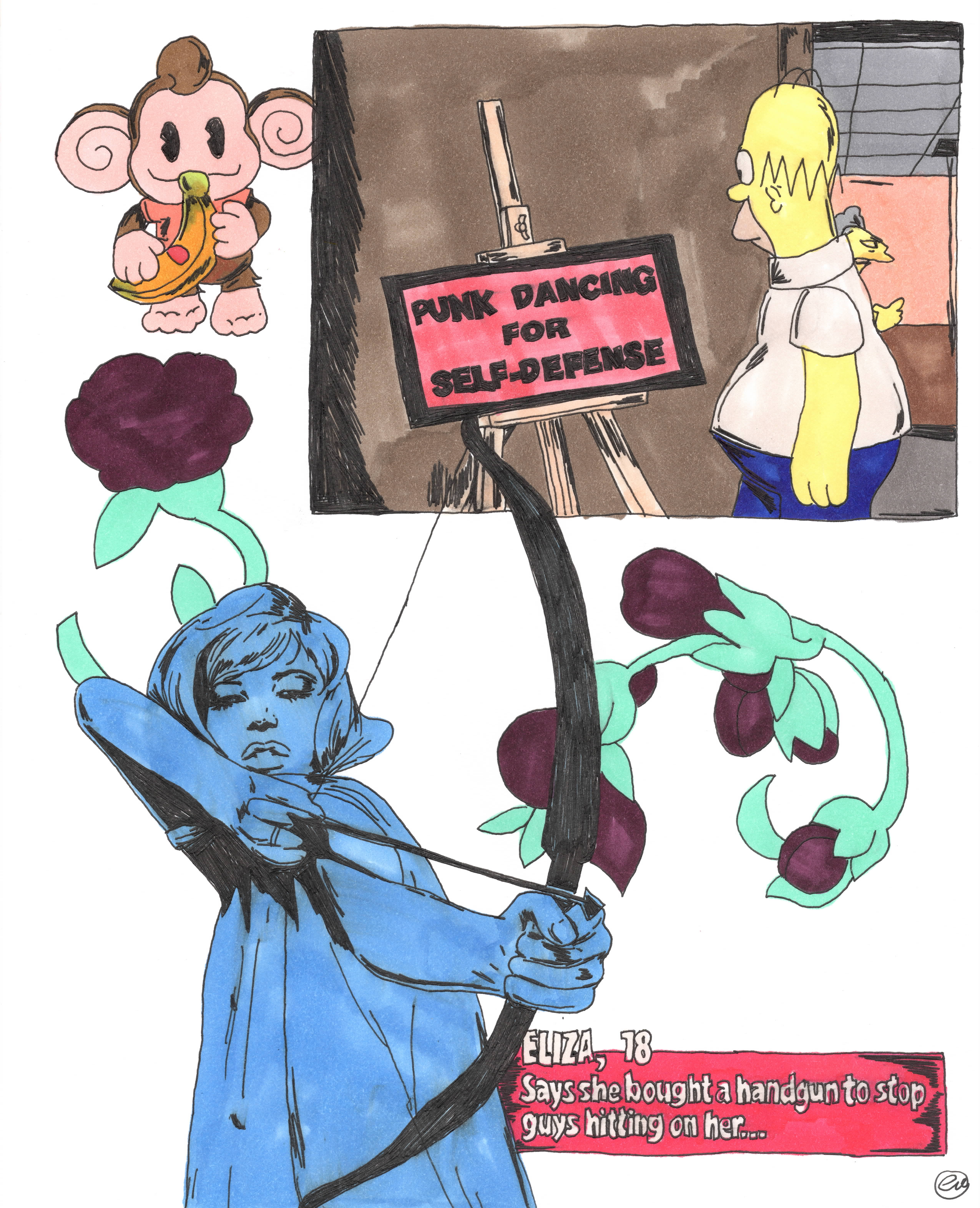
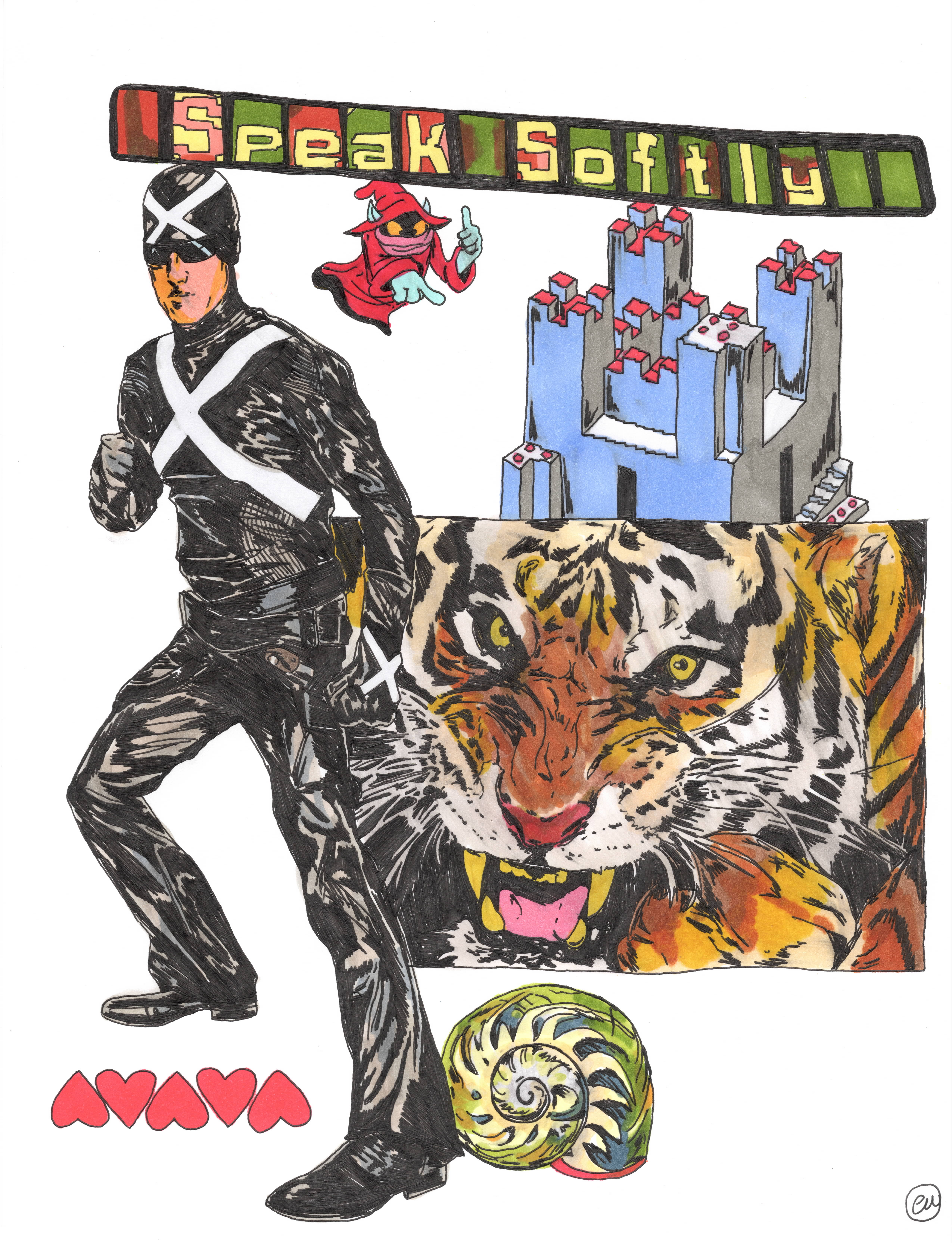
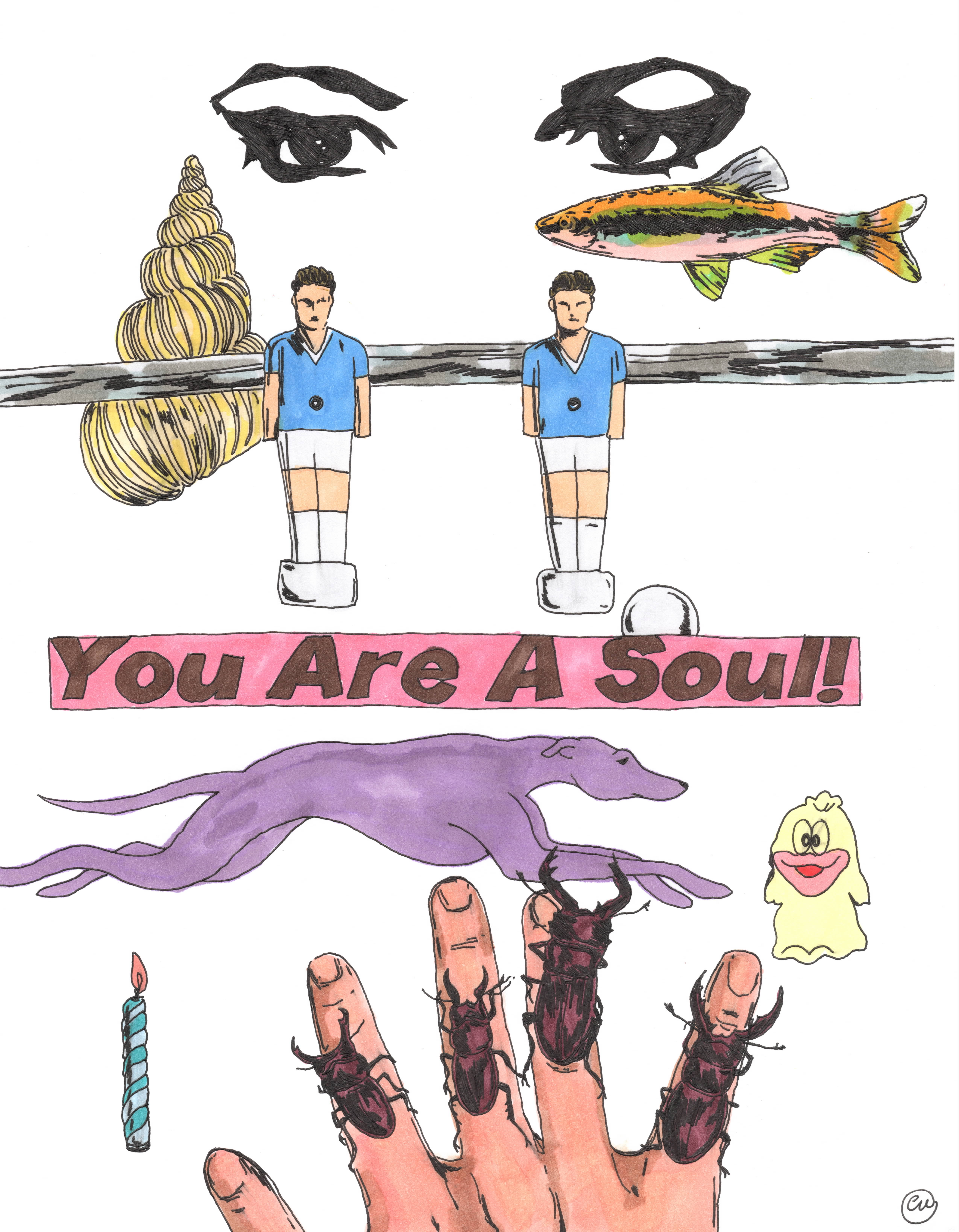
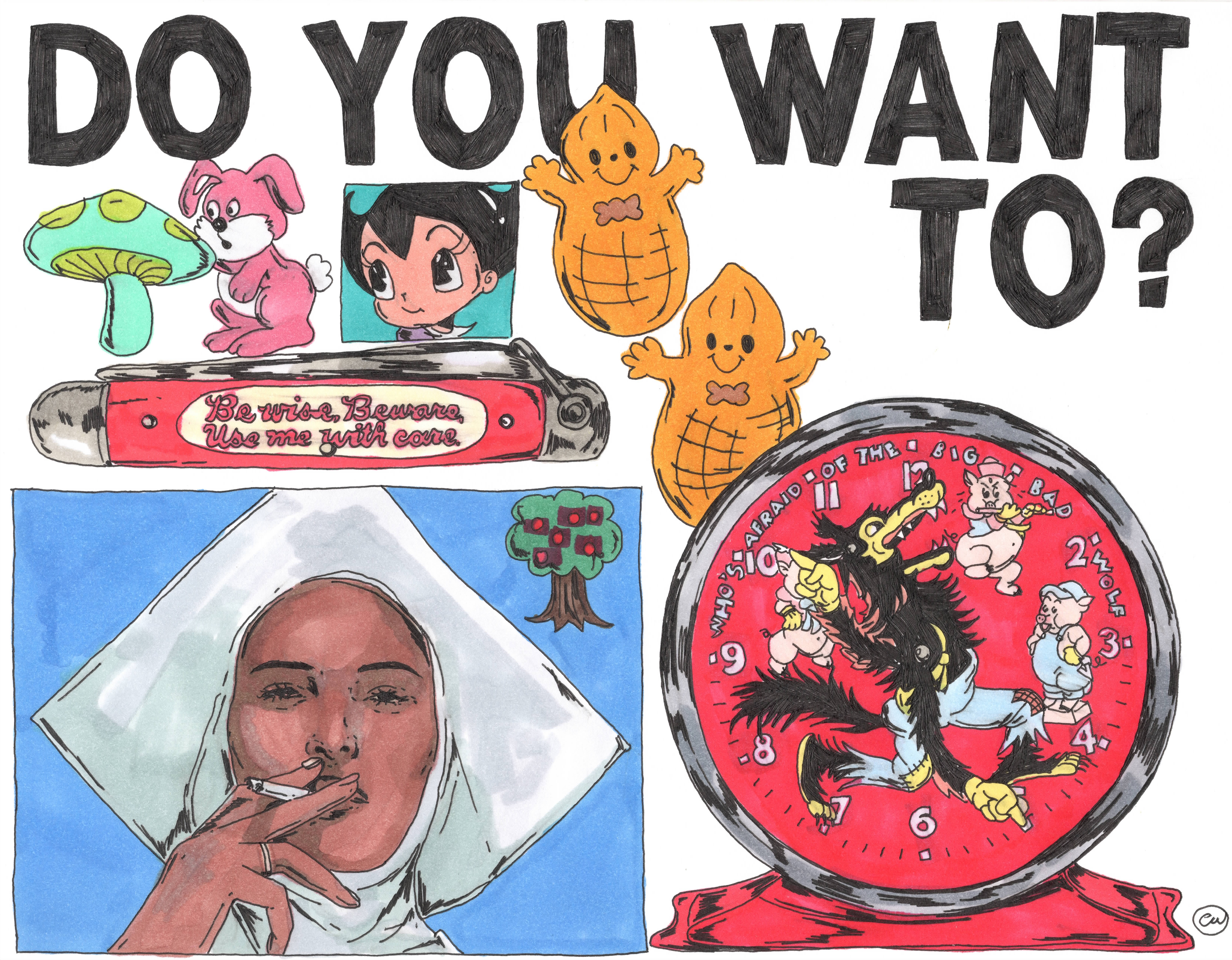
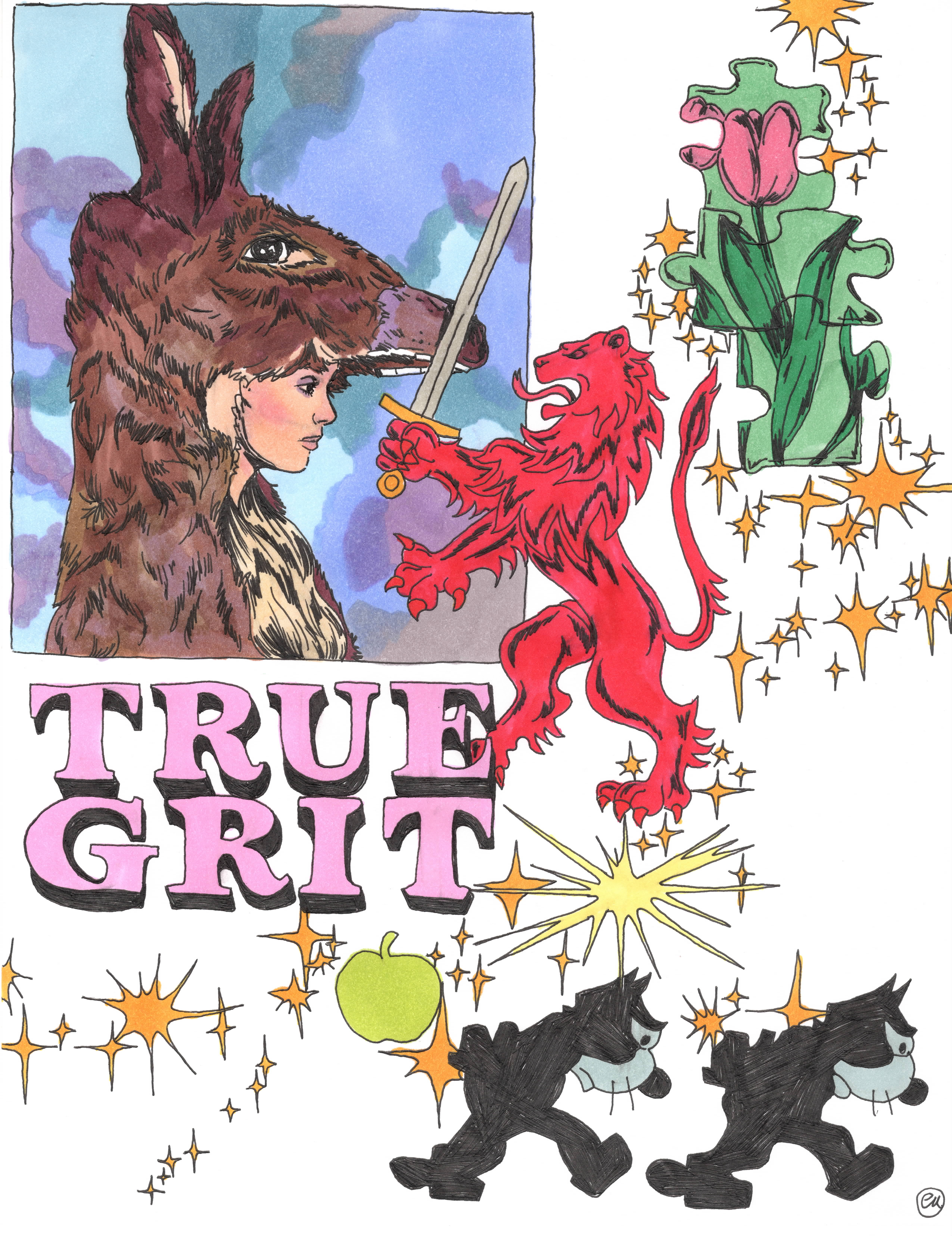
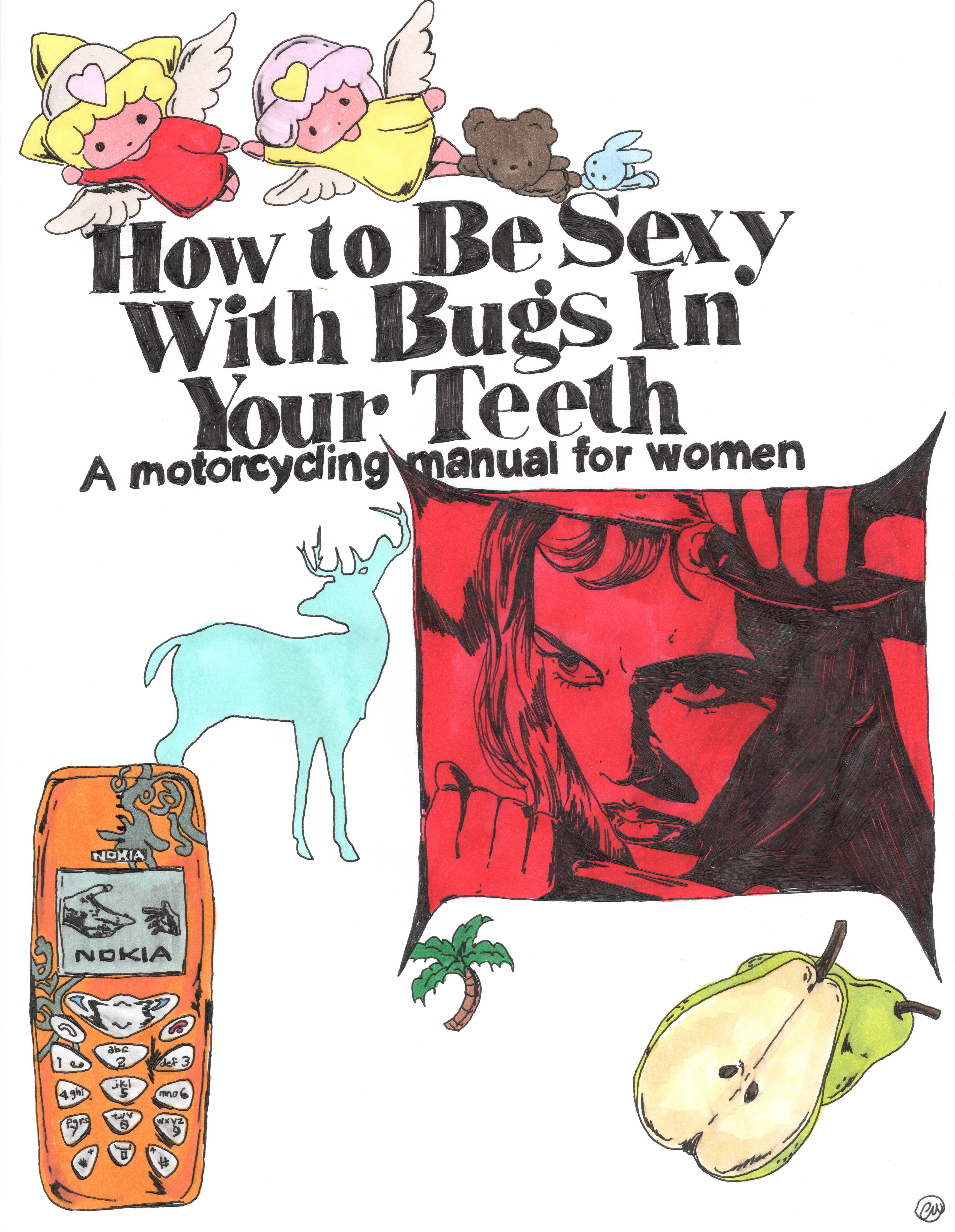
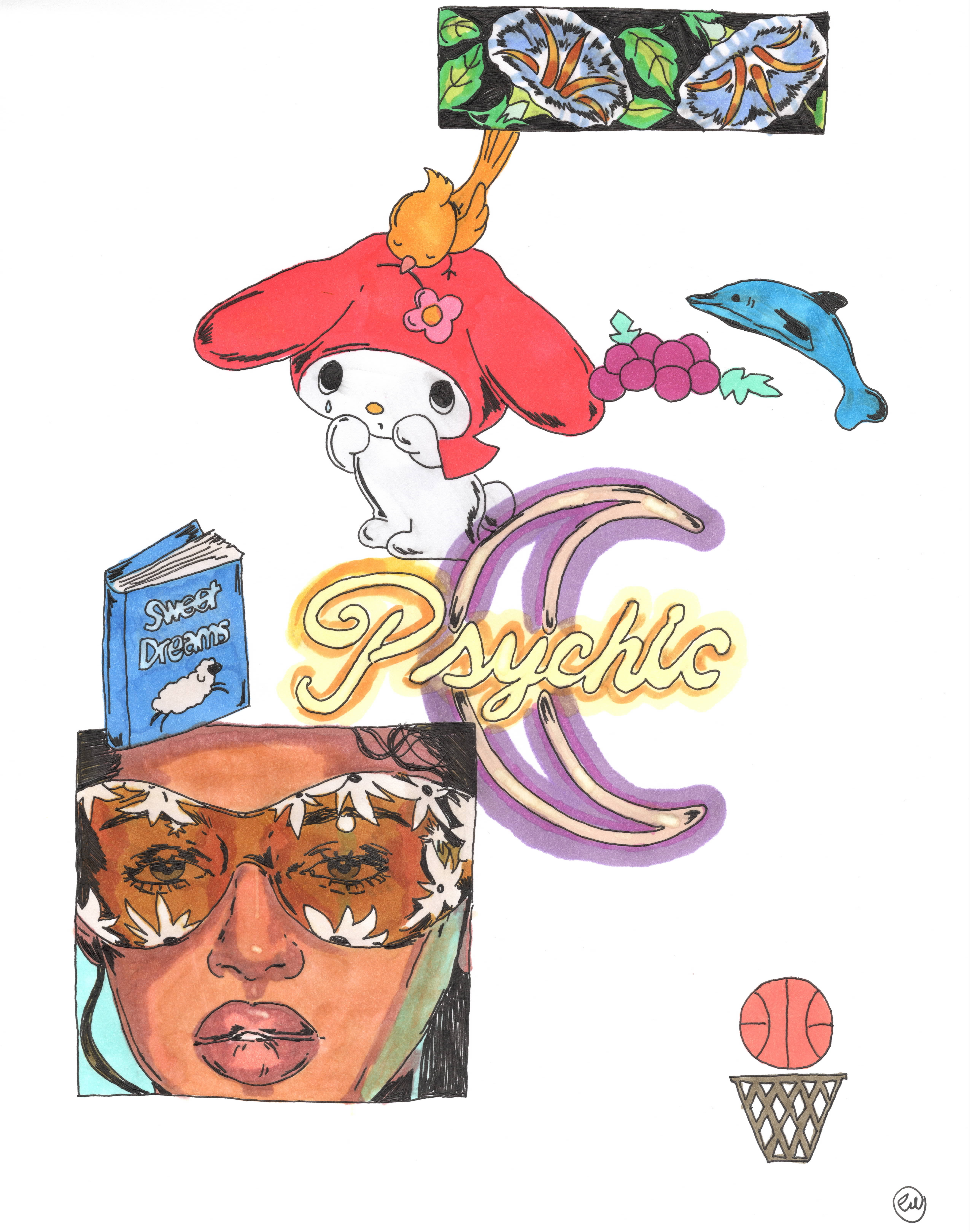
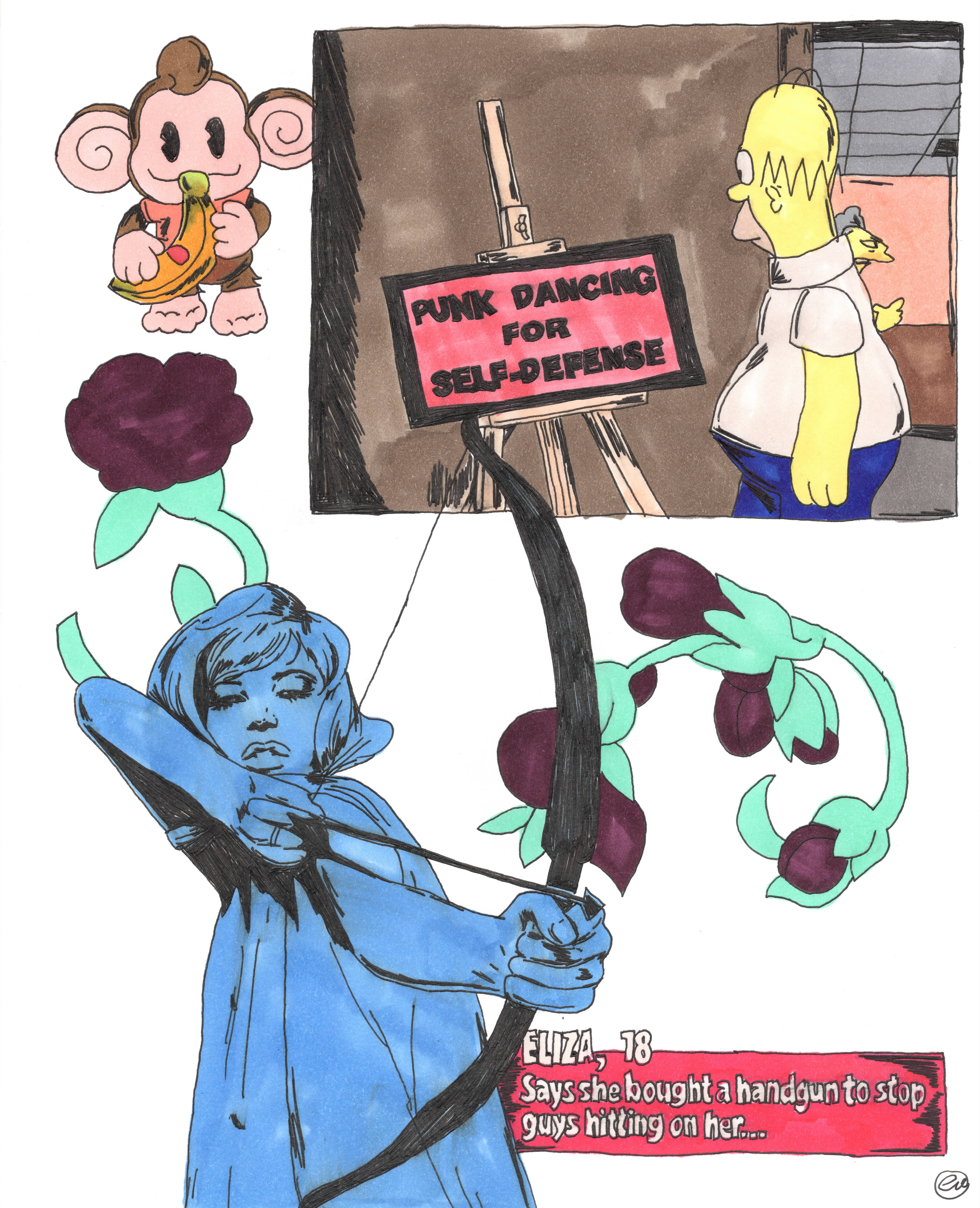
For Caroline Mills, nostalgia is more than a longing for the past, it is a way of re-writing it. In her work, everyday imagery becomes autobiographical fragments, and Snoopy and a Bratz doll become a key to memory. Whatever memory may mean, or look like, for you. (In my childhood, Snoopy and the Bratz girls crucially existed in the same world. They were close friends, though sometimes, enemies. I often had to separate them to avoid drama during playtime in 2006.)
Her work operates in the space between a diary and a coping mechanism, allowing her to confront trauma while reclaiming the objects and images that once offered comfort. In Caroline’s universe, memories can be altered, preserved and made joyful again. The result is art that is both deeply personal and unexpectedly communal. Her work helps to remind us that art can be cathartic, a form of processing that invites viewers to see themselves in her work, reflected back.
The following interview has been edited for length and clarity.
To start out – why printmaking rather than another medium?
I went to [The Tyler School of Art and Architecture at Temple University] in Philadelphia and they did not have an illustration major which was kind of weird, my two options were printmaking or graphic design and I felt like graphic design wasn’t really me at all, so I took a couple of printmaking classes. My dad was previously a printmaker and had a printshop, and I felt like it would be cool to follow in his footsteps. Learning printmaking meant I could still work on my illustrations while learning new skills that are relatively atypical – I mean, print is dead basically. But it was so cool to learn how people made art in the 1800s. I loved it, but I don’t have access to studios anymore so I am just doing more illustration-focused work now.
Is there anything that surprised you about printmaking as a process that you didn’t anticipate?
There is so much labor to it. I became jacked somehow by lifting huge limestones for lithography or pulling up the press levers. It was insane. I didn’t realize how much work it would be and how many chemicals you have to work with, but I had a really fun time doing it.
Your work feels like self-contained universes. You have a lot of images, words, symbols colliding, and there’s a real mix of imagery going on, from fashion, religious symbolism, and cartoons. When you begin a piece, do you start with one image and let everything build organically, or do you already have all the ideas and elements in your head before you put pen to paper? How does your process work?
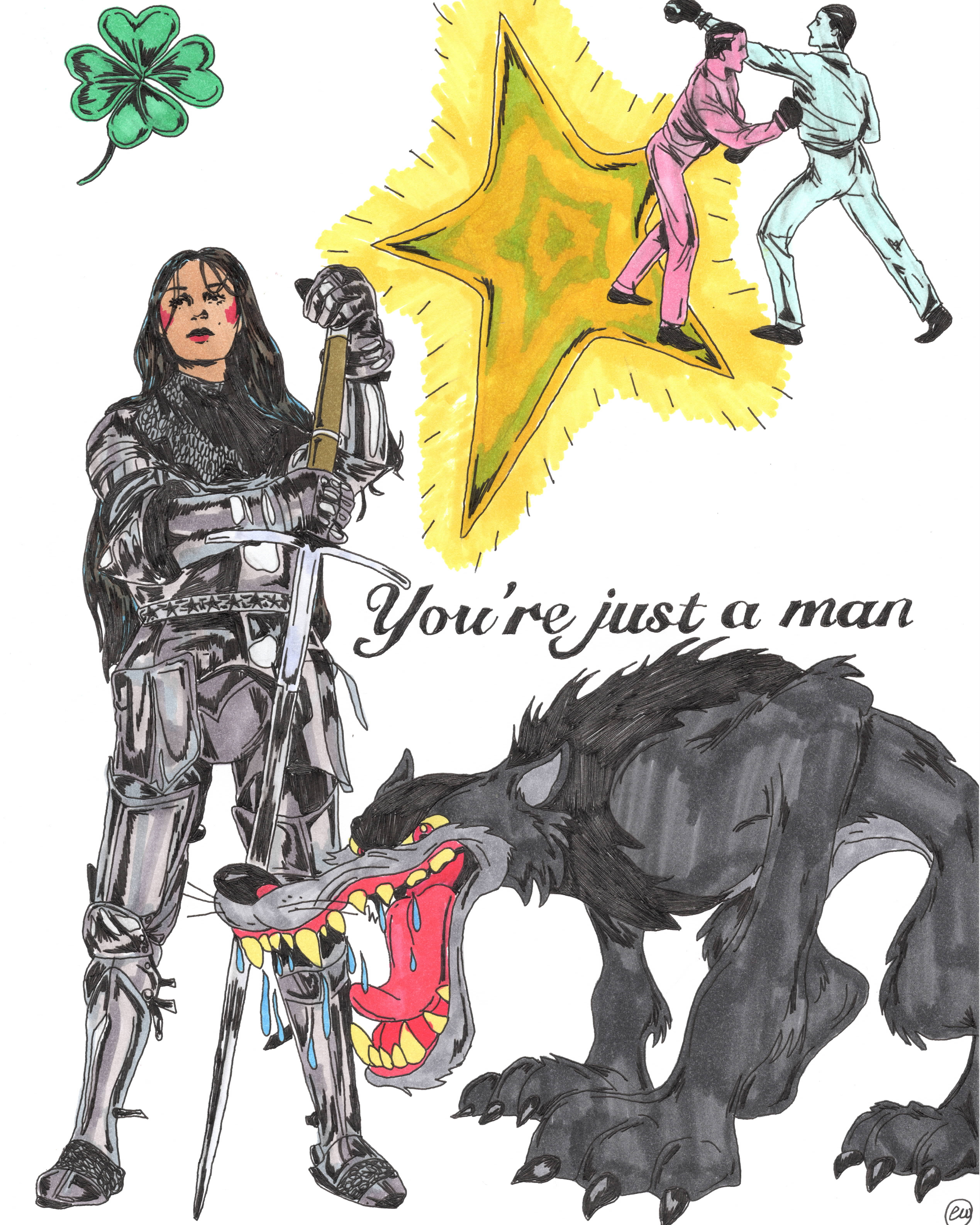
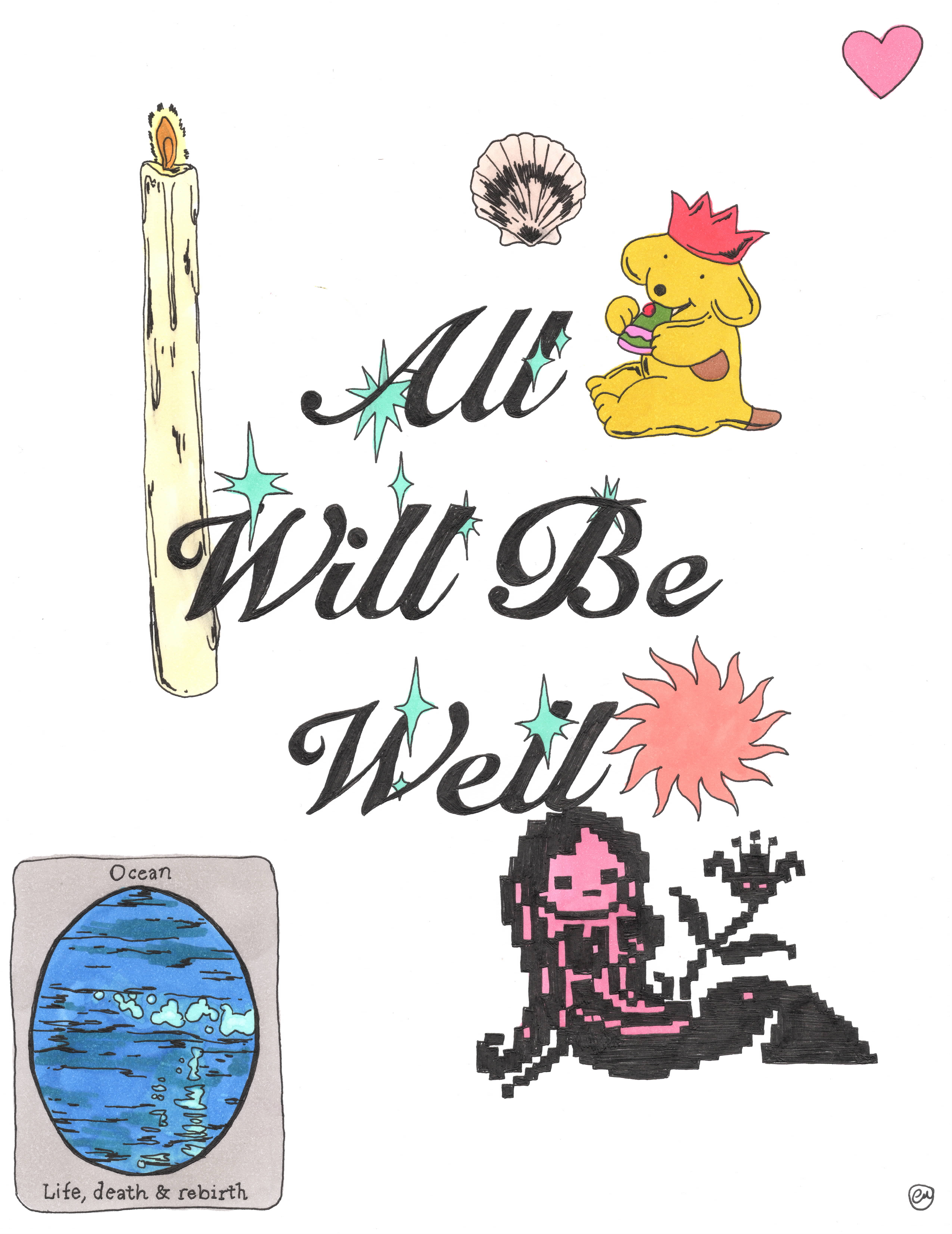
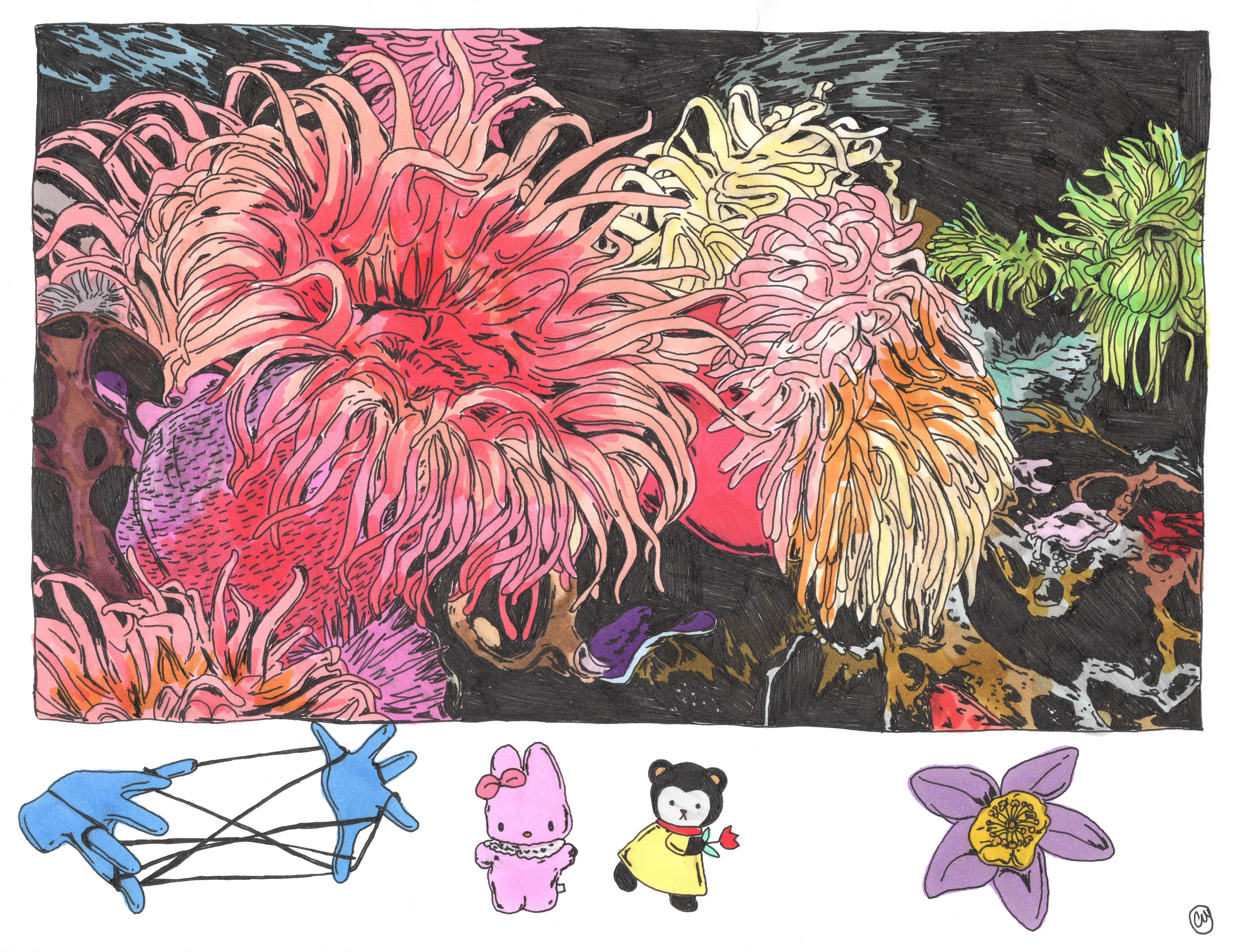
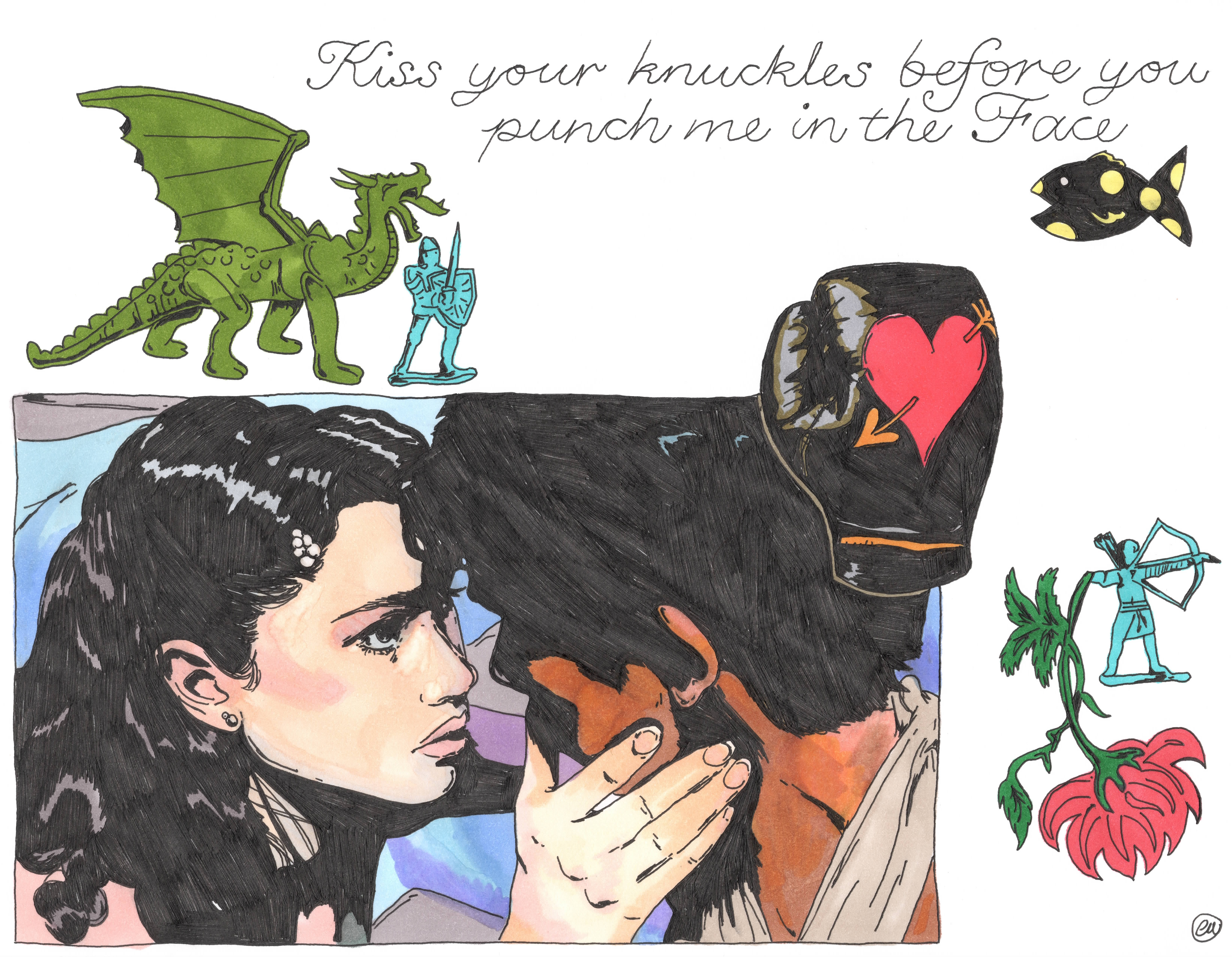
It’s usually like, if I have words or a song lyrics stuck in my head, I put that down first and try to build around it instinctually. I don’t try to think too much about it because when I overthink I never finish it, so I just try to draw whatever I am feeling at that time. If I am thinking about a cartoon character, maybe I’ll add that in.
It feels like a diary entry of sorts and I’ll include whatever my brain is obsessing over at that moment…
I have OCD so I have stuff clung in my thoughts that I need to get out. It’s a good process for getting this out on paper. It’s all pretty random, I don’t really think about why I am putting it down, I just let it happen.
How long does it take to create one of these pieces?
Usually like an hour. I’m really fast with it. I scribble a lot and I like when I am working on something and it is hour three and I’m like, ‘Oh my god what am I doing?’ but then I keep looking at it and I think, this is gonna be great. But overall, usually an hour or so.
To your point, it sounds like it's less of a consistent theme but more what comes to you, inspiration wise. Your artistic statement describes this work as a form of journaling.
Right.
A lot of artists tend to struggle with trying to create art that is both brave and vulnerable, and struggle with connecting with people without it getting into a territory where you have revealed “too” much. Do you ever worry about this? Does making the work create enough distance from those experiences?
As a person, I am very open. My friends always make fun of me because I will tell anyone anything. When thinking about processing trauma, I need to be an open book. Being so blunt and obvious in my work really helps me process trauma. The response from this has been really nice to see. People feel like I am expressing my emotions in a way that they couldn’t do themselves. I am really happy to do this. I don’t think about the repercussions or how people will view it – I don’t care what they think. If they relate to it, then that is great! Some of my work and the themes around it are also pretty vague, which also helps…they can be interpreted in multiple ways. I put it out with a certain message and some people respond that it reminds them of something I hadn’t envisioned or intended. It’s a healing process for me and for the viewer.
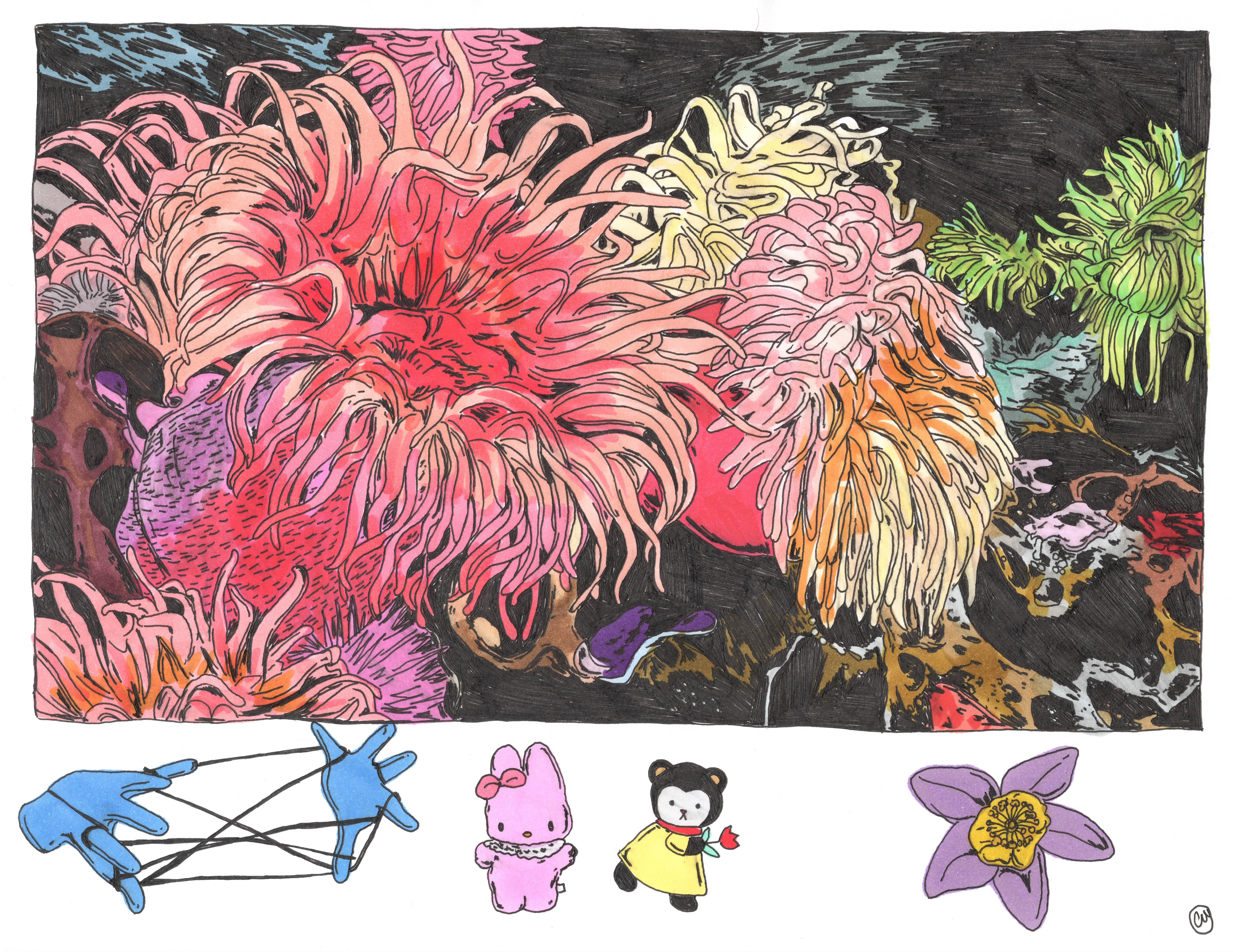
I really love that Philadelphia is your home and the backdrop for your work - I really like those birds shirts! How has the city influenced your work?
Growing up in Philly, everyone here is so original. When I go to New York or Los Angeles, I see classic stereotypes, but in Philly there is so much individuality and everyone is a little crazy, which is very fun. Living in the city has helped me reflect on my nostalgia. For example when I think about my childhood playing outside. But the “Philly culture” many identify with doesn’t necessarily influence me that much because it is so eagles-soft pretzels-cheese steaks…
The city of brotherly love!
Yeah…growing up in a city was really important and I try to put this in my work. Thinking about what I did as a child, especially when my family moved to the suburbs which was a stark difference: it was so quiet at night. When I moved back to the city later in life, I felt so at home.I love living in a city. The art museums are fantastic, and Philadelphia also has the largest collection of public murals.
Do you think you’ll stay in Philadelphia long-term?
I think New York is my dream. Every time I go there I feel so happy to be there. Philly is great but it's small and you get used to everything. You go to the same bars and stores. New York is always changing and there are always new people coming in and out. It’s really nice to meet people who are also artists. New York is probably the best next move for me.
I think you and I are roughly the same age, late 20s, and it’s interesting when you get older and become an adult and start returning to childhood memories.. Does your work come from that place of nostalgia as means of survival? Is it even that complicated? Do you think nostalgia is something you're trying to preserve, or something you're questioning?
I think I am trying to preserve it, like you said with ageing, I feel compelled to revisit my childhood as I age. After I was diagnosed with PTSD, my psychiatrist recommended that I do whatever is needed to make myself feel safe. For me, that was buying toys that I had when I was a kid, making my room colorful and eclectic, and building what I wanted my dream room to look like when I was a child. I started to learn about weird subjects, and now that I have the time and the resources, I can buy all the things that I wanted when I was young. Sometimes my friends are like, ‘Your room looks like an 8- year olds’!’ And that’s ok, it makes me feel good. When people experience nostalgia, they feel warm. It’s kind of scary in a way because you know you can never truly be in those memories again. In my work, I try to bring it back. I’m still growing up but I am trying to keep components of my childhood in my work, because why not? I don’t want to be a boring 30-year old with a minimalist house!
Yes, maximalism! That really resonates. And even the way music is now, too, we are sampling everything from the 90s’, everyone is trying to pick up on nostalgia, and redefine it in a way. Your work is autobiographical in a way, too, does that change your relationship to those memories?
I feel like I am rewriting the memories
I am taking the things I found comforting as a child or teenager, the things that I used to turn to when I was in a bad place. I am trying to rewrite bad experiences into good experiences, bringing nostalgia along the way.
Your work has a lot of color, they have sort of a vintage-y vibe, some of the pieces even reminded me of old western film posters. Are there any elements from your childhood that you feel like you are always circling back to, such as certain cartoon characters or fonts?
I grew up watching Looney Toons and Tom and Jerry. I was so obsessed with those shows. I always tend to circle back to these, as well as old Japanese cartoons. I was not an athletic child and did not enjoy group settings that much. I felt most safe and comfortable rewatching cartoons over and over again. I like to weave these in. Music is a big part of my work too, and I try to embed song lyrics that are important to me. I grew up with a very musically-affluent mom, she is super punk. She taught me everything about music, from age 3 to now. I like to bring parts of her into my work, as well as parts of my dad.
What role does internet culture play in your visual language?
Around 2020 through 2022, I was so happy about the internet. I felt like it was helping my career, and I felt like every artist should be utilizing the internet. Now with doomscrolling, as that has become a thing, I feel a bit less excited about it. I actually recently deleted TikTok and Twitter because it was starting to feel very overwhelming. I was getting so angry at my phone! I needed to take a step back. I still enjoy posting on instagram because I can get my work out there in an easy way, as well as in an archival way, too. But I think trying to utilize the internet for my career now is getting hard because everyone is now SO in tune with it. With the rise of influencers, too, I just feel like it's a little overwhelming.
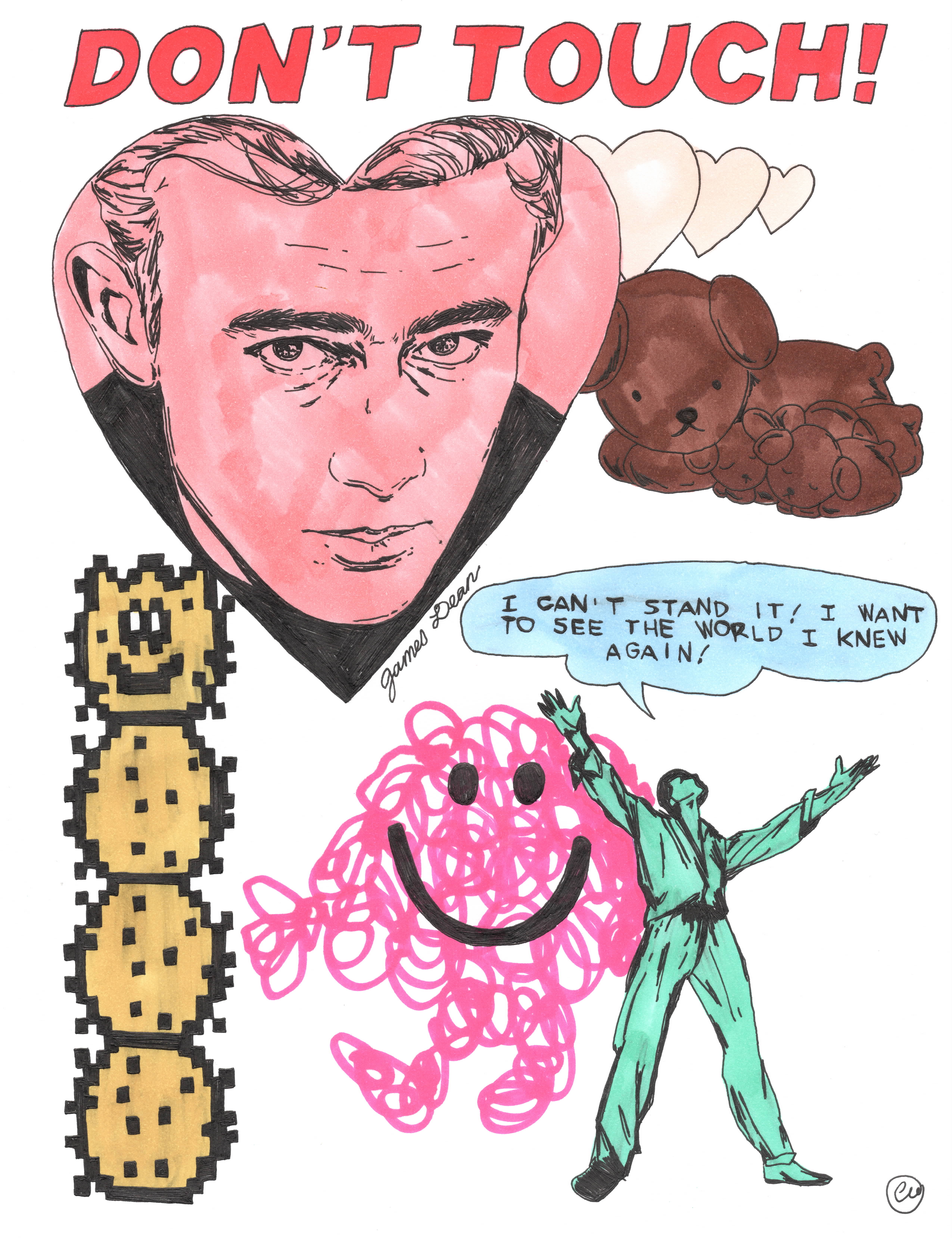
You’ve done work with several successful artists, like Olivia Rodrigo, and Billie Eilish. I loved the poster you did for Big Thief – how do commercial commissions affect your personal practice?
At first, it was difficult because I had to adapt to what they wanted and not just create what was intrinsically “me.” But I am so lucky to have been able to do any of this work – I just did some work for The Rolling Stones and when I told my mom I got that job, she started crying. It feels so important to be doing that. When I was in high school, my art teacher really helped me figure out what I wanted to do in life. I always thought my perfect job would be drawing for musicians and artists. When I started working for Olivia, I felt like wow, this is really it. It is still hard to put a piece of myself in those pieces, but I think I am just excited and grateful to be working with these artists. People still recognize my style even though it's not authentically me, which is great. I’m glad I have a style that is recognizable that can still be merged with their work.
What do you hope people carry away after looking at your work?
I hope people feel giddy, perhaps through seeing or recognizing something they had forgotten about from childhood – like “oh my god! I remember that!” – is really important to me. When people interpret the text in my work, whether it is coming from my brain or from a music lyric that applies to a situation, having people message me saying they identify with certain words or lyrics even when they weren't necessarily that important to me, is also great. For them to treasure a piece that I didn’t think too much into is really awesome. Especially when talking to people about processing trauma, being there to help them with that, that is special. I had such a great support system and a lot of people don't. I am glad to be helping people even when it's just a drawing. It feels much more than that sometimes.
It seems like you've taken what was a difficult time in your life and created some very impactful work out of it. What’s next for you?
I don’t know! I am not a planner, I’m a very “Type B” person, I take what comes my way and I run with it. I still love working for smaller companies and doing small jobs or commissions, such as doing illustrations for music posters or clothing designs. When the big stuff comes my way, I’ll do it. But I’m a “yes” man, I don't care what budget you have, I just like to do it. It’s fun for me. Exposure is so important, I just want to see my stuff everywhere and think “Wow, I did that.”
You can find Caroline’s work here.