



Contains spoilers.
I was hovering between ★ and ★½ stars on Letterboxd. The half star, as usual, accounting for how I was at least inspired to be brought to the point of reviewing it. My review was coming together around a fairly straightforward objection: I had spent three hours watching mentally ill people get provoked, including Amanda Seyfried, whose visible spiralling over her own involvement was just as icky. Then came the twist, in which Holmes’s coked-up husband asks for a percentage. Who cares? And who cares if Elizabeth didn’t want to be around for it. And who cares if they proposed the project first. A24 should have given them something. Human ethics supersedes performative journalistic ethics. The cinematography and art direction were wonderful, and it was fun to go with my friends on a school night. I was prepared to submit this to the deafening roar of my, maybe twelve, Letterboxd followers and forget about it.
Then, I noticed an unsettling feeling remaining. I'd scrolled through what must have been hundreds of takes declaring this “★★★★★, The undisputed film of the year - Addison Machann”, and it was registering that my opinion was deeply unpopular. I've long accepted that my readings of things rarely settle neatly into the consensus. However, at post-movie beers with my friends, I still felt distinctly affected, disconnected, and even isolated by my interpretation. I wanted to understand why I'd had such an aversive reaction, and what, exactly, that reaction said about me. And, of course, there was the nuanced, humiliating delulu thought beneath it (there always is one): was my Letterboxd review going to establish me, to my twelve followers, as a con-sympathiser? Then there was humiliating delulu thought 2.0 (there's always another): as someone whose job is to digest art and culture, was I simply going to look silly expressing this over the film, as though I hadn't got it?
My sense of responsibility in all of this felt comically heavy. As someone whose job does involve me in the comms strategy for brands and artists, I'm hyperaware that we live in a culture that actively invites us to participate in the meaning of things. In this attention economy, I've seen firsthand how brands rely on tools like provocation to build campaigns that cut through, how artists actively leave room for us to complete the story of who they are, and how the internet, and people's whole-ass livelihoods within that ecosystem, rely on bubbling comment sections of how we feel about something. There is surely something fun in this kind of participation. It gives us more room and reason to love the brands and artists we want to love. To form attachments that extend beyond what would otherwise be boring product pushing and robotic releases. We're equally interested in participating in the interpretation of ourselves. Personality tests, attachment styles, horoscopes, the seemingly endless vocabulary of self-diagnosis.
We seem to operate on the assumption that beneath our immediate responses to things lies some latent truth about who we are and how we see the world.
And culture gives us an ever-expanding supply of material through which to excavate that truth.
You Can See Everything (2026), the docu-hybrid film directed by Nathan Fielder and Lance Oppenheim, is a concentrated expression of this phenomenon. The film invites interpretation at every level, from what we believe we are witnessing in Elizabeth Holmes to what we think of the filmmakers who are orchestrating our witnessing, to being abandoned in, at an even deeper layer, witnessing the filmmakers themselves witnessing Holmes. Thus, two people can watch the same scene and emerge with entirely different accounts of what has happened, what it means, and who, if anyone, is the villain or victim. And this task put upon the audience, masterfully, I will say (Letterboxd review has gone up since not only did it resonate with me enough to write a review, but now an essay) can feel heavy. You might find yourself wondering what someone noticed that you missed, what an interpretation suggests about the way a person understands other people, or worse of all – being hesitant to ask a friend what they think as to not open an everflowing can of worms.
The film is a true social experiment conducted among its audience, additionally exposing how readily we stick to or abandon our gaze (that is really a reflection of who we are). You Can See Everything is this generation’s Rorschach test.
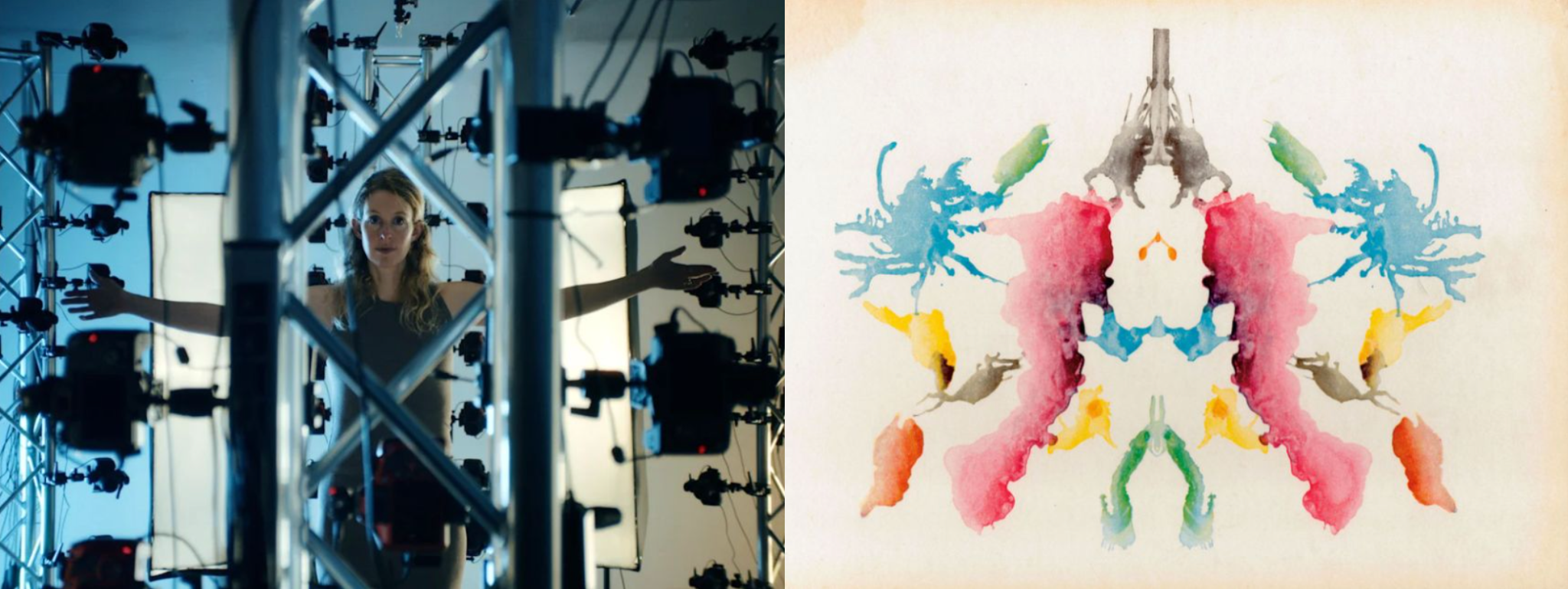
In the timeframe that this movie was born, projection has become a pervasive cultural activity. We have developed elaborate methods, subconscious or not, for interpreting strangers, frequently with very little information and usually a rather limitless confidence in our conclusions. A Hinge profile is passed around to friends as an index of emotional availability; Taylor Swift's bad outfits render full on theories into the strength of her friendships. Online, we treat the smallest visible detail as an aperture into an otherwise inaccessible interior life. The enjoyment comes partly from the sensation of having learned something secret, of recognising a pattern before other people have noticed it. Social media has made this activity even more participatory and cumulative: we can publish our takes, compare them with thousands of others, and watch an individual become the object of a collective interpretive project. Never in history has projection become such a constant, collective activity, with no clear point of conclusion.
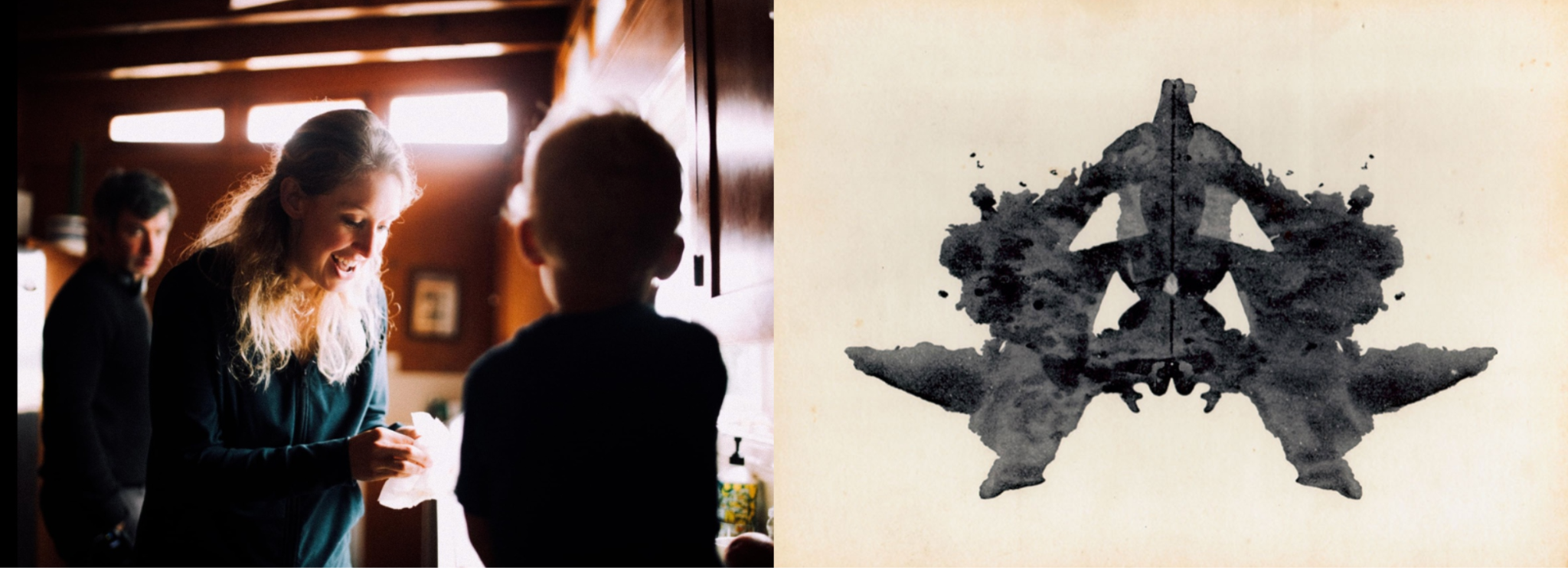
But in this film, there is something unsettling about being invited to project so openly. Projection usually operates in the backrooms, allowing us to mistake it for observation or fact. The film makes that process harder to ignore. Its construction encourages us to form judgements, while its attention to the conditions of filming gives us reasons to question how those judgements were produced. We become conscious of the edit, the camera, the questions, the expressions, and our own desire for resolution. The experience becomes recursive: we interpret Holmes, then interpret the film’s interpretation of Holmes, then interpret our own response to both. At some point, the desire to come to the ‘correct’ reading becomes indistinguishable from the desire to be the kind of person who would come to it. Crucially, we want affirmation that we can personally recognise manipulation. We want affirmation that we can personally sniff out how an industry works, entertainment, or tech. We want affirmation that we can personally distinguish love from something monstrously toxic.
The possibility of misreading any of these things becomes entangled with the possibility of misreading our own lives, and ourselves.
We have become pretty good at turning culture into a surface on which to recognise ourselves, and other people into surfaces on which to practise that recognition. We look for the hidden motive, the revealing detail, the pattern that makes a person comprehensible, and ourselves by extension. The satisfaction is immediate: the sense that we have seen through something, that we understand what is ‘really going on’. But the act of making sense of the world is more tangled than ever with the need to establish who we are within it. We want our interpretations to accumulate into something, each opinion another data point in a digital ecosystem that provides an endless stream of material against which to test what we stand for. The trouble is that people, art, and life rarely cooperate with this project. And one day, we might find ourselves in a crowded movie theatre, failing to piece together our memories, values, and personhood into an opinion that holds up to our own scrutiny, the group chat, the internet, and especially the court of Letterboxd.
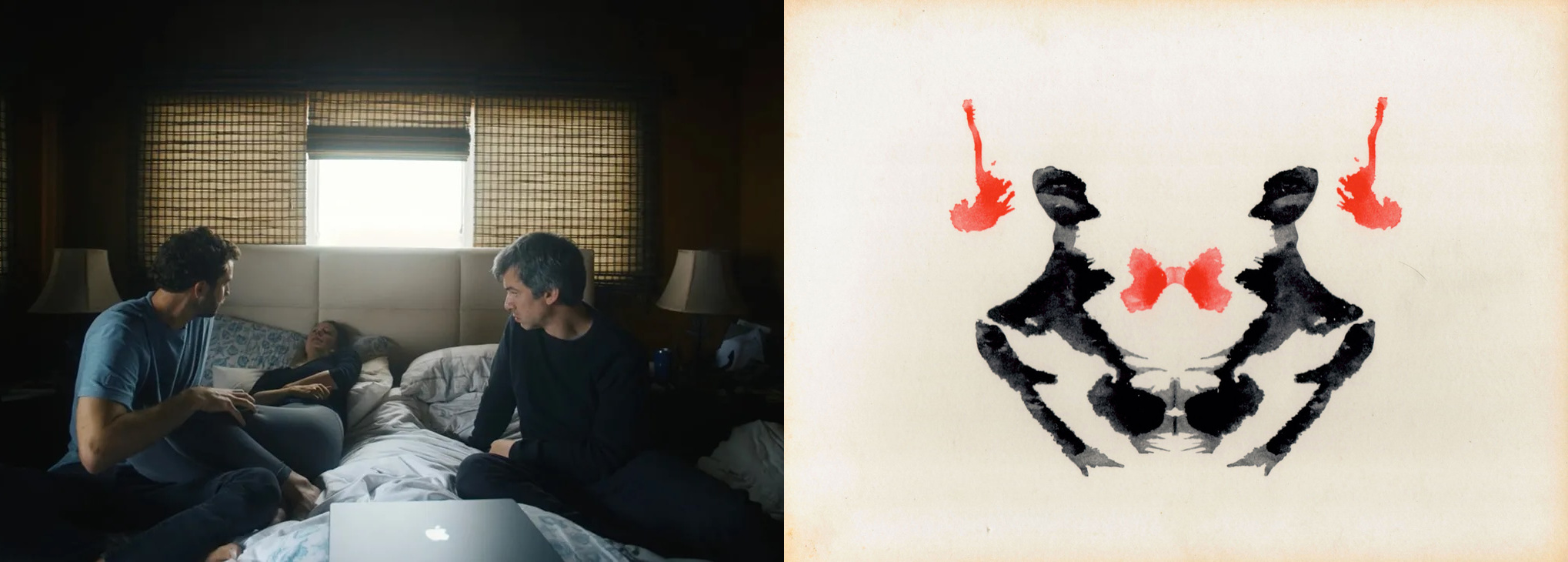
Your Results Are In
THE FIELDER: You are willing to do whatever it takes to get at the rawness of something. You are compelled to strip things back to their purest form, even when you cannot predict what the process will expose.
THE HOLMES: You have an almost pathological resistance to being defined by other people. Even when their version of events might serve you better, you struggle to surrender control of the narrative.
THE BILLY: You need things to have a story, a through-line, a reason for happening. You will follow that thread wherever it leads, even when it begins to consume you.
THE SEYFRIED: You know how to hold a strong front, even when you’re quietly coming undone underneath it. You are acutely aware of how you’re being perceived, and spend more energy than you’d like to admit making sure nobody notices the difference between how you appear and how you feel.
If you recognised yourself in more than one result, your responses may be contradictory, context-dependent, or simply difficult to categorise. This test has no established clinical validity.