



The Drama has been one of the most anticipated releases of the year thanks to months of carefully crafted marketing. The media hooked us all on the question of what Emma (Zendaya) could have done to send her friends and fiancé Charlie (Robert Pattinson) spiraling days before their wedding. Now weeks after it was released in UK cinemas, the big “what did she do?” is hardly a spoiler. We’ve digested the long awaited answer and it was not the revelation many of us could have guessed. Despite how hot Rob Pattinson and Zendaya are in playing a young well-to-do Boston couple, the deep dark secret was certainly more provocative than anticipated.
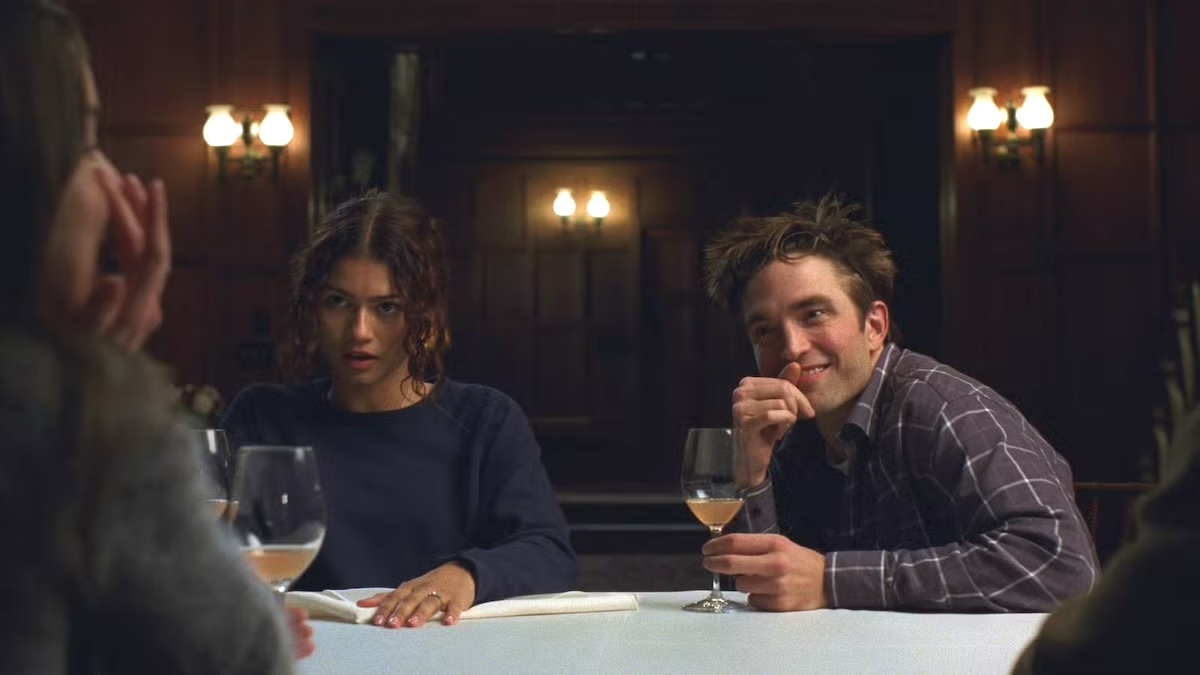
Emma spent part of her teen years fantasising about becoming a school shooter. This information is candidly relayed over wine and a game of “what’s the worst thing you’ve ever done?”. As her fiancé and his friends sit in shock, she explains she was enthralled in the aesthetics of school shootings more than the act itself, describing teenage isolation and bullying as motivation to bring her father’s rifle to school. When asked why she didn’t go through with it, she says another local shooting happened the same day she planned to go ahead with her own. After a teacher announced the death of a classmate in said shooting, Emma undergoes a radical change of heart, or does she?
We usually hope characters on our screens will be redeemable, that if we relate to them in any capacity, hopefully that empathy can be extended to ourselves too. On the other hand, meeting characters that express a more sinister side of humanity unveils our immediate distance from them. Since we (sadly) no longer live in a tomato throwing society we are left to either shout our disdain at the screen, laugh in discomfort, or simply sit with jaws dropped turning to friends (all of which I did with the friends I watched this with). Kristoffer Borgli’s characters throughout the film tilt you in-between these spaces, hopping between redemption and as much distancing as humanly possible.
Each character makes you question what sins are worth forgiving, and whose place it is to offer salvation.
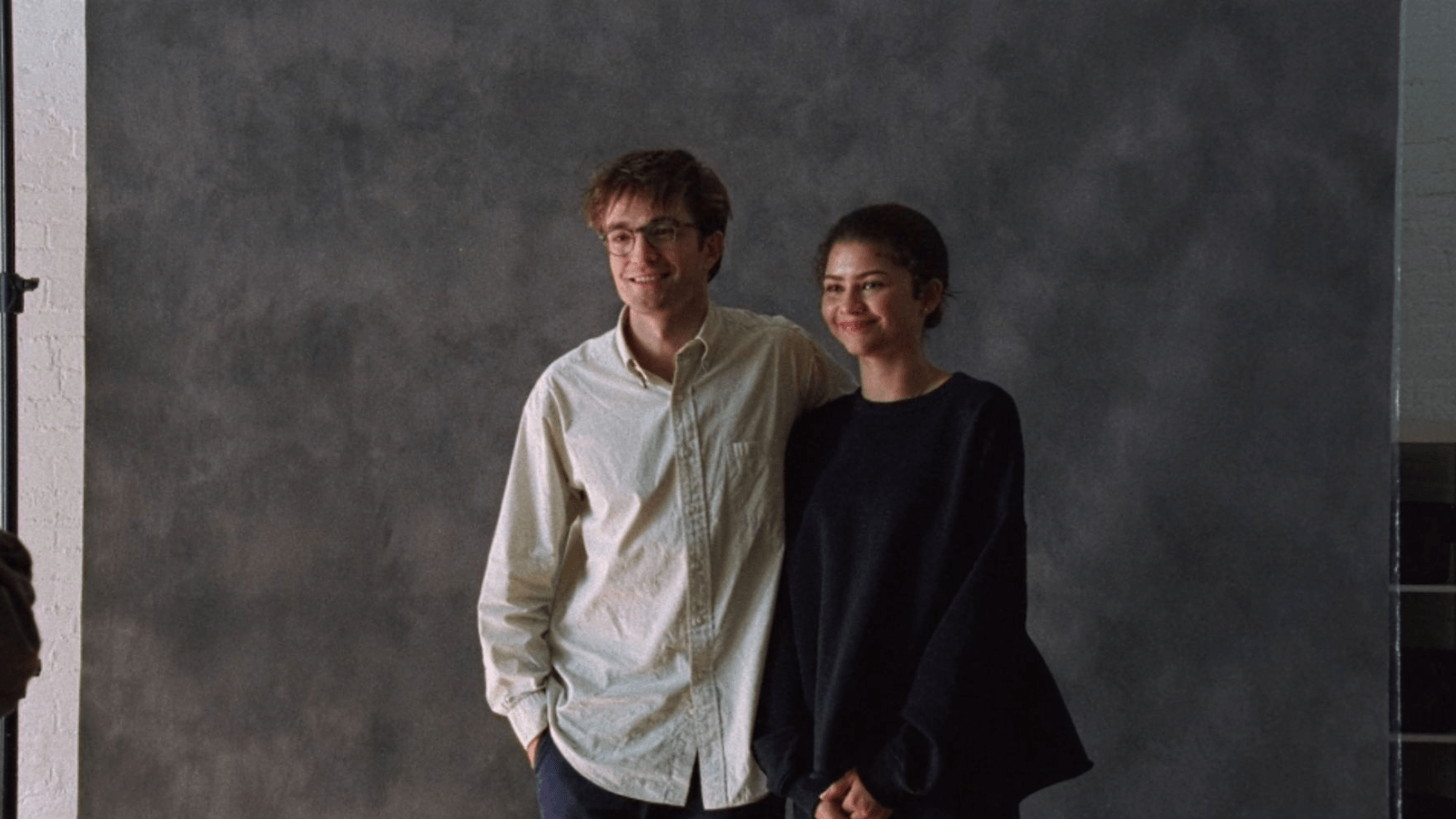
The Drama immediately demands your focus. When asked for my opinion on the film by those who had yet to watch it, I’ve frequently described The Drama as 105 minutes of stress. Though the film takes you back and forth in decoding their motivations, by the end of the film you realise how much of their morality is immediately laid out from the very first scene. Their meet cute, on the surface, is endearing as Charlie attempts to introduce himself to Emma at a local cafe and she doesn't hear his quiet, awkward attempt. He fails, retreats, tries again, fails, retreats and tries again. When she finally responds, at first confused, (alongside Charlie, we learn she’s deaf in one ear, later we learn from firing a rifle while practicing to shoot targets), Emma offers Charlie a second-first impression. This gesture became to me the most important thing that happens in the film, and when Charlie is writing his vows he even mentions this moment as what he owes his entire relationship to.
There’s been plenty of discourse online about whether Emma is truly sinister or psychopathic, and what made me decide she was not (entirely) was how tightly woven her entire personality is to the second-first-impression. Multiple times throughout the film and Charlie and Emma’s relationship, when things go wrong she wants to start again, fresh slate. Although this might be seen as a deflection of her responsibility, she always wants to press the reset button. In the context of her dark secret it makes sense for her to believe in second chances. After all, don't we all deserve another chance to change for the better?
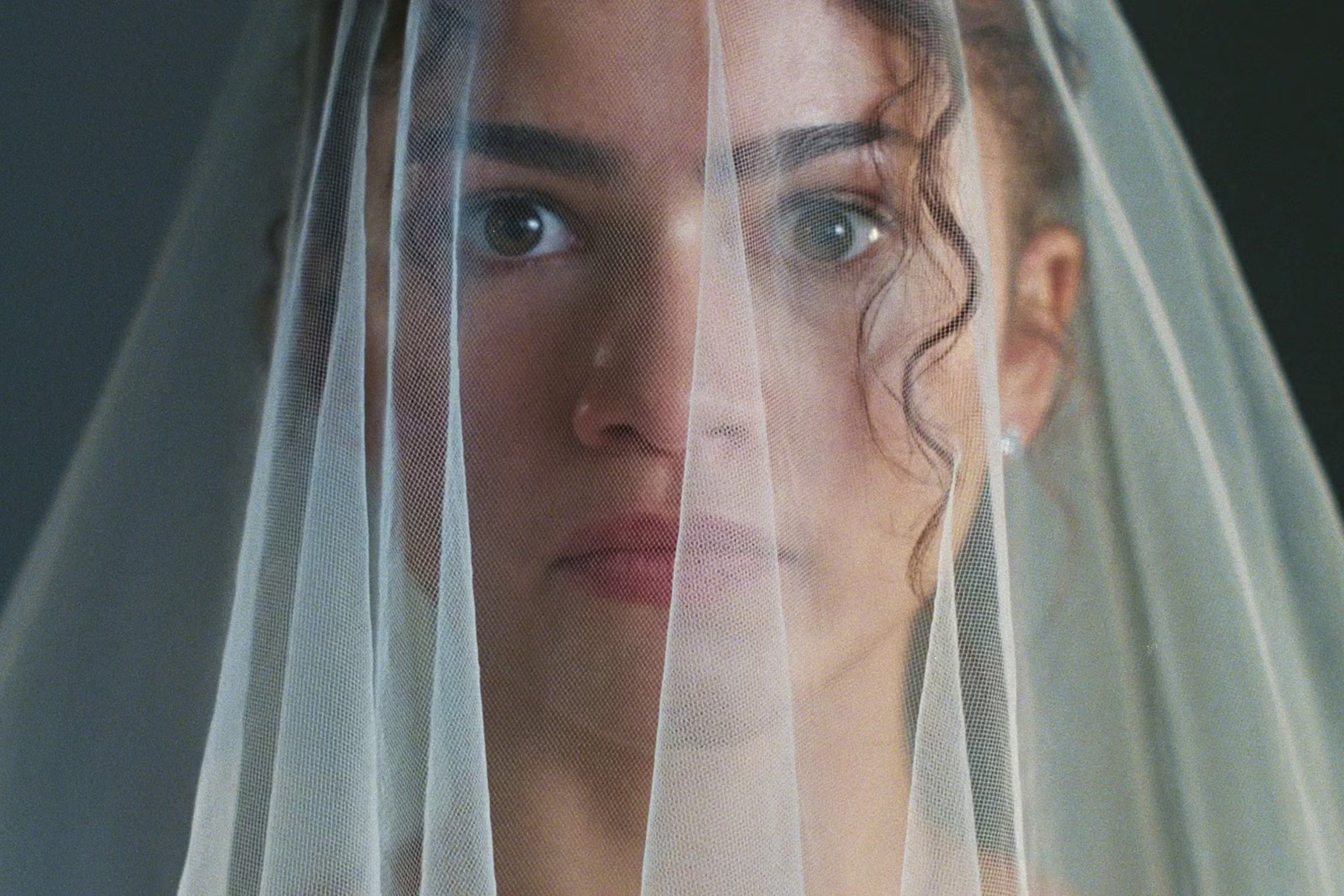
I would like you to think about the worst thing you’ve ever done. Sit with it for a moment, I’m sure it doesn't feel good, does it? Now, ask yourself if that deeply depraved thing you once did is reflective of your character now? Does it infringe on your daily life, wake you up and make you wish you’d never done it? Depending on what you’ve done, perhaps your sweaty palms just conjuring these memories is enough to motivate you to never do something like that again. And though (I pray) your secret is nowhere near as dark as Emma’s, this is a story designed to provoke you. Whether or not Emma’s dark secret is forgivable is not necessarily the point of the film. The conversation the film erupts on boundaries and morality is where it invites you to converse and examine your own world.
In The Drama Emma atones for her secret by citing the hypothetical extent of her violence, claiming she never did anything harmful to anyone else. After the death of her classmate, she joined her school’s anti-gun violence club. For the first time she is offered community, she is listened to and she is given a second-first-impression. This context directs us to be more empathetic towards her darkness, as scenes show her laughing with her classmates rather than alone in an empty childhood home holding a gun. On the other hand, her partner Charlie sits within the narrative as an almost incompetent devotee to her silent madness. We don’t learn about Charlie’s family or childhood, we only glimpse into his job as a museum curator. What can be learnt about him though is a clear cycle of all bark no bite, making Charlie and Emma a match made in heaven (or hell), as the pair, in her case for the better and in his for worse, are incapable of following through with the things they envision.
At the best of times, Charlie’s incompetence makes way to remove his responsibility in matters. His overly analytical mind causes him to respond to Emma’s secret in a series of half-assed crash outs. He thinks back to things as small as Emma slapping him during sex as a potential example of her need for sadistic pleasures (with her on top during this scene, another power dynamic plays out visually). Seeing her hold a kitchen knife makes him tremble, and when Emma jokes about this he’s not even able to get his words out. His unconsummated attempts at action are shown throughout the film. From failing to sneak Emma into the museum he works at on a date, setting off the alarm system; to his non-committal attempt to cheat on Emma with his co-worker Misha (Hailey Benton Gates)—he only gets as far as getting his pants unbuttoned and her skirt up before breaking down in tears. When it’s Charlie’s turn to answer what the worst thing he’s ever done is, it’s no surprise he’s unable to think of anything.
It’s not that he’s an innocent sweetheart, but there’s a clear inability to look at himself.
At the end of the film, when Emma and Charlie meet at Andy’s Diner, him covered in blood and Emma tear drenched, you feel sorry for them. The misfortune comes from seeing their lives culminate into an unfathomable mess. Could this have been prevented by admitting her secret to Charlie in privacy earlier in their relationship? Maybe.
Despite their mess, I do believe Charlie and Emma deserve one another. Though it’s their brokenness that binds them together most, the fear of never being loved again because of their past is what ultimately keeps them together. Since the pair seemingly survive the atrocity of their wedding day, it feels like The Drama wants us to consider our own binds and vows, like how literal we are when we declare, “in sickness and in health”. For where I’m at in life, unworried about wedding bells, I instead find myself wondering how many first impressions can we offer the people in our lives and how much should we let our pasts matter in the relationships we hope to carry into our futures.