




Ally Evenson watches a film every night. Sometimes she makes one. For a musician, she seems unusually interested in what happens to a song once it leaves the studio.
That sense of curiosity beams through her sophomore album, Speed Kills, a record alive with contradiction and collision of feeling. Following her widely acclaimed debut, BLUE SUPER LOVE, this new record feels like a confrontation between everything Evenson has absorbed and where she is now. Released in February via Assemble Sound/Atlantic Records, Speed Kills grew into a world larger than the music, drawing from inspirations across mediums. The 25-minute film accompanying the record premiered at Brain Dead Studios in Los Angeles.
Now, six months later, Speed Kills: All Gas adds four more tracks to the picture. I sat down with the Los Angeles-based singer-songwriter ahead of the release of her deluxe album, arriving August 14.
What's the last song you listened to?
Wait. I can tell you. Hold on. Either Way by Wilco.
When you're working on an album, do you think consciously about what you're letting into your head, music or otherwise?
Yeah, I do. I try to avoid listening to artists who are similar to me, especially current artists, because I can get very easily swayed and find myself in that comparison world. But I'm also always listening to new music. Something will grab me and pull me out of whatever rule I've set for myself. When I was writing for the deluxe, the Grace Ives album came out and I was just listening to that.
When I'm writing, though, I tend to go back to the music that really grabbed me when I was 13 or 14 and think, What made me love music? Like, really love it? What made me want to make this my life? And then I'll listen to that.
I'm watching movies all the time, too. I probably watch one every day. I try to end my day with a movie, or I'll go see one in the theatre. Around Speed Kills, I was watching a lot of the films that inspired the short film, especially horror. Gothic horror is probably my favourite kind of media, so I'm always drawn to it anyway. I'm also usually reading two books at once, one audiobook and one physical book, They're both horror-adjacent right now. And then there's always Crime Junkie, conspiracy theories, Trixie and Katya.
You grew up surrounded by art. Both your parents being artists, can you trace the sonic side of your creativity to one parent and the visual to another?
It's actually really funny because my mom is a visual artist, and my dad was a musician. My mom is a fine artist and was also my art teacher in elementary school. I attribute a lot of the quirky creativity aspects of my brain to her, and I attribute a lot of the music and film stuff to my dad. I'm an only child too, and I think they just created this really you can try anything environment. We were always doing something creative. My mom had an entire closet at our house full of art supplies, and my dad had this makeshift studio that he built in our basement, and we would record songs when he wasn't working his day job.
Being surrounded by so much art and music must have shaped your interpretation of albums. How did that make its way into your process?
The first CD my parents bought me was Wildflower by Sheryl Crow. Wildflower by Sheryl Crow and Riot by Paramore were the two albums that I remember really listening to front to back. Those are the two I remember first really connecting to. It's funny because my dad showed me Riot by Paramore. He was browsing on iTunes on the family computer, discovering albums and artists, and he was constantly asking,
What can we put in her brain?
With this being your sophomore album, were there any specific sonic risks that you wanted to take before you started getting into the weeds of writing?
The sophomore album is so scary. I'm still such a developing artist, and I think the first album got praised by pretty cool music blogs and magazines that I like [namely Pitchfork]. It almost helped me lower my expectations a little bit and say I kind of don't care if it gets the same love. I just wanna make music that I like and makes me happy.
The music I released before Speed Kills was all pretty dark and sad and brooding. I think this album is wild and fun and kind of in your face. That's genuinely how I was feeling in my life. There are songs that are just silly.
I think the biggest risk was being silly and owning it.
Overdressed at the Party felt like a little bit of a risk because it was the first song written for the album. I knew the song was really special, but I couldn't really make it a single. Everything felt so good to me, and that made me a little nervous. Is it going to translate? And I kind of still don't care if it does because it is cool to me.
You worked with the same producer, NYDGE, on both records. How do you feel that your creative conversation with him evolved with this album, aside from obviously having done it once before?
We just understand each other a lot more now. There were definitely moments on Speed Kills where we hit a wall too, but we knew to say, “Okay. Let's just leave this song and come back to it.”
I think before, I had not learned yet that it's okay to just leave something. You don't have to go into a session and make a full song. Most times, you don't. Nigel and I just kind of share a little brain cell, which is very nice. I love making art with him.
Something this fully realized in terms of an album and a film doesn't necessarily happen in isolation. How did you tap the creative team to build this world, both musically, visually, and beyond?
Musically, I tend to write with the same people. My friend Kim Vi writes with me a lot. My friend Trella writes with me a lot, and my friend Morgan Nagler writes with me a lot. Keeping those people consistent throughout the writing process was really helpful. I can say kind of whatever in front of them, and I'm not scared.
The team around me, obviously NYDGE was really behind the film idea, and he and I sound designed it together, which was so fun. My manager at the time, Brenna, was my biggest supporter and my biggest fan. She was kind of the one saying, “No. You need to do this. This is important to you. You should do it.” With her help and some people at the label, I was able to find the correct team.
Visually, my creative director, Dylan McBrayer, designed all of the vinyl, the title cards, everything text-wise, the cover art. That was all him. Dylan and Antony, the director of the film, the three of us were just locked in creatively. I've never been that locked in with people before. It was just like, woah.
It's like you're in my brain.
I came up with a loose treatment for all of the videos and a loose script, like a chain of events, and brought it to a couple of directors. Antony just immediately, I knew he was the one. He and I met for coffee and sat and wrote the scripts together. Both of us kind of just trauma dumped for a while, and we're like, let's write about our trauma together. And we did, and it was so awesome.
The film feels like such a physical extension of the album, and there's a lot of emotional intensity that translates visually. Do you feel like you're carrying that feeling through the instrumentation too, like you have your own dialogue with the instruments?
The most perfect example of the emotion toying with the instrumentation probably is Strawberry. This song sounds like you're allowing yourself to think about them again. The pauses are, like, you're almost struggling to figure out what to say, and it's being pulled out of you. Then it becomes more wordy because now the floodgates are open, and I'm gonna talk, and I'm gonna talk, and I'm gonna talk.
The one that really surprised me was AFO. That visual is meant to be an uncomfortable watch. When I first stood back and watched it, I stopped breathing and just started crying. This song that is so playful and fun and sexy is now turned into this really uncomfortable problem that we actually, as women, face in society.
When you were figuring out the sequencing of the album, how much of it was informed by having the film in mind? Was the film's order ever a consideration when you were sequencing the record?
The film's order of songs and the album's order of songs are completely different. The film is more of a set story. With the album, I knew I wanted Overdressed at the Party first because it was the first song written, and it just felt like an album opener.
There was a day where NYDGE and I just devoted to figuring out the album order. We sat there and listened to the end of each song and the beginning of each song and just pieced it together. I think when you're doing an album that isn't necessarily a concept album, but it all lives in the same world, it's just about what feels and sonically sounds right.
To me, if an artist has put it in this order, they've put it in this order, and it should be listened to in this order.
Strawberry goes into Phetamines. Strawberry ends with this beautiful, kind of ambient, synthy, sparkly thing, and then it goes into just the dirtiest guitar you've ever heard and the dirtiest vocal you've ever heard. Something clicked in my brain. I was like, yeah. That's it. That's right.
Sometimes you need that at a certain point in an album.
You need to wake up.
Obviously, with BLUE SUPER LOVE and Speed Kills, you've built these distinct worlds. What did you learn from BLUE SUPER LOVE about building a visual world that changed the way you approached Speed Kills?
BLUE SUPER LOVE for me was just dipping my toe into world building. I did as much as I could with the resources I had. Speed Kills had more resources, so I could really fully send it. I learned so much about rolling out an album and creating an album and what technically goes into it. In gaining that wisdom, Speed Kills felt like I could be more free with the world building, and I could try some things.
I genuinely think Speed Kills felt more like a set story, and that's kind of why we made a film around it too. It's not a concept album by any means. Each video and song in the film represents a part of myself that I don't necessarily like and that I'm coming to terms with and accepting.
I really didn't know that half of those songs were about a specific thing until I made the video for them.
And I was like, oh, there's a whole new meaning to that. I think I'm a very theatrical person, and to me, every song needs to have some kind of visual element.
People have, naturally, been very interested in the hair colour change surrounding the Speed Kills era. There’s this obvious transformation between the blue of BLUE SUPER LOVE and the red of Speed Kills, but beyond the aesthetics, what do you feel has actually changed for you? And what hasn’t changed at all?
Blue is so sad to me, and so unsure and timid. Red is so confident and fiery and angry. Last summer I dyed my hair red again. It felt right with the general direction of how the music was going.
But what seems to stay the same is the honesty. I'm very honest in my writing about myself. I'm not afraid to be like, Damn, girl, you suck. You need to fix this. There are certain songs on both albums that are major critiques of myself. Fear of God is kind of a critique of how I love, but so is Stoic on Speed Kills. I'm not afraid to be honest about things that I have messed up in my life. Therapy is great, but writing a song about my behavior, I'm like, okay. I get it now. I need to change.
Now that you've set the album free into the ether, How do you translate this album in this world that's so meticulously thought out onto the stage and, like, in the live experience?
I prefer performing with a full band because that's how the songs are intended to sound, but I also love playing them completely stripped down. I played a couple of songs solo at the film premiere, and it was really cool to break them down to their bare bones.
We just added lights that are synced to the music, and I think that really does a lot. They're these really cool old bulbs placed around the stage, and it creates this massive feel. The moment we added lights, I was like, oh, that's what was missing.
You’ve talked about Speed Kills as this world that keeps expanding beyond the album itself. With the deluxe coming up, when did these songs actually come to life? Were they written alongside the original record, or did some come later?
There's one song that was written during the album writing period, and that song is called Speed Kills. There was supposed to be a song called Speed Kills on the album, and it was this song. To me, it wasn't ready to be released. It needed me to come back to it a long time later and rewrite it.
It's what we named the album after, which I think is sick. The hook is essentially a riff that I wrote on guitar, which is very rare for me. I wrote this riff and was like, This needs to be in a song. We need to base a song around this.
That was the only song written during the album period. All the other songs were written pretty immediately after Speed Kills, toward the end of last year and early this year.
It felt like a very natural progression. I wrote these with the same people that I work with all the time, so it just felt like these songs immediately lived in the world of Speed Kills, just in a little room next to it. Chronologically and subject-matter-wise, I think they're a nice little extension too.
You’ve said you want people to walk away from Speed Kills feeling empowered, and that there’s a song for every emotion on the record. With the deluxe, are you thinking about the emotions you want listeners to find in these songs, or are you more interested in letting them find their own meaning?
Say It, which I released a couple weeks ago, is about having ADHD, and it can be taken so many ways. It feels like such an angry punch in the face, which is kind of how my pain feels when I'm upset about it.
Then there's The Martyr, which is essentially me admitting that I'm wrong, coming to terms with being wrong and shedding the victim complex. The lyrics are a little too close to home for me, but I want listeners to just have fun listening to that song. Then there's a song on the deluxe that's just a straight-up love song, and that's all I want you to feel with that one. I want you to feel like you're in love.
I think there is a song for every emotion, even if that's three forms of anger. You can break each emotion down into so many different facets. The deluxe still feels like that to me.
When you're introducing these new tracks to the conversation that is already happening around the album, do you feel like they're answering any questions that the album itself kind of left open, or do you think that they're creating almost a different conversation within the album and the era?
I think both. I knew when we were doing it that I wanted Speed Kills to be on the deluxe, so the fact that the original album ends with that little piece of it is kind of an answer to that.
There are also sister songs on the deluxe and the actual album. I think there’s some call and response happening, but it’s also furthering the conversation. If I touched on something earlier in the album, it’s kind of being answered or taken further in the deluxe.
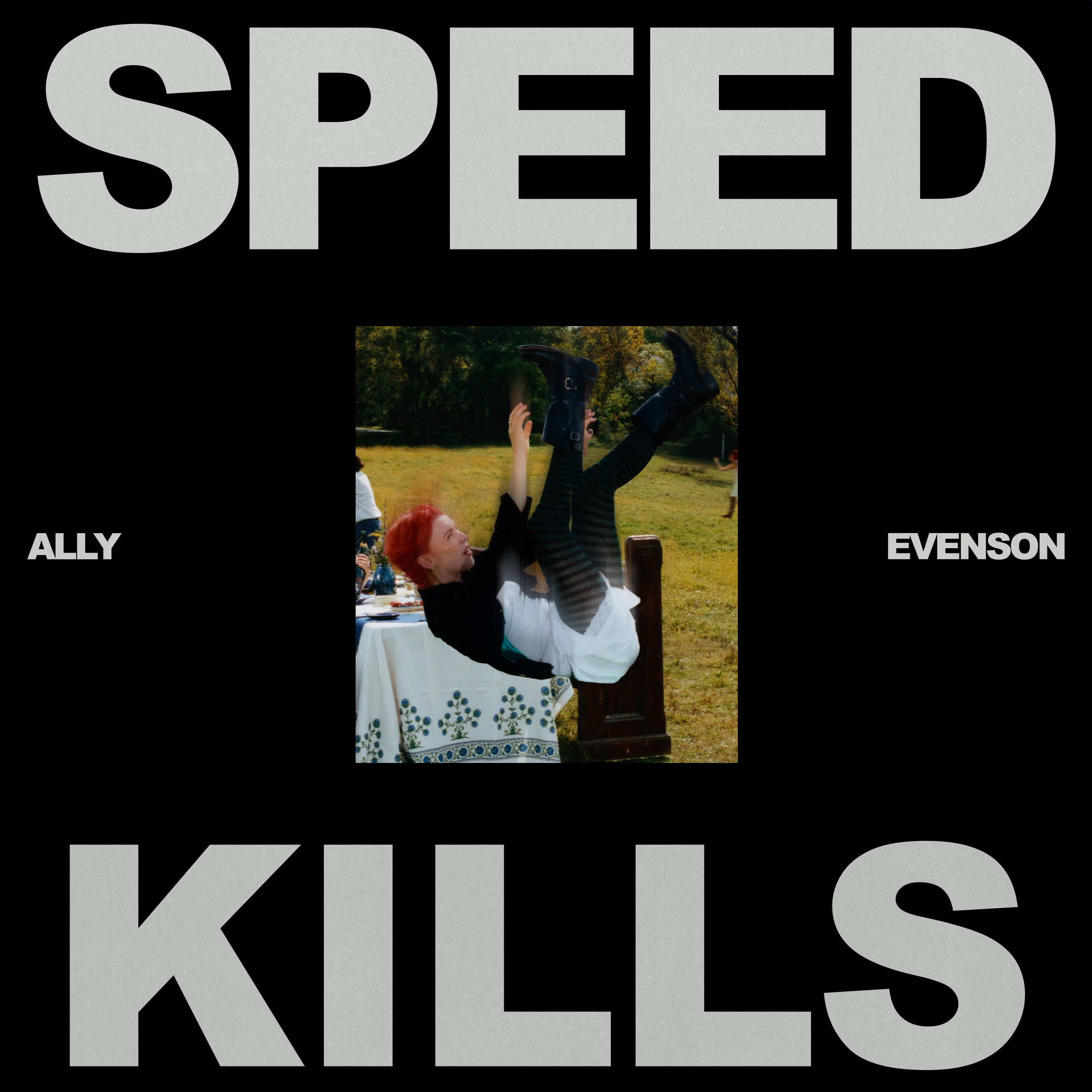
Speed Kills: All Gas is out now as is SPEED KILLS: THE FILM.


